

New York is one of the best cities in the world for travelers who enjoy architecture because the skyline is only the beginning. Within a single day you can move from nineteenth-century churches and cast-iron façades to Beaux-Arts railway halls, Art Deco skyscrapers, modernist diplomatic buildings and some of the newest public architecture in the United States. This guide focuses on places that are visually distinctive, historically important and practical to add to a real sightseeing itinerary.
How to use this New York architecture guide
Do not try to “collect” every building in one day. Architecture is more rewarding when grouped by neighborhood. Midtown gives you Grand Central, the Chrysler Building, Rockefeller Center and the Empire State Building. Lower Manhattan combines Trinity Church, St. Paul’s Chapel, the World Trade Center Oculus, Federal Hall and modern towers. Greenwich Village and Flatiron are better for street-level scale, parks and historic districts. Uptown adds the Dakota, the Cathedral of St. John the Divine, the Cloisters and the Little Red Lighthouse.
| Best area for skyscrapers | Midtown Manhattan |
| Best area for old + new contrast | Lower Manhattan |
| Best area for historic streets | Greenwich Village / SoHo |
| Best free new viewpoint | Centre 360 |
| Best architecture + transit pairing | Grand Central + Chrysler Building |
| Best unusual structure | Little Red Lighthouse beneath George Washington Bridge |
20 iconic New York buildings and landmarks
1. Chrysler Building
Art Deco skyscraper · Midtown East
The stainless-steel crown and automotive ornament make this one of the city’s defining towers. Read our detailed guide
2. Grand Central Terminal
Beaux-Arts transportation · Midtown East
A monumental railway station where architecture is still inseparable from daily city life. Read our detailed guide
3. Empire State Building
Art Deco skyscraper · Midtown
An icon with both architectural history and public observation decks. Read our detailed guide
4. Rockefeller Center
Art Deco urban complex · Midtown
Not one building but a planned ensemble of towers, plazas, public art and underground circulation. Read our detailed guide
5. Flatiron Building
Early steel-frame skyscraper · Flatiron
The triangular site demonstrates how New York’s street geometry can shape architecture. Read our detailed guide
6. New York Public Library
Beaux-Arts civic architecture · Midtown
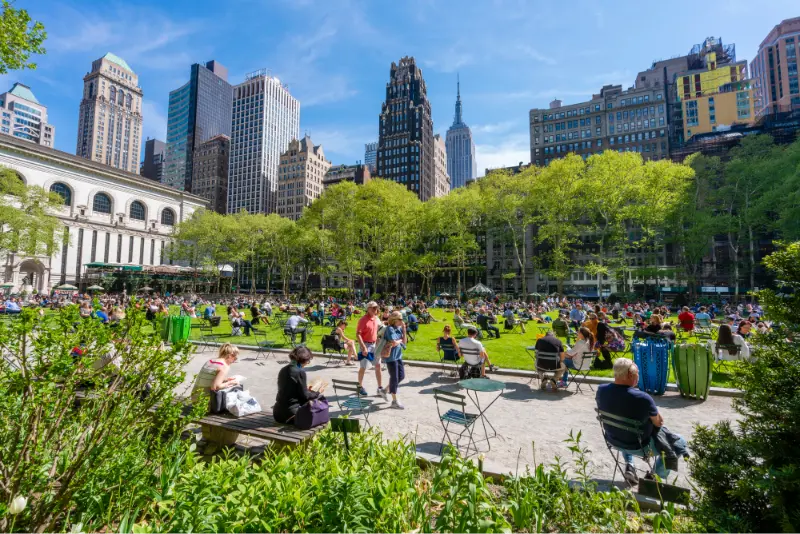
A grand public interior facing Bryant Park and one of Fifth Avenue’s strongest free architectural stops. Read our detailed guide
7. World Trade Center Oculus
Contemporary transportation architecture · Lower Manhattan
Santiago Calatrava’s white ribbed structure turns a transit hub into a civic interior. Read our detailed guide
8. Trinity Church Wall Street
Gothic Revival church · Financial District
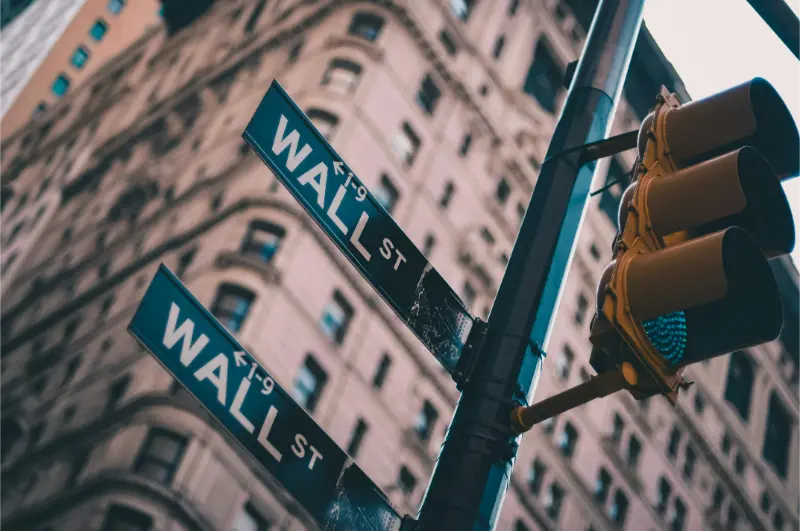
Historic church and burial ground surrounded by the modern towers of Lower Manhattan. Read our detailed guide
9. St. Paul’s Chapel
Colonial-era church · Lower Manhattan
A rare surviving eighteenth-century sacred building with deep 9/11 meaning. Read our detailed guide
10. United Nations Headquarters
International modernism · Midtown East
A working diplomatic campus with guided tours and a dedicated architecture tour on selected dates. Read our detailed guide
11. Washington Square Arch
Beaux-Arts monument · Greenwich Village
Stanford White’s marble arch frames Fifth Avenue and anchors one of the city’s great public spaces. Read our detailed guide
12. The Dakota
Historic apartment architecture · Upper West Side
An 1880s luxury apartment landmark facing Central Park; admire from public sidewalks and respect resident privacy. Read our detailed guide
13. Cathedral of St. John the Divine
Cathedral architecture · Morningside Heights
A monumental and still-evolving cathedral complex offering a very different architectural scale from Midtown. Read our detailed guide
14. The Met Cloisters
Medieval-inspired museum complex · Fort Tryon Park
Architecture, courtyards, gardens and medieval art combine above the Hudson. Read our detailed guide
15. Little Red Lighthouse
Infrastructure landmark · Washington Heights
A tiny lighthouse under the George Washington Bridge creates one of Manhattan’s most memorable scale contrasts. Read our detailed guide
16. Brooklyn Bridge
Engineering landmark · East River
Stone towers, steel cables and the pedestrian path make it architecture you can physically move through. Read our detailed guide
17. Federal Hall
Greek Revival civic architecture · Wall Street
A compact national memorial in the heart of the Financial District. Read our detailed guide
18. Guggenheim Museum
Modern museum architecture · Upper East Side
Frank Lloyd Wright’s spiraling museum building is as important as the art collection for many visitors. Read our detailed guide
19. Centre 360 / Dinkins Municipal Building
Civic skyscraper + free viewpoint · Civic Center
The 2026 opening of the cupola gives visitors a rare free view from a working municipal landmark. Read our detailed guide
20. Cast-iron SoHo
Historic district streetscape · SoHo
Repeated columns, large windows and converted industrial buildings are best understood across multiple blocks. Read our detailed guide
Best architecture route in Midtown
Start at Grand Central Terminal and spend time in the Main Concourse. Walk to the Chrysler Building for exterior views, then continue west to Bryant Park and the New York Public Library. From there follow Fifth Avenue toward Rockefeller Center. Finish at Top of the Rock or the Empire State Building if you want to see architecture from above. The route is compact enough to walk and shows several different approaches to early twentieth-century Manhattan.
Best architecture route in Lower Manhattan
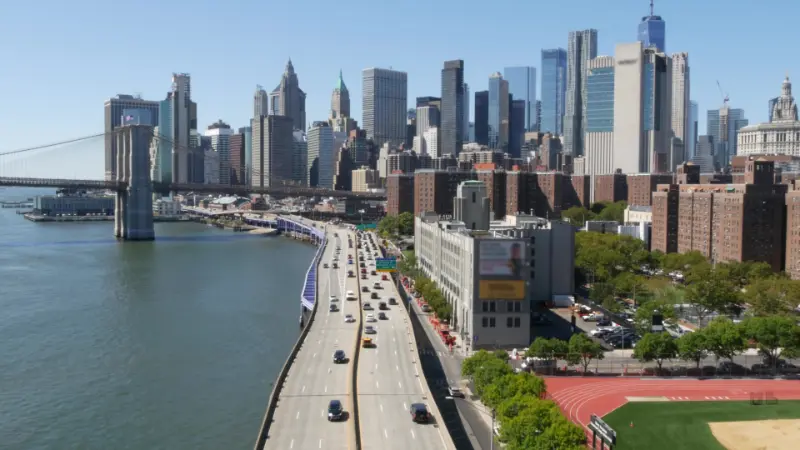
Begin around City Hall and, if you have a reservation, visit Centre 360. Continue to St. Paul’s Chapel, the 9/11 Memorial and the Oculus. Walk south to Trinity Church, Federal Hall and Wall Street, then finish at The Battery or cross the Brooklyn Bridge. This route compresses colonial, nineteenth-century, modern and contemporary New York into a remarkably small area.
Historic districts matter as much as famous buildings
Some of New York’s best architecture is not a single landmark. SoHo’s cast-iron façades, Greenwich Village’s townhouses, Brooklyn Heights brownstones and the Upper West Side’s apartment blocks make more sense as streetscapes. Slow down in these neighborhoods and look at cornices, stoops, fire escapes, storefront proportions and the way later buildings respond to older ones.
Which architecture attractions require tickets?
Many of the best exterior landmarks are free. Ticketed experiences include observation decks, some museums and guided institutional tours such as the United Nations. Centre 360 is unusual because it is free but capacity-controlled. Churches may be free to enter when open, but access is shaped by worship and events. Private office or residential buildings such as the Chrysler Building or Dakota should never be treated as open tourist interiors.
Best architecture for photography
For skyline images, observation decks and waterfronts are obvious choices. For street architecture, early morning gives you cleaner pavements and fewer delivery vehicles. Wide lenses are useful but can exaggerate vertical lines; sometimes the strongest image is made from farther away with a normal or short telephoto lens. Keep people and traffic in some frames because New York architecture gains meaning from density and scale.
Architecture with kids
A long lecture on styles will lose most children. Instead, make architecture visual: find the shiny crown on the Chrysler Building, count bridge cables, spot gargoyles, compare the tiny lighthouse with the enormous bridge or look for the narrow tip of the Flatiron. Public spaces, stations and viewpoints work particularly well because children can move rather than stand silently in galleries.
Architecture for travelers with limited mobility
Many major public attractions provide accessible routes, but historic buildings and parks can include stairs, steep grades or long approaches. Check the dedicated accessibility pages for institutions with security. In Lower Manhattan, elevators and underground passages can reduce street crossings but may lengthen the route. Our New York with Limited Mobility guide and Accessible Attractions guide provide broader planning help.
Compare hotels for an architecture-focused New York trip
Frequently asked questions
What is the most famous building in New York?
The Empire State Building is probably the most globally recognizable, but the Chrysler Building, Flatiron Building, One World Trade Center and Rockefeller Center are also defining pieces of the skyline.
What is the best neighborhood for architecture?
There is no single winner. Midtown is strongest for famous skyscrapers, Lower Manhattan for historical contrast, SoHo for cast iron, Greenwich Village for human-scale historic streets and Brooklyn Heights for brownstones and skyline views.
Can I see great New York architecture for free?
Yes. Grand Central, the New York Public Library, public parks, bridges, historic districts, church exteriors and many landmark streets cost nothing. Centre 360 is also free with a reservation.
Do famous skyscrapers let tourists into the lobby?
Not automatically. Many are working office buildings with security restrictions. Never assume lobby access because a blog or old travel guide mentions it. Use public areas and official visitor information.
How many architecture days do I need?
One focused day gives you an excellent introduction. Two days allow a Midtown route plus Lower Manhattan and a historic neighborhood without rushing.
Related Dreaming New York guides
- Midtown Manhattan Guide
- Lower Manhattan & Financial District Guide
- Greenwich Village Guide
- SoHo New York Guide
- Best Photo Spots in New York
- Hidden Gems in New York City
Useful official architecture resources
Final advice
The best architecture itinerary leaves room for detours. A landmark you planned to see may be covered by scaffolding, while a building you had never heard of may stop you in your tracks. Use the major icons as anchors, but keep looking between them. In New York, the street itself is the architecture museum.