

Walking across the Brooklyn Bridge is one of those New York experiences that sounds simple until you actually start planning it. Which direction gives the best views? Where is the pedestrian entrance? How long does the crossing take? Is sunrise really worth waking up for? And what should you do on the Brooklyn side once you arrive?
The good news is that the bridge is free, open to pedestrians and easy to combine with Lower Manhattan, DUMBO and Brooklyn Heights. The key is to treat the crossing as part of a wider neighborhood walk rather than as a quick photo stop. This guide explains the route, the best direction to walk, realistic timing and the small details that make the experience much better.
Why the Brooklyn Bridge is worth walking
The bridge is both a transport link and one of New York’s defining landmarks. Designed by John A. Roebling and completed in 1883, it spans the East River between Lower Manhattan and Brooklyn. According to NYC DOT, the bridge and its approaches measure just over 6,000 feet, with a main span of 1,595.5 feet. The elevated pedestrian promenade gives you a perspective that you simply do not get from a subway train or taxi.
What makes the walk special is the sequence of views. The stone Gothic arches frame Manhattan differently every few minutes, the cables create dramatic geometric patterns, and the skyline changes as you move. You can see Lower Manhattan, the East River, the Manhattan Bridge and, from certain angles, the Statue of Liberty in the distance.
Brooklyn to Manhattan or Manhattan to Brooklyn?
For a first visit, I generally prefer walking from Brooklyn toward Manhattan. The Manhattan skyline stays in front of you for much of the crossing, so the views build naturally rather than sitting behind your shoulder. It also works beautifully if you start with breakfast in DUMBO, explore Brooklyn Bridge Park, then walk across toward City Hall and continue into the Lower Manhattan and Financial District.
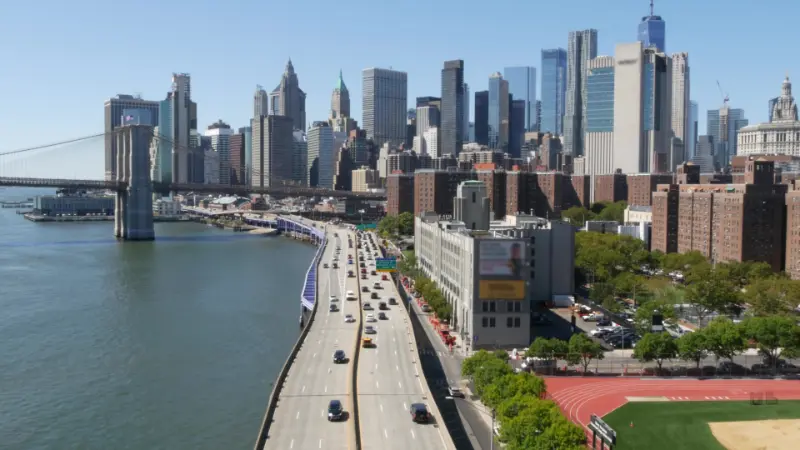
Walking from Manhattan to Brooklyn is still a great choice if your day ends in DUMBO, Brooklyn Heights or Williamsburg. That direction lets you finish with waterfront views, pizza, rooftop drinks or sunset in Brooklyn Bridge Park. The best direction therefore depends less on photography than on where you want to spend the next part of your day.
Where to enter the pedestrian walkway
On the Manhattan side, the most familiar pedestrian approach is near City Hall Park and Centre Street. On the Brooklyn side, visitors commonly access the promenade from the Tillary Street area or via the stair access around Washington Street and Prospect Street. Construction and traffic patterns can change around the approaches, so follow current signs rather than relying on an old screenshot of a map.
NYC DOT has continued to improve pedestrian and cycling access around the bridge. Cyclists now use a protected path separate from the elevated pedestrian promenade, which has made the walking experience more comfortable than it was when bikes and pedestrians shared the same narrow space.
How long does it take to walk the Brooklyn Bridge?
The practical answer is about 30 to 45 minutes if you walk steadily, but most first-time visitors take closer to an hour because they stop for photographs. If you want to enjoy the view, read the plaques, wait for a clear frame and avoid rushing through crowds, allow 60 to 75 minutes.
That does not include the walk to and from the actual entrances. The bridge may look close on a map while the pedestrian access point is several blocks from the waterfront below. Add extra time if you are coming from Brooklyn Bridge Park or the Financial District.
Best time to walk the bridge
Sunrise: best for space and photography
Early morning is the easiest time to experience the bridge with fewer people. The light can be beautiful, especially on clear days, and you have more freedom to stop without blocking the flow of pedestrians. If photography is important, this is the most forgiving time.
Late afternoon: best for atmosphere
Late afternoon gives the bridge more energy and can lead naturally into sunset in Brooklyn or evening in Lower Manhattan. The trade-off is crowds. On warm weekends and holidays, the promenade can be extremely busy.
Night: best for city lights
Walking after dark can be memorable because the skyline and bridge towers are illuminated. Stay aware of your surroundings, keep moving and avoid creating an obstruction while taking photos. If you are specifically building an evening itinerary, see our guide to New York at night.
The best photo spots on the bridge
The classic image is the Manhattan skyline framed by one of the stone towers, but do not spend the whole walk chasing the same shot. Look back toward Brooklyn, use the suspension cables as leading lines and photograph the bridge’s wooden walkway at a lower angle when there is enough space.
For a broader skyline composition, the best images often come from outside the bridge itself. Pebble Beach in DUMBO, the waterfront around Brooklyn Bridge Park and the Brooklyn Heights Promenade can all produce stronger city panoramas. Our New York photo spots guide includes additional viewpoints around the city.
What to do on the Brooklyn side
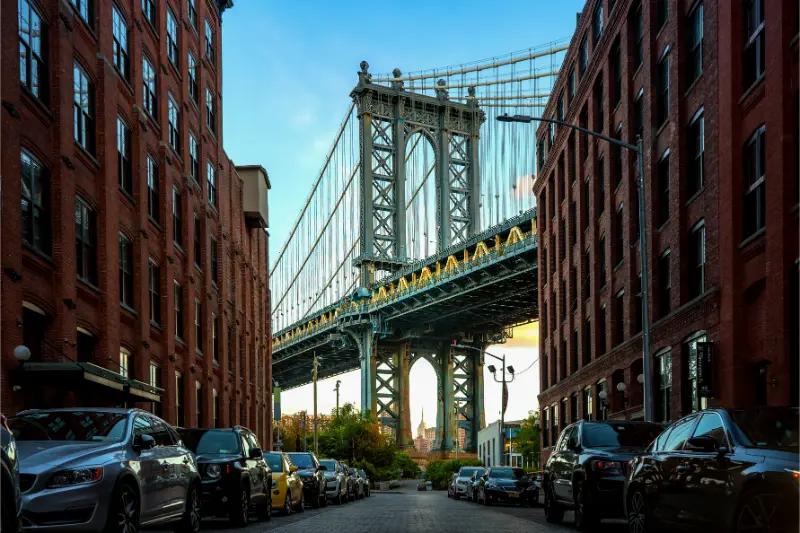
Do not cross the bridge, take one photo and immediately turn around. The Brooklyn side is where this walk becomes a half-day experience. Head toward DUMBO for cobblestone streets, converted warehouses and views of both the Brooklyn and Manhattan bridges. Washington Street is the famous photo location where the Manhattan Bridge frames the Empire State Building in the distance.
Continue into Brooklyn Bridge Park for lawns, piers, waterfront paths and skyline views. From there, walk south toward Brooklyn Heights and the Promenade if you still have energy. Our DUMBO and Brooklyn Heights guide gives you a complete route.
What to do on the Manhattan side
Arriving in Manhattan places you close to City Hall, the Civic Center, the Financial District and the World Trade Center area. You can walk south toward Wall Street, the New York Stock Exchange, Trinity Church and Battery Park, or west toward the 9/11 Memorial.
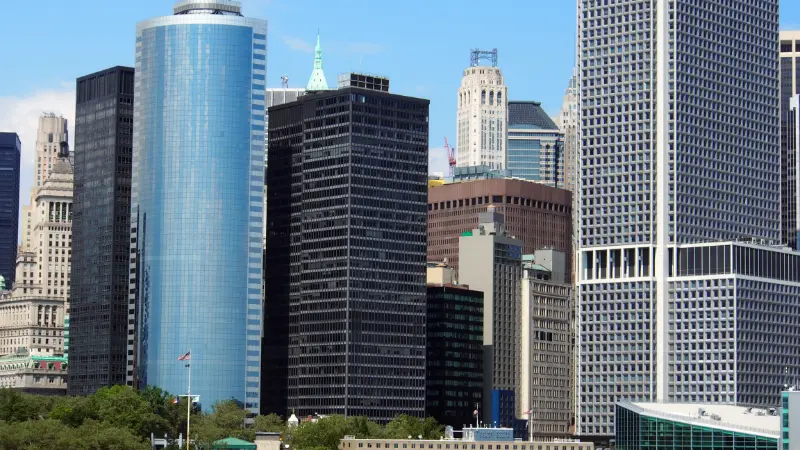
If you have only one full day in the city, combining the Brooklyn Bridge with Lower Manhattan is efficient because you avoid unnecessary subway rides. Our one-day New York itinerary shows how to fit several major sights into a realistic schedule.
What to wear and bring
The bridge is exposed to sun, wind and weather. In summer, bring water, sunscreen and a hat. In winter, the wind over the East River can make the temperature feel much colder than it does between buildings. Comfortable shoes matter because the bridge is rarely the only walking you will do that day.
Carry less than you think you need. A small bag makes it easier to move through crowds and take photos. If rain is possible, a compact rain jacket is often more practical than trying to control a large umbrella in strong wind.
Accessibility and walking difficulty
The promenade is a gradual incline rather than a steep climb, but the full outing can involve considerable walking. Visitors with limited mobility should plan the exact entrance and exit in advance and avoid adding unnecessary detours. If you use a wheelchair or have accessibility needs, review our accessible New York guide and check current NYC DOT conditions before your visit.
Common mistakes to avoid
Do not stop suddenly in the middle of the walkway. Step to the side before taking photos. The bridge is not only a tourist attraction; thousands of people use it to move between boroughs.
Do not underestimate the sun and wind. Do not expect to find bathrooms or cafés on the span itself. And do not schedule a timed museum or observatory ticket immediately after the crossing without leaving a buffer for photos and crowds.
A simple Brooklyn Bridge half-day itinerary
Start in DUMBO, walk through Brooklyn Bridge Park and spend a little time around Washington Street. Have coffee or an early lunch in the neighborhood, then walk across the bridge toward Manhattan. Continue through City Hall Park and into the Financial District. If your energy is good, finish at the 9/11 Memorial or One World Trade Center.
This route works particularly well on a first trip because it combines architecture, skyline views, neighborhoods and history without requiring constant transport changes.
Is the Brooklyn Bridge free?
Yes. Walking across the Brooklyn Bridge is free. You do not need a ticket or reservation. That makes it one of the best high-value experiences in the city and a natural addition to our list of free things to do in New York.
Is it worth walking if you are short on time?
If you have only a few hours in New York, the bridge may not be the best use of time unless Brooklyn is already part of your route. But with two days or more, it is one of the easiest iconic experiences to justify. The walk itself costs nothing and connects two areas you would probably want to see anyway.
Final tip
The Brooklyn Bridge is most rewarding when you stop thinking of it as a single attraction. Build it into a route: DUMBO to Lower Manhattan, or Manhattan to Brooklyn at sunset. Give yourself time, stay aware of other pedestrians and look in both directions. The skyline changes constantly, and that changing perspective is the real reason the walk remains one of New York’s essential experiences.
[…] Brooklyn Bridge guide […]
[…] Brooklyn Bridge guide […]
[…] Brooklyn Bridge guide […]