

SoHo is one of those New York neighborhoods that can feel completely different depending on when and how you visit. At midday on a weekend, its main streets can resemble an open-air shopping mall packed with visitors. Early in the morning, the same blocks reveal cobblestones, loading doors, ornate facades and some of the city’s most distinctive cast-iron architecture. The secret is to look beyond the storefronts.
This SoHo New York guide explains what to see, where to walk, when to go, how to combine SoHo with nearby neighborhoods and how to enjoy the area even if shopping is not your main interest.
Where is SoHo?
The name means South of Houston Street. The neighborhood is generally understood as the area below Houston Street and above Canal Street, with Lafayette Street and Sixth Avenue often used as practical eastern and western reference points. Boundaries are not perfectly rigid, and visitors frequently move between SoHo, Nolita, Tribeca, Chinatown and Greenwich Village without noticing the exact transition.
Several subway lines serve the area. Broadway-Lafayette, Prince Street, Spring Street and Canal Street stations can all be useful depending on where you start.
Why SoHo looks different from the rest of Manhattan
SoHo’s visual identity comes largely from its 19th-century commercial buildings, many featuring cast-iron facades. Cast iron allowed builders to create large windows and decorative exteriors relatively efficiently, and the neighborhood now contains one of the world’s most important concentrations of this architecture.
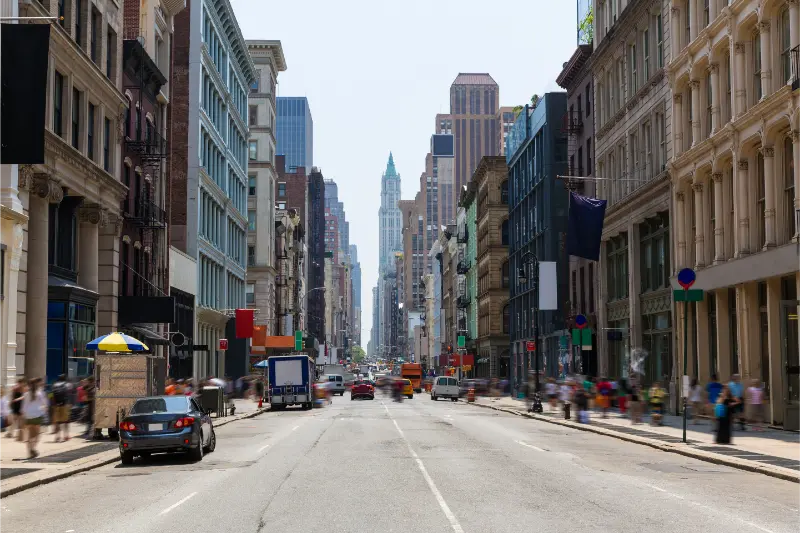
In the 1960s and 1970s, artists began occupying large former industrial lofts. That creative period transformed SoHo’s reputation and eventually helped attract galleries, boutiques and luxury brands. Today’s SoHo is far more commercial than its artist-loft era, but the buildings still tell that earlier story if you look above street level.
1. Broadway: useful, busy and not the whole neighborhood
Broadway is SoHo’s busiest shopping spine. Major international brands, sportswear stores and flagship shops make it convenient if you have specific purchases in mind, but it is also the street most likely to feel crowded and generic.
Use Broadway as an orientation line, then move west onto Greene, Mercer, Wooster and West Broadway or east toward Crosby and Lafayette. The quieter side streets make the neighborhood much more interesting.
2. Greene Street for cast-iron architecture
If you want to understand why SoHo is architecturally special, walk several blocks of Greene Street. Look upward at columns, arches, fire escapes and repetitive industrial windows. Some facades imitate stone even though their decorative elements were manufactured from iron.
Morning is the best time for photography because delivery traffic and shoppers increase later. Remember that many buildings contain private residences and offices; doorways and stoops are not public photo studios.
3. Mercer and Wooster Streets
Mercer and Wooster provide another strong north-south route through SoHo. Galleries, design stores and fashion boutiques appear between historic facades. These streets are especially useful if Broadway feels overwhelming.
Do not plan every store in advance. SoHo works better when you choose one or two shopping targets and leave time to browse. If you are traveling with someone who does not enjoy shopping, split briefly and meet at a cafe or nearby park instead of making the entire group enter every store.
4. The Judd Foundation
Art and architecture travelers may want to reserve a visit to 101 Spring Street, the former home and studio of artist Donald Judd. Visits are controlled and typically require advance booking through the Judd Foundation. This is a strong way to connect modern SoHo with the neighborhood’s artist-loft history rather than seeing only retail.
Check the official Judd Foundation website for current tours, accessibility and booking requirements.
5. SoHo’s galleries
SoHo is no longer the undisputed center of New York’s gallery world—Chelsea has taken much of that role—but smaller galleries and design spaces remain. Exhibitions change constantly, so a static list becomes outdated quickly. The better strategy is to check current gallery calendars a few days before your visit and add one stop to a walking route.
6. Shopping in SoHo
SoHo is one of New York’s major shopping districts because it combines global brands, designer stores, beauty retailers, sneaker shops and independent boutiques in a compact area. Broadway has the highest concentration of large names; side streets tend to be more interesting for design and premium fashion.
If shopping is a major part of your trip, read our New York shopping guide before deciding how much time to spend here.
7. Nolita: the easiest extension
Walk east across Lafayette Street and the atmosphere changes quickly. Nolita—North of Little Italy—has smaller blocks, cafes, restaurants and boutiques. It can feel more intimate than SoHo and is an excellent place for lunch after a morning among the cast-iron buildings.
Elizabeth Street, Mulberry Street and the streets around Prince Street make a natural continuation. From Nolita, Chinatown is only a short walk south and the Lower East Side is nearby to the east.
8. Dominique Ansel Bakery
If you enjoy pastry and want a famous SoHo food stop, Dominique Ansel Bakery at 189 Spring Street remains one of the neighborhood’s best-known addresses. It became internationally famous for the Cronut, but the bakery has a broader pastry menu and seasonal creations.
Do not build your day around one item being available. Popular products can sell out, and lines vary. Treat it as one possible stop rather than a mission.
9. Housing Works Bookstore
For a quieter break, Housing Works Bookstore at 126 Crosby Street combines books, events and a nonprofit mission. It is a useful alternative to retail fashion and gives you a reason to explore the eastern edge of SoHo.
Always check current opening hours before making a special trip, especially if you are visiting around holidays.
10. Vesuvio Playground and small neighborhood pauses
SoHo lacks the large green spaces of other neighborhoods, which makes small parks and playgrounds valuable breaks. Vesuvio Playground on Spring Street is useful for families, while nearby squares and cafe stops help break up a shopping-heavy day.
A two-hour SoHo walking route
Start near Prince Street or Broadway-Lafayette. Walk west along Prince, turn south onto Greene Street, continue toward Broome and Grand, then move east through Mercer or Crosby Street. Finish in Nolita around Elizabeth or Mulberry Street.
This route gives you architecture, shops and a neighborhood transition without spending the whole visit on Broadway.
A half-day SoHo itinerary
Begin early for architecture and photography, add a booked cultural stop such as the Judd Foundation if it interests you, browse a small number of shops, then have lunch in Nolita. Continue into Chinatown or Greenwich Village depending on the rest of your day.
SoHo works especially well as part of the west-side route in our 7-day New York itinerary.
SoHo and Chinatown
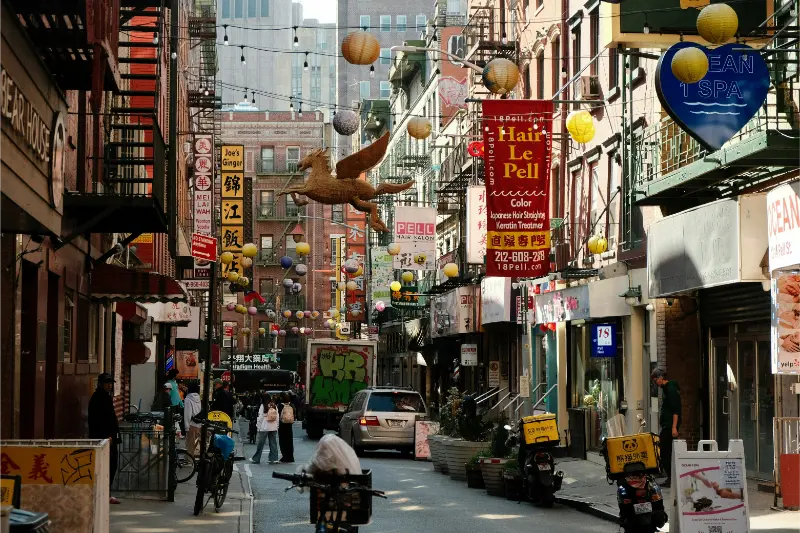
This is one of the easiest neighborhood combinations in Manhattan. Walk south and the transition becomes obvious in storefronts, food, languages and street activity. Chinatown deserves more than a quick meal, so leave at least two hours if it is your first visit.
SoHo and Greenwich Village
Walk north through NoHo toward Washington Square Park and you can connect SoHo with Greenwich Village without using the subway. The contrast is excellent: industrial cast-iron blocks gradually give way to university buildings, smaller streets and brownstones.
Our Greenwich Village and West Village guide continues the route.
SoHo and the Lower East Side
If you prefer nightlife, food and contemporary city energy, continue east after Nolita toward the Lower East Side. This combination works particularly well from late afternoon into evening.
Best time to visit SoHo
Weekday mornings are best for architecture and a calmer atmosphere. Weekend afternoons are busiest, especially around Broadway and popular shops. Evening can be pleasant for restaurants, although many retail stores close earlier than nightlife areas farther east.
In December, SoHo becomes a major shopping destination and weekends can be extremely crowded. In summer, start early to avoid walking the sunniest streets during the hottest part of the day.
Where to eat in SoHo
SoHo and neighboring Nolita have restaurants in almost every price category. Instead of choosing the closest place to Broadway when you become hungry, decide whether you want a quick cafe, bakery, sit-down lunch or destination restaurant and walk a few blocks away from the busiest retail corridor.
For more specific restaurant ideas across Manhattan, Brooklyn and Queens, see our where to eat in New York guide.
SoHo with children
Children who enjoy shopping may like SoHo, but long store-to-store itineraries become tiring quickly. Keep the visit short, use a bakery stop or playground as a break and combine the neighborhood with something more interactive. Strollers are manageable on most sidewalks, though cobblestones and crowded weekends can slow you down.
Is SoHo expensive?
It can be. Luxury boutiques and premium restaurants are common, but walking the architecture costs nothing and there are casual food options nearby. You do not need to buy anything to enjoy SoHo. In fact, one of the neighborhood’s best experiences is simply walking early and looking above the store signs.
Common mistakes to avoid
- Spending the entire visit on Broadway.
- Looking only at storefronts instead of the architecture above them.
- Visiting at the busiest weekend hour and concluding that SoHo has no atmosphere.
- Trying to combine serious shopping with an overpacked sightseeing day.
- Blocking residential doorways for photographs.
- Assuming the neighborhood still functions exactly like the artist district of the 1970s.
- Ignoring nearby Nolita, Chinatown and Greenwich Village.
Frequently asked questions
How long do you need in SoHo?
Two hours is enough for an architectural walk and light browsing. Allow half a day if shopping, galleries or a reserved visit are priorities.
Is SoHo worth visiting if I do not like shopping?
Yes. Go early, focus on cast-iron architecture, side streets and the neighborhood’s urban history, then continue into Nolita or Greenwich Village.
What is the best street in SoHo?
Broadway is best for large stores, while Greene, Mercer and Wooster are better for architecture and atmosphere.
Can I walk from SoHo to the Brooklyn Bridge?
Yes, but it is a longer Downtown walk. Chinatown and Civic Center sit between the two areas, so it works best if you want to explore along the way.
Final advice
SoHo becomes more interesting the moment you stop treating it as a shopping center. Arrive before the biggest crowds, look up at the cast-iron facades, wander the side streets, choose only the shops that genuinely interest you and continue on foot into Nolita or Greenwich Village. The neighborhood is compact, but it tells a surprisingly large part of New York’s story—from manufacturing to artists’ lofts to global fashion.