

Greenwich Village and the West Village are among the best parts of Manhattan for travelers who want to feel New York at street level. Instead of giant landmarks and wide avenues, you get smaller blocks, brownstones, music history, independent restaurants, neighborhood parks, university buildings and streets that seem to ignore Manhattan’s famous grid.
This Greenwich Village and West Village guide explains the difference between the two areas, what to see, how to build a walking route, where to stop for food and music, and how to combine the Village with SoHo, Chelsea or the High Line.
Greenwich Village vs. West Village: what is the difference?
The names overlap in everyday use, but visitors can think of Greenwich Village as the broader historic neighborhood centered around Washington Square Park, with the West Village occupying its quieter western section toward the Hudson River. Greenwich Village includes NYU, music clubs, cafes and busy streets around MacDougal and Bleecker. The West Village feels more residential, with brownstones, winding streets, small restaurants and a maze-like street pattern.
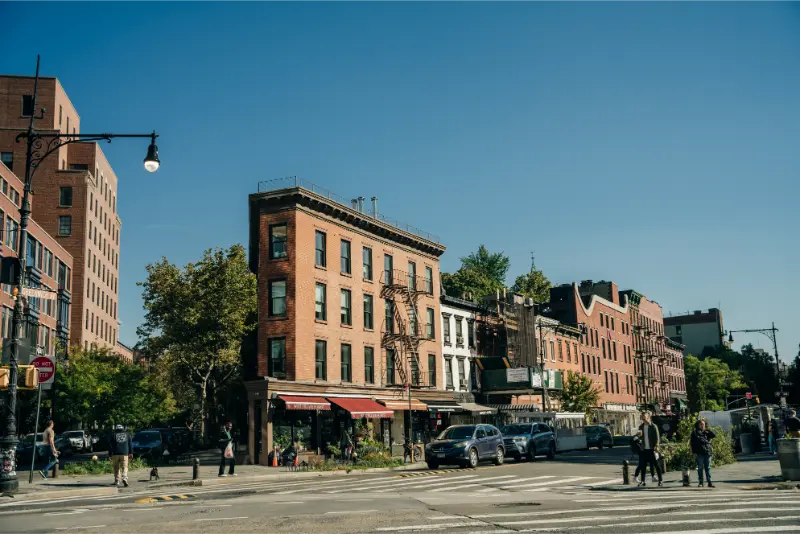
You do not need to draw a strict border while walking. The appeal comes from moving gradually from one atmosphere to another.
Why the street grid changes here
Much of the Village developed before Manhattan’s Commissioners’ Plan of 1811 imposed the regular numbered grid farther north. Older roads remained, which is why streets bend, change names or meet at unexpected angles. It is one of the rare parts of Manhattan where a visitor can genuinely get turned around even with a map.
That irregularity is a feature, not a problem. Leave extra time and use the neighborhood for wandering rather than trying to follow a minute-by-minute route.
1. Washington Square Park
Washington Square Park is the natural starting point. Its marble arch, central fountain, musicians, chess players, students and street performers make it one of Manhattan’s best places for people-watching. The park sits beside New York University and has long been connected to political protest, artistic life and public gathering.
Visit in daylight for the architecture and neighborhood orientation, then return in the early evening if you are nearby. The atmosphere changes as performers, students and local residents fill the square.
2. Washington Mews
Just north of the park, Washington Mews is a short gated lane with small historic buildings that once served as stables and later became studios and university spaces. Public access can vary, so do not assume the gate will always be open. Even from the entrance, it offers a glimpse of a completely different urban scale.
3. MacDougal Street
MacDougal Street is closely associated with the Village’s bohemian and music history. The area around West 3rd Street contains comedy clubs, music venues, cafes and casual restaurants. It is busier and more nightlife-oriented than the residential West Village.
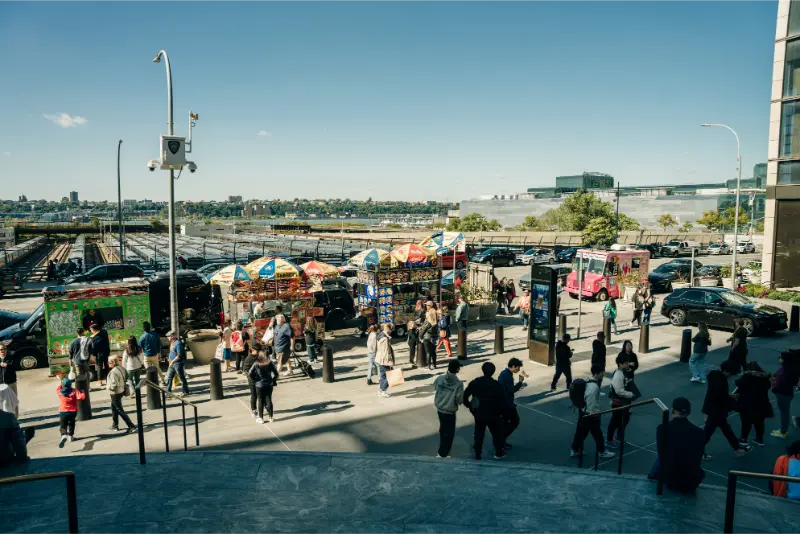
If live music is important, check schedules before your trip rather than simply arriving at a famous venue and hoping for the right show.
4. Comedy Cellar and Village comedy
The Comedy Cellar at 117 MacDougal Street is one of New York’s best-known comedy clubs. Popular sets can sell out, and lineups may change. Book through the club’s official channels if it is a priority and pay attention to minimum purchase, age and arrival rules.
Even if you do not attend, MacDougal Street is worth walking at night because it shows a more animated side of the Village.
5. Blue Note and jazz in the Village
The Blue Note at 131 West 3rd Street is an internationally known jazz venue. The Village has a much broader jazz history, however, and smaller clubs can be just as memorable. Check current calendars for the type of music you want rather than choosing solely by fame.
For an evening plan, have dinner nearby, arrive early enough to find your venue without stress, then stay in the neighborhood rather than scheduling another distant attraction afterward.
6. Bleecker Street
Bleecker Street changes character as it moves west. Near Greenwich Village it is tied to music, nightlife and casual food; farther west it passes attractive residential blocks and boutiques. Walking a long section is an easy way to experience the transition between Greenwich Village and the West Village.
7. Jefferson Market Garden
Near Sixth Avenue, the Gothic former courthouse tower of the Jefferson Market Library is one of the neighborhood’s most recognizable landmarks. Beside it, Jefferson Market Garden creates a small, seasonal green space that feels hidden from the traffic only steps away.
Garden opening is seasonal and weather-dependent, so treat it as a pleasant bonus rather than a guaranteed stop.
8. Christopher Street and Stonewall
Christopher Street is central to the history of LGBTQ+ life in New York. The Stonewall National Monument and Stonewall Inn area commemorate the 1969 uprising and the broader struggle for LGBTQ+ rights. It is an important historic site, not just a nightlife photo stop.
Read the National Park Service interpretation around Christopher Park, take time to understand why the site matters, and remember that the surrounding bars and streets remain active parts of community life.
9. Grove Street and the classic West Village look
Grove Street is one of the best places to appreciate the West Village’s lower scale. Tree-lined blocks, brick facades, stoops and irregular intersections create the kind of streetscape visitors often imagine when they think of old New York.
The corner around Grove and Bedford is heavily photographed. Be considerate of residents and do not block entrances or windows for staged photos.
10. Commerce Street
Commerce Street bends through a particularly picturesque part of the West Village. It is a short detour, but it demonstrates why the neighborhood is best experienced by walking without a strict grid. Nearby Bedford and Barrow Streets continue the same atmosphere.
11. Hudson River Park
Continue west until the streets reach the Hudson River. Hudson River Park gives you open space, piers, bike paths and sunset views that contrast with the dense residential blocks behind you. It is an excellent end to a Village afternoon, especially in spring, summer and early fall.
12. Little Island
North of the traditional West Village edge, Little Island at Pier 55 is a landscaped public park raised above the Hudson. It connects naturally with a northbound walk toward Chelsea and the High Line. Entry policies can change during busy events, so check current information if you are visiting for a performance.
Where to eat in Greenwich Village and the West Village
This is one of Manhattan’s strongest areas for food because the choices range from pizza and bagels to historic Italian restaurants, modern tasting menus and tiny neighborhood spots. A few long-standing references include Joe’s Pizza at 7 Carmine Street and John’s of Bleecker Street at 278 Bleecker Street. Both are famous, so expect lines at peak times.
For a broader citywide strategy, see our where to eat in New York guide.
Best places for coffee and a break
Instead of chasing one viral cafe, use the Village’s density to your advantage. Walk until you find a place that fits your pace. The neighborhood has independent cafes, bakeries and small restaurants on nearly every few blocks. Sitting for 30 minutes is often more memorable than squeezing in another minor landmark.
A two-hour Village walking route
Start at Washington Square Park, walk MacDougal Street and West 3rd Street, continue west along Bleecker Street, visit Christopher Park and the Stonewall area, then wander Grove, Bedford and Commerce Streets before finishing near Hudson River Park.
This route is intentionally loose. Add side streets whenever something looks interesting.
A half-day Greenwich Village itinerary
Begin at Washington Square Park late morning, explore MacDougal and Bleecker Streets, stop for lunch, continue through the West Village and Christopher Street, then finish at the Hudson River around sunset. If you have an evening comedy or jazz reservation, loop back east afterward.
Combine Greenwich Village with SoHo
SoHo is directly south, making the combination ideal. Start early in SoHo for architecture and quieter streets, then walk north through NoHo to Washington Square Park. This creates a natural change from cast-iron commercial buildings to the smaller streets of the Village.
Read our SoHo guide for the first half of that route.
Combine the West Village with Chelsea and the High Line
If you move north along Hudson Street or the river, you can continue into the Meatpacking District, Chelsea Market and the High Line. This is a strong full-day west-side itinerary and avoids unnecessary subway rides.

Best time to visit
Late morning through evening works well. Weekday afternoons are calmer than weekend nights. Spring and fall are ideal for walking; summer evenings are lively; winter can be atmospheric but requires more indoor breaks.
If photography matters, early morning is best for the quietest residential streets. If music, comedy and restaurants are the priority, arrive later and stay into the evening.
Greenwich Village with kids
Families can enjoy the neighborhood if the visit is built around parks and food rather than nightlife. Washington Square Park, Hudson River Park and nearby playgrounds provide easy breaks. The irregular sidewalks and busy weekend streets are manageable with strollers, but allow extra time.
Where to stay
The Village is attractive for travelers who prioritize atmosphere, restaurants and walking. Hotels are limited compared with Midtown and can be expensive, but the location is excellent for Downtown exploration. Nearby Chelsea, SoHo and Union Square often provide more accommodation choices while keeping the Village within walking distance.
Compare areas in our where to stay in New York guide.
Common mistakes to avoid
- Walking only from Washington Square Park to one famous TV location and leaving.
- Trying to follow the street grid as if you were in Midtown.
- Blocking residential stoops for photos.
- Choosing a comedy or jazz venue without checking age and booking rules.
- Eating at the first place beside a major landmark when better options are a few blocks away.
- Visiting only in the afternoon if nightlife and music are part of your interests.
- Overplanning a neighborhood whose main pleasure is wandering.
Frequently asked questions
How long do you need in Greenwich Village?
Two to three hours gives you a good walking introduction. Half a day is better if you include food, the West Village and the riverfront. Add an evening if you want comedy or live music.
Is Greenwich Village worth visiting on a first trip?
Yes. It is one of the best places to balance New York’s major landmarks with neighborhood atmosphere.
Is the West Village the same as Greenwich Village?
The West Village is generally considered the western portion of the broader Greenwich Village area, though local usage can vary.
Can I walk from the Village to Times Square?
Yes, but it is a long urban walk. For a sightseeing day, the subway is usually better unless you specifically want to explore the neighborhoods between them.
Final advice
The Village is at its best when you leave room for detours. Start with Washington Square Park, follow Bleecker Street, step into the smaller West Village blocks and finish near the Hudson. The famous sites matter, but the real reason to come is the feeling of discovering a quieter, older and more human-scale Manhattan between the city’s skyscrapers.
[…] Greenwich Village & West Village Guide […]