

A full week in New York gives you something a short trip cannot: the ability to see the major landmarks and still have time for neighborhoods, Brooklyn, museums and unplanned discoveries. Seven days is long enough to move beyond a checklist, but only if you resist the temptation to fill every hour.
This 7-day New York itinerary is designed for first-time visitors who want a balanced week. It combines Midtown, Central Park, Downtown, Brooklyn and neighborhood days while leaving enough flexibility for weather, shopping, food and personal interests.
How to use this itinerary
The order is flexible. Move museum-heavy days to rainy weather and protect Central Park, the High Line, Brooklyn Bridge and waterfront time for better conditions. If you have fixed Broadway, sports or attraction tickets, rearrange the surrounding day rather than crossing the city repeatedly.
If your trip is shorter, use our 5-day itinerary or 3-day itinerary.
Day 1: Midtown orientation and the New York skyline
Morning: Grand Central, Bryant Park and Fifth Avenue
Begin with Grand Central Terminal, then walk to Bryant Park and the New York Public Library. Continue north toward Rockefeller Center and St. Patrick’s Cathedral. This route helps you understand the Midtown grid and keeps the first morning easy to navigate.

Afternoon: Rockefeller Center and MoMA
If modern art interests you, spend two or three hours at MoMA. Otherwise, explore Fifth Avenue and Midtown more slowly. Avoid trying to add every nearby landmark simply because it appears on the map.
Evening: observation deck and Times Square
Choose one observation deck for late afternoon or sunset. Top of the Rock gives a classic view with the Empire State Building visible; SUMMIT offers a more immersive experience. Compare all major choices in our observation deck guide.
Finish with Times Square after dark. Keep the visit short unless you are eating, shopping or attending a show.
Day 2: Central Park and one major museum
Morning: Central Park
Walk through the Pond, the Mall, Bethesda Terrace, Bow Bridge and the Lake. Continue farther north if weather and energy are good. Our Central Park guide has several route options.
Afternoon: Met or AMNH
Choose the Metropolitan Museum of Art on the east side or the American Museum of Natural History on the west side. Dedicate enough time to enjoy it rather than rushing.
Evening: Upper East Side or Upper West Side
Stay Uptown for dinner. On the west side, walk toward Lincoln Center or Columbus Circle. On the east side, explore Madison Avenue and quieter residential streets.
Day 3: Statue of Liberty, Ellis Island and Lower Manhattan
Morning: early ferry
If Liberty and Ellis Islands are priorities, book an early authorized ferry from The Battery. Allow several hours and do not schedule another timed attraction immediately after your expected return.
Use our Statue of Liberty and Ellis Island guide for ticket and security details.
Afternoon: Financial District
Walk through The Battery, Wall Street and Federal Hall, then visit the 9/11 Memorial and Oculus. If you are skipping the islands, you can spend more time at the 9/11 Museum or One World Observatory.

Evening: Downtown dinner
Stay in Lower Manhattan or move into Tribeca, Chinatown or the Lower East Side for dinner. Do not return to Midtown automatically; use the evening to experience another neighborhood.
Day 4: Brooklyn Bridge, DUMBO, Brooklyn Heights and Williamsburg
Morning: cross the Brooklyn Bridge
Start early from Manhattan and walk toward Brooklyn. Early hours reduce crowd pressure and give you more time on the other side.
Late morning: DUMBO and Brooklyn Bridge Park
Explore the waterfront and cobblestone streets, then walk south through Brooklyn Bridge Park. Continue into Brooklyn Heights and the promenade.
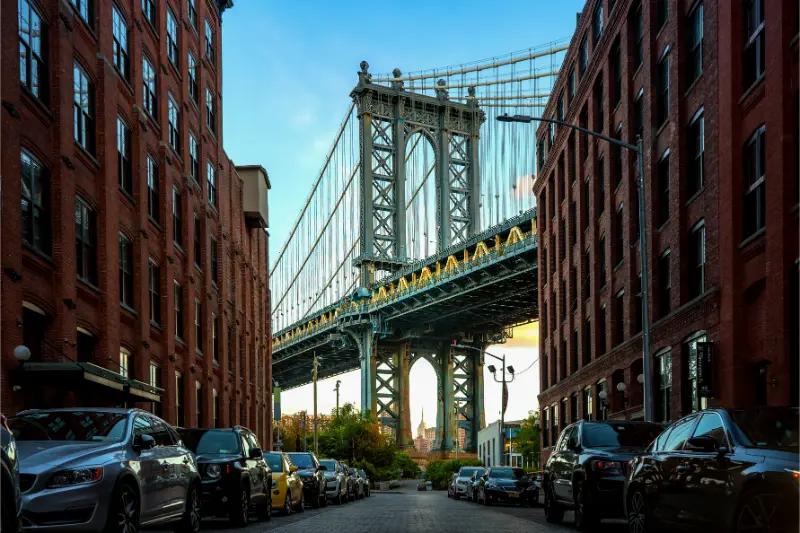
Afternoon and evening: Williamsburg
Take the subway or ferry to Williamsburg. Spend the rest of the day around waterfront parks, shops, cafes and restaurants. If that feels too busy, stay in Brooklyn Heights, Cobble Hill or Carroll Gardens instead.
Our Brooklyn travel guide explains the neighborhood options.
Day 5: High Line, Chelsea, West Village, SoHo and Chinatown
Morning: Hudson Yards and High Line
Begin at Hudson Yards and walk south along the High Line. If Edge is your chosen observation deck, you can visit before or after the walk, but avoid duplicating skyline experiences without a reason.
Lunch: Chelsea
Stop around Chelsea Market or explore local restaurants. Then continue into the Meatpacking District and West Village.
Afternoon: Greenwich Village
Walk through Washington Square Park and allow time for side streets. The Village is a neighborhood to wander, not a sequence of monuments.
Evening: SoHo and Chinatown
Continue south for cast-iron architecture and shopping in SoHo, then finish with dinner in Chinatown or the Lower East Side. If you prefer nightlife, end on the Lower East Side.
Day 6: choose your New York
By the sixth day, your itinerary should become personal. Choose one of the following themes instead of following a generic list.
Option A: Harlem and northern Manhattan
Explore Harlem’s historic streets and cultural landmarks, then continue toward Hamilton Heights, Sugar Hill or the northern end of Central Park. This is an excellent choice for architecture, music and neighborhood history.
Option B: Prospect Park and Brooklyn culture
Spend the day around Prospect Park, the Brooklyn Museum, Brooklyn Botanic Garden and Park Slope. This gives you a very different Brooklyn experience from DUMBO and Williamsburg.
Option C: Queens
Explore a Queens neighborhood such as Astoria, Jackson Heights or Long Island City depending on your interests. Food and cultural diversity are major reasons to go. The Museum of the Moving Image can anchor an Astoria day.
Option D: shopping and design
Use SoHo, Fifth Avenue, department stores, vintage shops or neighborhood boutiques based on your style. A full week gives you enough time to shop without sacrificing your main sightseeing days.
Option E: sports
If a New York team is playing during your visit, a baseball, basketball, hockey or football game can replace a standard sightseeing block. Venue location and schedules vary seasonally, so check current official calendars.
Day 7: favorite neighborhood, second museum and Broadway
Your final day should not be another exhausting checklist. Return to a neighborhood you liked, visit the museum you skipped, do some shopping or explore a part of the city that caught your attention earlier.
Morning: second museum or relaxed neighborhood
Choose MoMA, the Whitney, Guggenheim, Tenement Museum, Transit Museum or another specialist institution from our best New York museums guide.
Afternoon: unplanned New York
Leave at least a few hours unscheduled. This is when you can revisit Central Park, shop, sit in a cafe, take a ferry, photograph a favorite street or follow a recommendation you discovered during the week.
Evening: Broadway or farewell skyline
If you have not yet seen a Broadway show, make it your final-night event. If theatre is not your interest, choose a waterfront sunset, rooftop or nighttime observation deck.
Where to stay for a week
With seven days, you can choose atmosphere over absolute centrality because you have more time. Midtown remains convenient, but Chelsea, Flatiron, the Upper West Side and Lower Manhattan are excellent alternatives. Brooklyn or Queens can work well if the hotel has a direct subway connection to your main sightseeing areas.
Use our hotel neighborhood guide before booking.
How to budget for seven days
A week gives you more opportunities to save because not every day needs an expensive attraction. Alternate paid days with free parks, neighborhoods and waterfronts. Use public transportation, mix restaurant meals with casual food, and choose one or two major splurges that matter to you.
See our New York on a budget guide for practical savings.
Should you buy a sightseeing pass?
A seven-day stay can make a pass more useful, but only if the included attractions match your itinerary. Price the exact things you intend to visit. Do not add attractions merely to “get your money’s worth,” because that turns a flexible week into a race.
How to manage subway travel
Group days by area and use the subway for long north-south movements. OMNY simplifies payment, but always use the same eligible card or device consistently if you want rides counted toward fare-capping rules.
Weekend and late-night service changes are common enough that you should check the MTA before any journey tied to a timed ticket. Our transportation guide explains the basics.
How to adjust for rain
Move museum days around. Grand Central, MoMA, the Met, AMNH, the 9/11 Museum and indoor shopping can absorb bad weather. Protect Brooklyn Bridge, the High Line, Central Park and long waterfront walks when the forecast is better.
How to adjust for families
Seven days is excellent with children because you can alternate intense sightseeing with parks and playgrounds. Keep only one major museum or ticketed attraction per day, use Central Park and Brooklyn Bridge Park as reset spaces, and do not schedule seven late nights.
Our New York with kids guide has stroller, hotel and pacing advice.
What not to overbook
- Multiple observation decks.
- Two huge museums on the same day.
- Long dinners before Broadway.
- Back-to-back attractions on opposite sides of Manhattan.
- Fixed outdoor tickets every day regardless of weather.
- Day trips outside New York before you have actually explored the city.
Frequently asked questions
Is seven days too long in New York?
No. A week lets first-time visitors see the highlights without rushing and gives repeat visitors time for outer-borough neighborhoods and specialist interests.
Should I take a day trip during a one-week stay?
You can, but New York itself easily fills seven days. On a first visit, consider using the extra time for Brooklyn, Queens, Harlem or a slower museum day before leaving the city.
How many Broadway shows should I see?
One is enough for most visitors, but theatre fans can easily build two or more into a week. Matinees make it easier to combine theatre with sightseeing.
How many observation decks?
One is enough for most travelers. Two can make sense if they provide different perspectives, such as Midtown and Downtown.
Final advice
Seven days gives you permission to slow down. Use the first half of the week for the landmarks you have dreamed about, then let the second half become more personal. The best one-week New York itinerary is not the one with the most reservations; it is the one that leaves you with enough time to understand why neighborhoods only a few subway stops apart can feel like entirely different cities.