

Six days in New York gives first-time visitors something shorter itineraries cannot: room to see the icons and still explore neighborhoods beyond the standard Midtown–Central Park–Downtown triangle. You can visit major museums, spend time in Brooklyn, add a borough beyond Manhattan and avoid scheduling every hour from breakfast to bedtime.
This itinerary is designed around geography and pacing. The first four days cover the essential first-trip experiences; Days 5 and 6 add deeper neighborhood time and one flexible choice based on your interests. Use it as a framework rather than a contract. New York rewards travelers who leave space to change plans.
Day 1: Midtown Manhattan
Grand Central Terminal
Begin at Grand Central Terminal. Explore the Main Concourse, celestial ceiling and nearby passages before Midtown becomes fully crowded.
Bryant Park and New York Public Library
Walk west along 42nd Street to the library and Bryant Park. This is a useful free stop and a good place for coffee before continuing north.
Fifth Avenue and Rockefeller Center
Follow Fifth Avenue past landmark stores and St. Patrick’s Cathedral to Rockefeller Center. Depending on your interests, continue toward Central Park or spend more time around the plaza.

Observation deck
Choose Top of the Rock, SUMMIT One Vanderbilt or the Empire State Building for late afternoon. One deck is enough today.
Times Square or Broadway
See Times Square after dark and add Broadway if you have tickets. If you are jet-lagged, skip the show and make the first evening short.
Day 2: Lower Manhattan and the harbor
9/11 Memorial and World Trade Center
Start early around the Memorial and Oculus. If you want to visit the 9/11 Museum, book enough time and reduce the afternoon rather than rushing through it.
Financial District
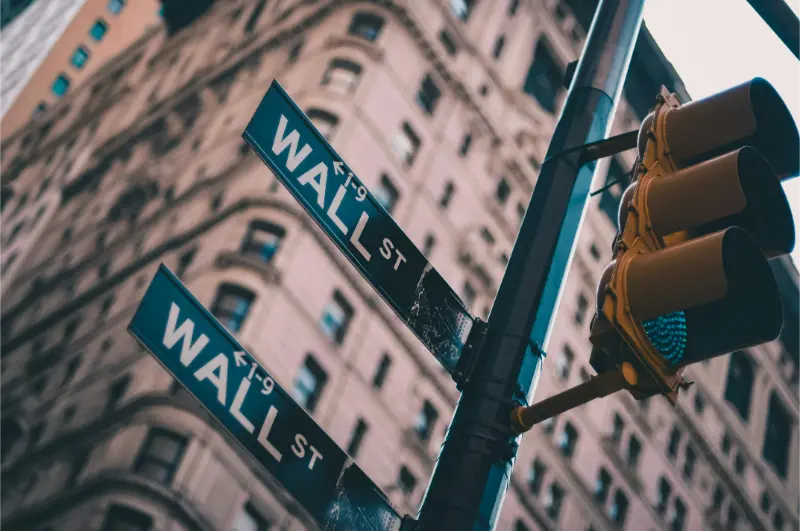
Walk through Wall Street, Trinity Church and the surrounding historic streets using our Lower Manhattan guide.
Statue of Liberty choice
If Liberty and Ellis Island are essential, use a morning ferry reservation and reorganize the day around it. If seeing the statue from the water is enough, keep the day more flexible and use a ferry or Battery Park viewpoint.
One World Observatory
If you skipped a Midtown observation deck, One World Observatory fits geographically. Otherwise, do not add it merely to collect viewpoints.
Day 3: Central Park and one major museum
Central Park morning
Follow a two- to three-hour route through the southern and central sections of Central Park. Bethesda Terrace, Bow Bridge and the Lake are natural anchors.
The Met or American Museum of Natural History
Choose one. The Met pairs with the east side; AMNH pairs with the west. Three or four hours is realistic for a first visit.
Neighborhood evening
Explore the Upper East Side or Upper West Side instead of returning immediately to Times Square. Dinner on Madison, Columbus or Amsterdam Avenue gives the day a more local finish.
Day 4: Brooklyn Bridge, DUMBO and Brooklyn
Walk the Brooklyn Bridge
Start in Lower Manhattan or Brooklyn depending on your preferred direction. Our Brooklyn Bridge guide explains entrances and timing.
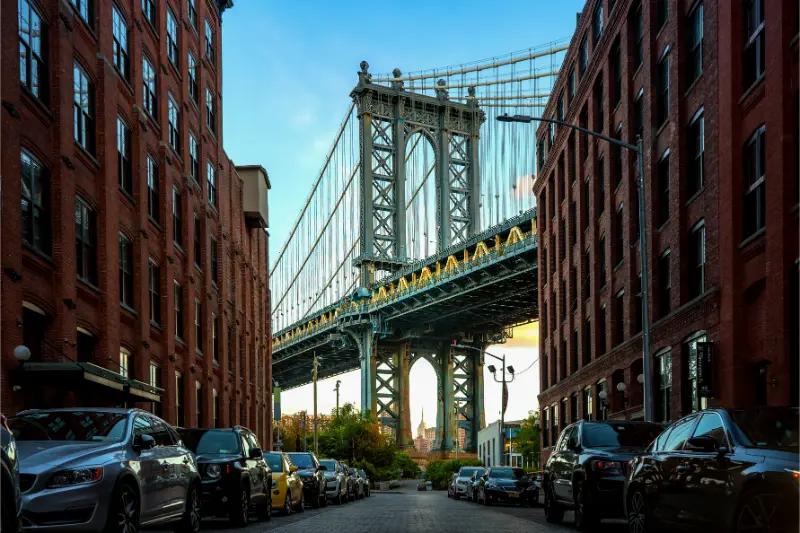
DUMBO and Brooklyn Bridge Park
Spend time on the waterfront, around Washington Street and along the piers. Do not take the classic photo and immediately leave.
Brooklyn Heights
Walk residential streets and the Promenade if energy allows. The contrast with DUMBO is part of the appeal.
Williamsburg evening
Continue to Williamsburg for food, shops, waterfront views or nightlife. If that feels like too much, stay around Brooklyn Heights and make the day slower.
Day 5: Village, Chelsea and the west side
Greenwich Village
Start around Washington Square Park, then explore Greenwich Village and the West Village on foot. Avoid turning the neighborhood into a route between celebrity addresses; its character is in ordinary streets and small businesses.
Meatpacking District and Little Island
Walk toward the Hudson and spend an hour at Little Island. It is free and works well as a break before the High Line.
High Line
Walk north through Chelsea, stopping for architecture, public art and city views. Use our Chelsea and High Line guide to avoid rushing past the neighborhood below.
Hudson Yards
Finish at Vessel and Hudson Yards. Edge can work at sunset if you have not already chosen an observatory.
Day 6: choose your deeper New York
Your final full day should reflect your interests rather than another generic list. Choose one of the following complete options.
Option A: Harlem and Upper Manhattan
Explore Harlem’s historic streets, cultural institutions and food, then continue north toward Fort Tryon Park and The Met Cloisters if medieval art interests you.
This is an excellent choice for travelers who want a very different Manhattan atmosphere from Midtown.
Option B: Bronx day
Choose either the New York Botanical Garden or Bronx Zoo as the main attraction, then finish around Arthur Avenue for food. Do not attempt to cover the entire borough.
Our Bronx guide explains the strongest visitor clusters.
Option C: Queens
Visit Flushing Meadows Corona Park, Museum of the Moving Image in Astoria or a food-focused route in Flushing or Jackson Heights. Queens is strongest when you choose one neighborhood rather than treating it as a single sightseeing district.
Option D: Coney Island in season
In warm weather, spend a relaxed day at the boardwalk, beach, amusement area and aquarium. The long subway ride is easier to justify on a six-day trip than on a weekend visit.
Option E: day trip
If you feel that you have seen enough city streets, use the sixth day for a Hudson Valley town, beach, historic site or another destination from our best day trips from New York guide.
Where to place Broadway
Day 1 is convenient, but any evening can work. On a six-day trip, you have the luxury of choosing the show first and building that day’s geography around the theater rather than forcing Broadway into an exhausted night.
How many observation decks?
One is enough for most travelers; two can make sense if they offer very different views. A strong combination is one Midtown deck and one Downtown or west-side viewpoint.
Use our observation decks comparison before buying multiple tickets.
How many museums?
Two or three major museums across six days is a comfortable pace for many visitors. More is appropriate only if museums are one of the main reasons you travel.
Mix a large institution such as The Met or AMNH with a more focused museum rather than scheduling enormous collections on consecutive days.
What if your trip includes Monday or Tuesday closures?
Check official opening days for every museum and botanical attraction before assigning them to a specific day. The Met Cloisters, for example, is closed Wednesday, while other institutions have different schedules.
Neighborhood days are easy to swap and make useful buffers around closures.
What if it rains?
Use museums, Grand Central, the library, shopping, Broadway and other indoor experiences. Do not move every outdoor attraction into the next dry day and create an impossible schedule.
A six-day trip gives you enough flexibility to redistribute park and bridge time gradually.
Where to stay for six days
Because this itinerary moves across multiple boroughs, subway access matters more than being beside one landmark. Midtown, Chelsea, Flatiron and well-connected parts of Lower Manhattan are practical for first-time visitors.
Brooklyn can also work if you prefer neighborhood atmosphere and do not mind a daily train into Manhattan.
Budget strategy
Six days can become expensive if every day contains two paid attractions. Alternate high-cost and low-cost days. Central Park, the Brooklyn Bridge, High Line, Little Island, neighborhoods, ferries and public spaces can carry entire half-days.
Our budget New York guide helps identify where admission fees are worth prioritizing.
Food strategy
Do not make every meal a famous reservation. Mix one or two destination restaurants with neighborhood pizza, bagels, food halls and spontaneous stops.
On long sightseeing days, choose food near where you already are. Crossing town for lunch can consume an hour you would rather spend walking.
How much walking?
Even with sensible subway use, six consecutive sightseeing days are physically demanding. Build one slower morning or evening into the plan and change shoes if possible.
If your feet are already painful by Day 3, the answer is not to walk faster. Reduce a neighborhood loop, use a bus or take a longer café break.
For families
Children usually need fewer formal attractions and more breaks. Replace one long museum with a ferry or park, and do not schedule late nights every evening.
The six-day format is family-friendly precisely because it lets you spread major sights out.
For repeat visitors
If you have already seen Times Square, Rockefeller Center and the main museums, use Days 1–3 more selectively and give greater weight to Queens, the Bronx, Upper Manhattan, Staten Island or neighborhood food.
Common mistakes on a six-day trip
- Assuming more days means you should book more attractions every day.
- Visiting several observation decks with nearly identical goals.
- Saving all outer-borough exploration for one overloaded final day.
- Ignoring museum closure days.
- Walking at maximum pace for six consecutive days with no recovery time.
Final advice
The greatest advantage of six days is not the number of attractions you can add. It is the ability to slow down after seeing the essentials.
Use the first half of the trip to understand New York’s landmarks, then let the second half become more personal. Choose a neighborhood because you like its streets, a museum because the collection interests you or a ferry because you want an hour near the water. That shift from “seeing New York” to simply spending time in New York is what makes a six-day trip feel substantially richer than a short city break.