

Chelsea is one of the easiest New York neighborhoods to misunderstand because there is no single Chelsea experience. The same half day can include contemporary art galleries, the High Line, a food market, luxury development at Hudson Yards, old industrial blocks and a waterfront sunset. The neighborhood works best when you use the High Line as a spine rather than treating it as the entire destination.
This Chelsea and High Line guide shows how to build a smart walking route, where to enter and leave the elevated park, which nearby stops deserve time and how to avoid the biggest mistake: walking the High Line end to end without exploring the streets below.
Where is Chelsea?
Chelsea occupies the west side of Manhattan roughly from 14th Street into the upper 20s, between Sixth Avenue and the Hudson River. Boundaries are flexible, and visitors often blend Chelsea with the Meatpacking District to the south and Hudson Yards to the north.
The A, C, E and L trains at 14th Street, the 1 at 18th/23rd Streets and the 7 at Hudson Yards are useful. Once you arrive, walking is usually the best transport.
1. Start at the Whitney Museum
A strong south-to-north route begins in the Meatpacking District at the Whitney Museum of American Art, 99 Gansevoort Street. The Whitney focuses on American art, especially modern and contemporary work, and its terraces also provide excellent city views.
In 2026 adult general admission is listed at $30, visitors 25 and under receive free admission, and the museum offers Free Friday Nights and Free Second Sundays with advance capacity controls. Always verify current details on the official Whitney website.
If you are not visiting the galleries, you can still start here because the southern entrance to the High Line is nearby.
2. Enter the High Line at Gansevoort Street
The High Line transformed an elevated freight rail line into one of New York’s most distinctive parks. It runs north through Chelsea toward Hudson Yards. The experience changes constantly: planting, art installations, architecture and city views compete for attention.
Do not rush. The High Line is narrow in places and popular year-round. Walk at the flow of pedestrian traffic, step aside before taking photographs and remember that cyclists are not allowed on the park itself.
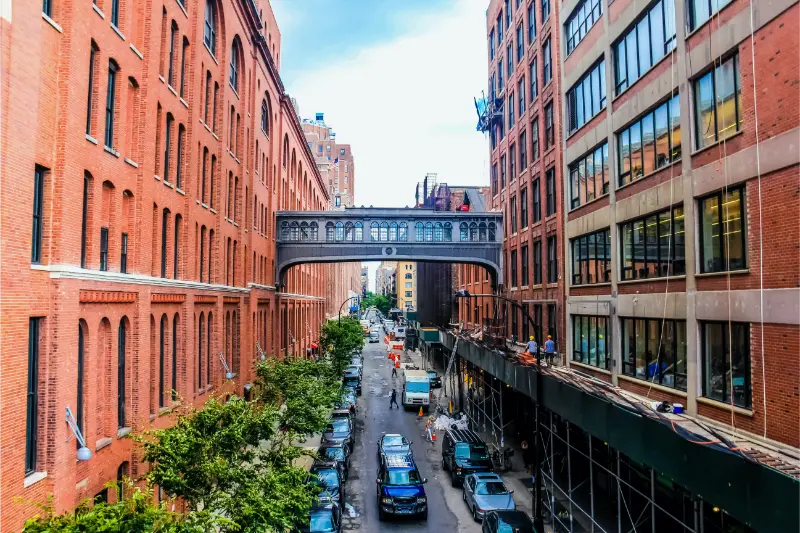
3. Look down as much as you look out
One of the pleasures of the High Line is seeing ordinary Manhattan streets from an unusual angle. Look at delivery activity, rooftops, old loading bays and the way new towers meet older brick buildings. This is more interesting than trying to photograph every piece of public art.
Benches and overlooks offer short pauses. Use them. A slower pace makes the park feel like a landscape rather than a pedestrian conveyor belt.
4. Chelsea Market
Chelsea Market occupies a former industrial complex around Ninth Avenue and 15th Street. It is a convenient indoor stop for food, especially in bad weather, but it can become very crowded at lunch.
If you want to eat there, go slightly before or after peak lunch. Browse first, compare options and avoid joining a long line just because it is the most visible one. For a quieter meal, leave the market and explore side streets farther north.
5. Little Island
Just west of the Meatpacking District, Little Island is a landscaped public park built on sculptural concrete supports over the Hudson River. Its paths rise and fall, creating small viewpoints toward the skyline and river.
Programming and crowd-control procedures can change seasonally. It works especially well as an early-morning or sunset extension before or after the High Line.
6. Chelsea’s gallery district
Contemporary art galleries are one of the neighborhood’s defining experiences, especially in the low 20s between Tenth and Eleventh Avenues. Unlike major museums, many commercial galleries are free to enter.
Exhibitions change constantly, so static “best gallery” lists become outdated quickly. The better strategy is to choose a cluster of streets, check a current gallery map or opening calendar, then walk into spaces that interest you. Thursday evenings can be lively when openings are scheduled.
7. Leave the High Line and explore street level
Many visitors stay elevated for the entire route and miss Chelsea itself. Exit around 20th or 23rd Street and walk one or two blocks west. You will find galleries, old warehouses, residential buildings and much less crowded sidewalks.
This detour also gives you a break from High Line congestion on sunny weekends.
8. Hudson River Park
The Hudson River waterfront offers a completely different kind of space from the High Line. Piers, lawns, bike paths and river views make it ideal for a break. If you have children, the waterfront can be more enjoyable than another hour of galleries.
At sunset, the west-facing light is excellent. Check seasonal pier access and events if a specific facility matters to you.
9. Continue toward Hudson Yards
The northern end of the High Line leads naturally into Hudson Yards, one of Manhattan’s biggest recent development projects. The neighborhood feels intentionally modern and contrasts sharply with Chelsea’s brick warehouses.
You can see the Vessel exterior, shop or continue to Edge if you have a reservation. The area is convenient, but it can feel less intimate than the streets you just walked. Treat it as a finale rather than the only reason to visit the west side.
10. Edge and skyline views
Edge is an outdoor observation deck projecting from 30 Hudson Yards. It delivers a dramatic open-air skyline experience, but weather matters more here than at fully indoor observatories. If the forecast is windy or clouded, reconsider an expensive timed slot.
For comparisons with Top of the Rock, SUMMIT, One World and Empire State Building, read our best observation decks guide.
11. The High Line at different times of day
Morning is calmer and better for photography. Midday has the strongest crowds, especially weekends and holidays. Late afternoon brings attractive light but can also become busy around sunset. After dark, selected areas can feel atmospheric, though park operating hours vary seasonally.
Check the official High Line schedule shortly before your trip because closing times change during the year.
12. Chelsea architecture beyond the park
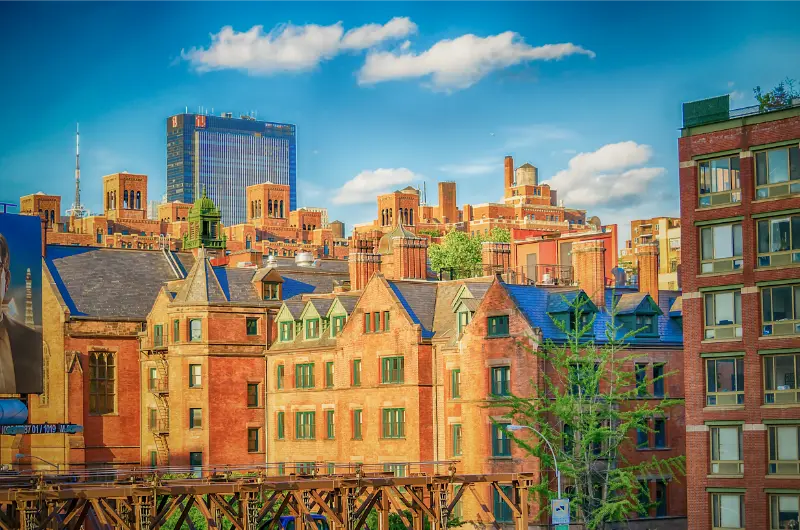
Look for the mix of old warehouses, former industrial structures, churches and luxury residential towers. The neighborhood’s identity is built from contrast. Around 20th and 21st Streets, side streets can feel surprisingly residential only a few blocks from the High Line crowds.
If architecture interests you, spend fifteen minutes walking without a destination. Chelsea is one of those neighborhoods where a short detour often becomes the best part of the visit.
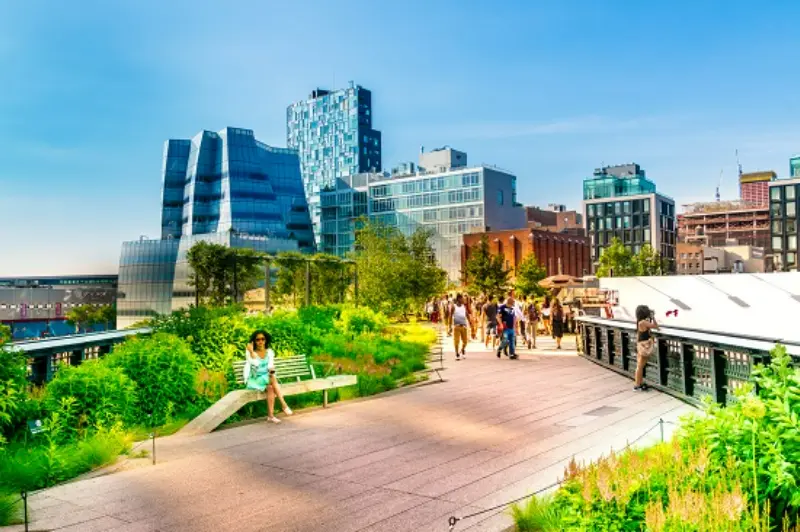
A two-hour Chelsea route
If you have limited time, begin at Gansevoort Street, walk the High Line north to roughly 23rd Street, exit to see a few galleries, then return to the park or subway. This gives you the park and neighborhood without pretending you can absorb everything.
A half-day Chelsea itinerary
Start at the Whitney or Little Island, have an early food stop at Chelsea Market, walk the High Line, exit for gallery blocks in the low 20s, then continue north to Hudson Yards. Allow four to five hours without a full museum visit.
If you enter the Whitney for two or three hours, this easily becomes a full-day west-side plan.
Chelsea with children
The High Line is stroller-friendly at accessible entrances, but elevators can occasionally be out of service. Check access points in advance if stairs are difficult. Little Island and the Hudson waterfront provide more room for children to move than the narrow High Line path.
Food markets are useful for families with different tastes, but peak crowds can be stressful. Eating early helps.
Where to eat
Chelsea Market is the obvious choice, but not the only one. Ninth and Tenth Avenues have restaurants in many price ranges. If you want a sit-down meal, reserve on busy evenings rather than hoping a popular place has space.
See our New York food guide for broader ideas.
How Chelsea fits into a first trip
Chelsea combines well with Greenwich Village, SoHo or Midtown West. It is less efficient to pair it with the Upper East Side or deep Brooklyn on the same half day. Keep your route geographically coherent and you will spend far less time underground.
Our Manhattan travel guide helps you group neighborhoods by location.
Common mistakes to avoid
- Walking the High Line without ever exiting into Chelsea.
- Visiting Chelsea Market at the busiest lunch hour and assuming it is always that stressful.
- Trying to photograph from the middle of a narrow High Line path.
- Scheduling Edge without checking visibility and wind.
- Assuming every gallery is open every day.
- Skipping the Hudson River waterfront.
- Combining Chelsea with too many distant neighborhoods.
Frequently asked questions
How long does it take to walk the High Line?
You can physically walk it quickly, but one to two hours is more realistic if you stop for views, art and crowds. Add more time for Chelsea Market or galleries.
Is the High Line free?
Yes. The park itself is free. Special programming may have separate arrangements.
Is Chelsea worth visiting if I do not like art?
Yes. The High Line, food, waterfront and architecture make the neighborhood worthwhile even without galleries.
Which direction should I walk the High Line?
South to north works well if you want to finish at Hudson Yards. North to south is excellent if you want to end in the Meatpacking District, Greenwich Village or the Hudson waterfront at sunset.
Final advice
Use the High Line as a route, not a destination box to tick. The park becomes much more interesting when you connect it to the galleries, food, river and changing architecture of Chelsea. Step down to street level, look at what survived beneath the new towers and give the west side enough time to reveal its layers.