

Central Park is more than a patch of green in the middle of Manhattan. It is a landscape of lakes, bridges, lawns, woods, playgrounds, arches, monuments and carefully designed viewpoints that can feel completely different from one section to another. For first-time visitors, the challenge is not deciding whether to go; it is deciding which part of Central Park to see and how much time to give it.
This Central Park guide explains the best places to see, practical walking routes, seasonal differences, family ideas and the most common mistakes. According to the Central Park Conservancy, the park is open daily from 6:00 a.m. to 1:00 a.m.. Specific attractions and facilities may have their own hours, so check official information for anything you plan to enter.
How much time do you need in Central Park?
Allow at least two to three hours for a first visit to the southern and central highlights. A half day is better if you want to walk slowly, stop for photos and combine the park with a museum. A full day makes sense for repeat visitors, families, cyclists, picnics or anyone who wants to explore the quieter northern half.
Central Park stretches from 59th Street to 110th Street. Trying to “see the whole park” on a short first visit can turn a relaxing experience into a long march. Choose a route instead.
Best Central Park route for first-time visitors
A practical first route begins around the southeast or southwest corner near 59th Street. Walk toward The Pond and Gapstow Bridge, continue toward the Mall and Literary Walk, then reach Bethesda Terrace and Bethesda Fountain. From there, explore the Lake area and walk to Bow Bridge. Depending on your energy, continue north toward Belvedere Castle or exit toward the Upper West Side or Upper East Side.
This route includes many of the park’s most recognizable landscapes without forcing you to cover the entire length. It also connects naturally with the Metropolitan Museum of Art on the east side or the American Museum of Natural History on the west side.
1. The Pond and Gapstow Bridge
Near the southeast corner, the Pond gives you one of the quickest transformations from Midtown streets to park scenery. Gapstow Bridge frames a classic contrast between water, trees and nearby skyscrapers. It is particularly atmospheric early in the morning when the surrounding paths are quieter.
2. The Mall and Literary Walk
The Mall is a broad, tree-lined promenade that feels almost ceremonial. It leads toward Bethesda Terrace and is one of the park’s easiest places for a relaxed stroll. Street performers often add to the atmosphere, but remember that Central Park is a public space rather than an outdoor theme park; leave room for runners, cyclists and local residents using the paths.
3. Bethesda Terrace and Fountain
Bethesda Terrace is one of Central Park’s architectural highlights. The arcade beneath the terrace is decorated with distinctive tiles, and the upper level opens toward the Lake and Bethesda Fountain. This is a natural place to pause, especially on a longer walking route.
4. Bow Bridge and the Lake
Bow Bridge is one of the park’s most photographed bridges, but the surrounding paths are as important as the bridge itself. Walk along the Lake, look back toward the skyline and explore the Ramble if you want a more wooded atmosphere. The paths in the Ramble are intentionally irregular, so use a map if you are on a tight schedule.
5. Belvedere Castle and Turtle Pond
Belvedere Castle offers an elevated viewpoint over parts of the park and is a good target if you are continuing north from the Lake. Turtle Pond and the surrounding landscape create another transition between open views and more natural sections.
6. Sheep Meadow
Sheep Meadow is a large open lawn popular for relaxing, sunbathing and picnics when conditions allow. It is less about a landmark and more about the experience of sitting in the park with the skyline beyond the trees. Seasonal or maintenance closures can occur, so do not build an entire visit around access to one lawn.
7. Strawberry Fields
Strawberry Fields, on the west side near 72nd Street, is a living memorial to John Lennon. The Imagine mosaic is the focal point and can become crowded. Keep the visit respectful and combine it with a walk through the Upper West Side rather than making it an isolated stop.
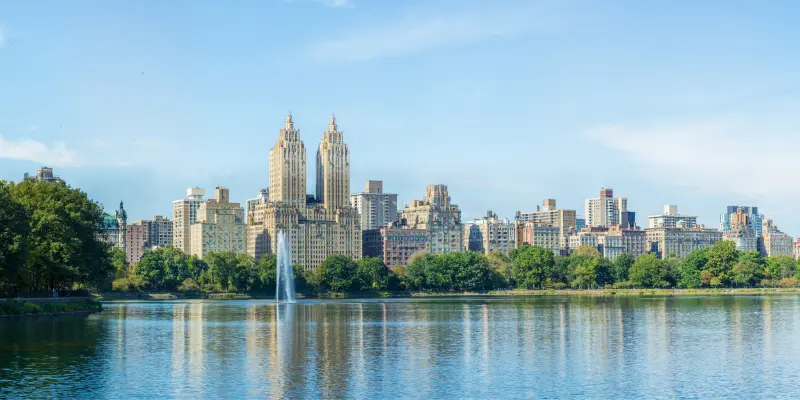
8. Jacqueline Kennedy Onassis Reservoir
The reservoir is one of the best places for longer skyline views and a more open feeling. The loop around it is popular with runners and walkers. If you have already seen the southern landmarks, the reservoir is an excellent way to experience a different side of the park.
9. The Conservatory Garden
On the east side near the northern part of the park, the Conservatory Garden feels formal and calm. It is often missed by first-time visitors because it is far from the southern entrances, which is exactly why repeat visitors appreciate it. Pair it with Harlem, Museum Mile or the northern park rather than crossing the city only for a short look.
10. The North Woods and Harlem Meer
The northern park feels much less like the Central Park shown in films. Wooded paths, rocky landscapes and water create a quieter experience. If you have already visited Bethesda Terrace and Bow Bridge on a previous trip, spend your next park visit here.
Central Park with children
Families should think in terms of play and breaks rather than landmark completion. The park has playgrounds, open lawns and seasonal activities, and it is an excellent place to reset after a museum. A strong family day could combine the American Museum of Natural History with a playground and a simple park walk.
Do not underestimate the distances with a stroller or young children. Subway elevators are not available at every station, and paths inside the park can add significant walking. See our New York with kids guide for family pacing and transport advice.
Central Park plus the Met
The Metropolitan Museum of Art sits on the east side of the park at Fifth Avenue. This is one of the most natural combinations in New York: spend the morning outside, enter the museum for several focused hours, then continue on the Upper East Side. Do not try to see every gallery in the Met. Choose departments that interest you and accept that the museum is too large for a comprehensive first visit.

Central Park plus the American Museum of Natural History
On the west side, the American Museum of Natural History makes an equally convenient pairing. As of September 2026, the museum lists daily hours of 10:00 a.m. to 5:30 p.m., though temporary hall closures can occur. Check the official museum website shortly before visiting.
When to visit Central Park
Spring
Spring brings blossoms, fresh leaves and comfortable walking weather. Weekends can be busy, especially on beautiful days, so mornings are valuable if you want quieter paths.
Summer
Summer offers long daylight hours, picnics and outdoor events. Heat and humidity can make midday walking tiring. Bring water, use shaded routes and avoid planning the park as a relentless multi-hour walk in extreme heat.
Fall
Autumn is one of Central Park’s most photogenic seasons. Foliage timing varies from year to year, so do not rely on an exact calendar date months in advance.
Winter
Bare trees open new skyline views, and snow can transform the park. Paths can be wet, icy or slushy after storms. Dress for wind and cold rather than assuming Manhattan buildings will protect you once you enter open areas.
Best time of day
Early morning is excellent for a quieter atmosphere and photography. Late afternoon gives warmer light and can connect naturally with an evening in Midtown. Midday is perfectly workable, especially in cooler seasons, but popular areas such as Bethesda Terrace and Bow Bridge will be busier.
Should you rent a bike?
Cycling is useful if your goal is to cover more of the park, but it is not the best way to reach every pedestrian landmark. Bike routes have rules and directionality, and you cannot simply ride on every walking path. For a first visit focused on the southern highlights, walking is often easier. For a broader park overview, a bike can make sense.
Horse carriages, pedicabs and tours
Visitors will encounter multiple commercial ways to tour Central Park. If you choose one, confirm the price, duration and route before starting. Do not assume a quoted price includes everything, and avoid making a decision under pressure. A self-guided walk is completely sufficient for most visitors.
Where to eat around Central Park
You can build a picnic from a deli or market and eat in an appropriate open area, or leave the park for lunch on the Upper West Side or Upper East Side. Food inside and immediately beside major tourist areas can be more expensive. If your museum day is already long, a simple nearby meal often works better than crossing Manhattan for a famous restaurant.
Practical tips
- Download or save a park map before entering.
- Use numbered streets on the east and west sides to understand where you are.
- Wear shoes suitable for several miles of walking.
- Carry water in warm weather.
- Do not feed wildlife.
- Check seasonal facility information if a specific attraction matters to you.
- Remember that bicycles and pedestrians use different routes in some areas.
- Keep valuables with you when sitting on lawns or benches.
Common mistakes
The biggest mistake is treating Central Park as a single landmark that can be “done” in 30 minutes. The second is trying to walk from 59th Street to 110th Street while also visiting every major feature. A third is planning a massive museum immediately after exhausting yourself in the park.
Choose a realistic section and connect it to the rest of your day. If you are staying in Midtown, use the park as a bridge into Uptown. If you are based on the Upper West Side, consider visiting early in the morning before tourist traffic increases.
Frequently asked questions
Is Central Park free?
Yes, entry to the park itself is free. Individual attractions, rentals, tours or concessions may charge fees.
Is Central Park safe?
It is heavily used by residents and visitors, but normal city awareness still applies. Stay on appropriate routes, especially late at night, and follow current local guidance.
Can I see Central Park in two hours?
Yes, if you focus on the southern and central highlights rather than trying to cross the entire park.
Which side is better, east or west?
Neither is universally better. The east side pairs with the Met and Museum Mile; the west side pairs with the American Museum of Natural History and the Upper West Side.
Final advice
Central Park works best when you leave some freedom in the route. Pick a handful of landmarks, but allow yourself to stop when a bridge, lawn or skyline view catches your attention. In a city famous for moving quickly, the park is one of the best places to deliberately move more slowly.
[…] Central Park guide […]
[…] Central Park […]
[…] Central Park […]
[…] Central Park Guide: Best Things to See, Walking Routes and Practical Tips […]