

Washington Heights and Inwood occupy the northern end of Manhattan and feel far removed from the Midtown image many visitors associate with New York. Hills, river views, large parks, Dominican businesses, historic sites and the medieval art of The Met Cloisters give the area a distinctive identity. This is still Manhattan, but the scale, topography and cultural rhythm can feel like a different city.
The neighborhoods work best for travelers willing to devote at least half a day rather than squeezing in one distant attraction. The Cloisters is the obvious anchor, yet Fort Tryon Park, Inwood Hill Park, Dyckman Farmhouse and the commercial streets around Broadway and 181st Street make the trip much richer.
The best visit is not built from a minute-by-minute checklist. Choose a few anchors and give yourself enough space to notice what happens between them. If this is your first trip, our New York travel guide for first-time visitors helps you place the neighborhood within a larger itinerary.
Why visit Washington Heights and Inwood?
The neighborhoods work best for travelers willing to devote at least half a day rather than squeezing in one distant attraction. The Cloisters is the obvious anchor, yet Fort Tryon Park, Inwood Hill Park, Dyckman Farmhouse and the commercial streets around Broadway and 181st Street make the trip much richer. The neighborhood is most rewarding when you approach it for its own character rather than as a place to race through between famous Manhattan landmarks.
Best things to see and do
Fort Tryon Park
This landscaped park sits high above the Hudson River and is the setting for The Met Cloisters. Terraces, paths and gardens create a calm approach to the museum. Give yourself time to walk the park rather than treating the subway-to-museum journey as a commute.
The Met Cloisters
The Cloisters brings medieval European art, architecture and gardens together in an unusually atmospheric museum. Its location is part of the experience. If you already plan to visit the main Metropolitan Museum of Art, compare ticket rules and opening days before deciding how to organize both visits.

Dominican Washington Heights
Washington Heights is strongly associated with New York’s Dominican community, visible in restaurants, bakeries, music, street life and businesses. Visitors should experience this as a living neighborhood rather than a themed attraction. A meal along Broadway or around 181st Street can be as important to the day as a museum stop.
Highbridge Park and the High Bridge
Highbridge Park runs along the eastern side of the neighborhood, and the High Bridge connects Manhattan with the Bronx over the Harlem River. The bridge is a pedestrian route with an unusual view of the city’s geography. Check current access conditions if it is central to your plan.
Inwood Hill Park
At Manhattan’s northern tip, Inwood Hill Park preserves forested slopes and salt-marsh habitat that feel surprisingly wild by New York standards. Paths can be uneven and hilly, so this is more than a simple paved promenade. It is especially rewarding for visitors who like nature and want to see a side of Manhattan few first-time itineraries include.
Dyckman Farmhouse Museum
The Dyckman Farmhouse is a rare surviving farmhouse in Manhattan and helps explain how different northern Manhattan once looked. It is a small historical site, so check current opening hours before making it the anchor of your day.
Hudson River and Palisades views
Western viewpoints open toward the Hudson and the New Jersey Palisades, creating a landscape that feels almost suburban compared with Midtown. Clear late-afternoon light can be beautiful, especially in fall.
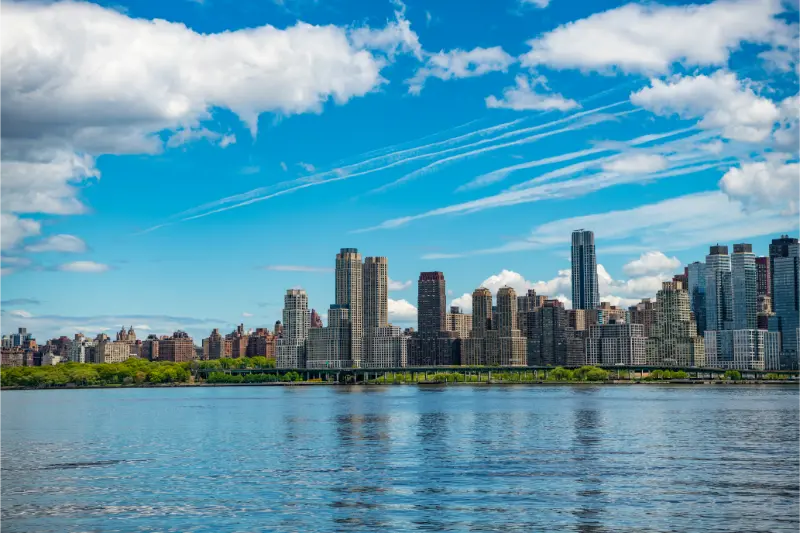
A different sense of Manhattan
The biggest reason to visit may be conceptual: these neighborhoods expand your understanding of what Manhattan is. Skyscrapers are not the whole island. Residential hills, immigrant communities, forests and river cliffs are part of the same borough.
A practical half-day walking route
For a first visit, this route keeps the day geographically sensible and leaves room for food, photographs and small detours:
- Take the A train to 190th Street and begin in Fort Tryon Park.
- Visit The Met Cloisters and allow time for the gardens and terraces when open.
- Walk or take transit south toward 181st Street for a Dominican lunch.
- Continue north later to Dyckman Farmhouse or Inwood Hill Park if energy allows.
- Return by the A or 1 train, choosing the line based on where you end the walk.
Do not treat the route as a race. New York blocks can look short on a map while traffic lights, subway stairs, queues and spontaneous stops add time. If one place captures your attention, stay longer and drop the least important stop. A neighborhood day is successful when it feels coherent, not when every saved pin is checked off.
How long do you need?
Three to five hours is a realistic first visit for most travelers, depending on whether you include a museum, long meal or park. If your plan contains a paid attraction, allow its real visit time plus at least thirty minutes of buffer. If you are mostly walking, two or three focused hours can still give you a strong sense of Washington Heights and Inwood.
One of the easiest mistakes in New York is pairing neighborhoods because they look close on a schematic subway map rather than because they connect well on the ground. Before adding a second area, check the actual door-to-door travel time and decide whether the transfer improves the day.
Where to eat
Dominican food is central to the Washington Heights experience, with roast chicken, mofongo, rice dishes, pastries and juices widely available. Rather than chasing only one famous restaurant, look at busy local spots near Broadway and 181st Street. Inwood also has Dominican, Latin American and newer cafés. Leave enough time for a real meal; this is a neighborhood where food contributes to understanding the place.
For visitors who want a broader strategy, our where to eat in New York guide explains how to think about neighborhoods, iconic foods, reservations and avoiding tourist traps. In neighborhood-focused days, the best meal is often the one that does not force you to leave the area and come back.
Best time to visit
Spring and fall are ideal because parks and views are major parts of the visit. Summer is lively but hills can make hot-weather walking tiring. Winter has clear views and fewer visitors at outdoor sites, though gardens and foliage are less dramatic. The Cloisters can be atmospheric in any season.

Light also matters. Residential streets and waterfronts usually photograph better in the morning or late afternoon than under harsh midday sun. If your itinerary is flexible, use weather and sunset time to decide which day should be outdoors and keep museums as a backup for rain.
How to get there and get around
The A train is fast for Washington Heights and Fort Tryon Park, while the 1 train serves Broadway and continues to Inwood. Elevators and station layouts vary, so travelers who need step-free access should verify the specific station before departure. Distances on the map can be deceptive because the terrain is hilly.
Once you arrive, walking is usually the best way to understand the neighborhood. Use the subway for the long jump from your hotel, then avoid repeatedly descending underground for one- or two-stop trips that are more enjoyable on foot. Our New York transportation guide explains subway, bus, ferry and OMNY basics.
Should you stay here?
Most first-time visitors will find Midtown or Downtown more convenient, but Washington Heights can appeal to travelers who want a residential base, larger parks and a strong local food culture. Commutes to Lower Manhattan are longer, so the choice makes more sense for repeat visitors or longer stays.
When comparing hotels, look at the exact walking route to the nearest useful subway station, not only the neighborhood name. Two hotels in the same district can create very different daily travel times. Our where to stay in New York guide provides a broader neighborhood comparison.
Who will enjoy this neighborhood most?
Washington Heights and Inwood is a particularly good choice for travelers who enjoy walking, urban photography, food and the small details that reveal how New Yorkers use their city. It also suits repeat visitors who have already covered the major Midtown and Lower Manhattan landmarks and want a more local day. Travelers with only one or two days in New York should first decide whether the neighborhood supports their main priorities; a short trip has less room for detours.
Common mistakes to avoid
- Visiting The Cloisters and immediately taking the subway back downtown.
- Underestimating hills and walking difficulty.
- Treating Dominican culture as a photo opportunity instead of supporting local businesses respectfully.
- Trying to cover Fort Tryon, Inwood Hill Park and multiple museums in a rushed morning.
- Assuming all northern Manhattan subway stations are step-free.
Useful connections with other Dreaming New York guides
These articles make it easier to continue planning without repeating the same parts of the city:
Practical tips before you go
Wear shoes you can comfortably use for several miles, even if your map suggests a short day. Carry a small power bank because maps, transit directions and photography consume battery quickly. Keep a contactless payment method accessible for transit, and avoid standing at the top or bottom of subway stairs while checking directions.
If you are visiting a museum, cultural space or seasonal venue, check its official page the evening before. Opening days, timed-entry rules and temporary closures can change. Restaurants and small shops change even faster, so treat older social-media lists as inspiration rather than guarantees.
For current destination information, see the NYC Tourism Washington Heights & Inwood guide. Official and local sources are especially useful for temporary events, construction and seasonal access that a static travel article cannot predict.
Is it worth adding to a first New York trip?
Yes, if the neighborhood matches the kind of New York you want to experience. Washington Heights and Inwood adds texture that the famous observation decks and Midtown landmarks cannot provide. The key is not to sacrifice a personal must-see simply because a neighborhood is fashionable. Add it when it creates a better day geographically or gives you a type of experience—food, architecture, parks, art or local street life—that is otherwise missing from your itinerary.
For many travelers, the most memorable New York moments happen between scheduled attractions: turning onto a beautiful residential block, finding a small bakery, seeing the skyline from an unexpected angle or sitting in a park long enough to watch the neighborhood change around you. Build enough empty space into the plan for those moments to happen.