

Harlem is one of the most important neighborhoods to understand if you want to experience New York beyond the postcard version of Midtown. Its streets carry the history of the Harlem Renaissance, jazz, gospel, civil rights, Black entrepreneurship, architecture, food and performance, but Harlem is not a museum frozen in the past. It is a living part of Manhattan where historic institutions sit beside new restaurants, renovated brownstones, community gardens, churches and busy commercial avenues.
This Harlem travel guide is designed for visitors who want to explore respectfully and independently. It explains what to see, how to organize a half day or full day, where the neighborhood changes character, how to combine Harlem with northern Central Park and what to know about the Apollo Theater in 2026.
Where is Harlem?
Harlem occupies a broad area of Upper Manhattan. Boundaries vary depending on historical and local definitions, but for most visitors the easiest orientation points are 125th Street, Lenox Avenue/Malcolm X Boulevard, Frederick Douglass Boulevard and St. Nicholas Avenue. East Harlem, also known as El Barrio, has its own strong Puerto Rican and Latin American identity and deserves separate time if your schedule allows.
Harlem is easy to reach by subway. The A, B, C, D, 2 and 3 lines are particularly useful depending on your exact destination. From Midtown, the trip is much shorter than many first-time visitors imagine, which makes Harlem easy to include even on a relatively short stay.
Why Harlem matters
Harlem became a major center of Black cultural life during the Great Migration and gained international importance during the Harlem Renaissance of the 1920s and 1930s. Writers, musicians, artists and intellectuals transformed American culture from this neighborhood. Names such as Langston Hughes, Duke Ellington, Zora Neale Hurston, Louis Armstrong, Billie Holiday and countless others are connected to Harlem’s cultural story.
That history remains visible, but the best way to visit is not to reduce Harlem to a single musical genre or era. Walk its residential blocks, look at the architecture, spend money at local businesses, visit cultural institutions and remember that many churches and community spaces are primarily for residents rather than tourist attractions.
1. Start on 125th Street
West 125th Street is one of Harlem’s main commercial arteries and the easiest first orientation point. It is energetic rather than picturesque: buses, shops, street vendors, restaurants and cultural institutions all compete for attention. Begin near the Apollo and then move away from the avenue into the quieter residential blocks.

If you arrive by the A, B, C or D train at 125th Street, you are only a short walk from the center of this part of Harlem. The 2 and 3 trains on Lenox Avenue are equally useful if you plan to explore farther east.
2. The Apollo Theater
The Apollo Theater is Harlem’s best-known performance venue and one of the most significant stages in American music history. Ella Fitzgerald, James Brown, Stevie Wonder and many other major performers are part of its story. In 2026, however, visitors should know about an important temporary change: the Apollo’s historic theater at 253 West 125th Street is undergoing renovation and is expected to reopen later in 2026.
The Apollo continues programming at The Apollo Stages at The Victoria, 233 West 125th Street. The organization also offers Apollo Experience tours on selected dates by advance reservation. Because renovation schedules and tour availability can change, check the official Apollo website before planning your day.
Even when you cannot attend a performance, the Apollo remains an essential reference point for understanding Harlem’s cultural influence. Do not simply photograph the sign and leave; use it as the beginning of a wider neighborhood walk.
3. Walk the brownstone streets
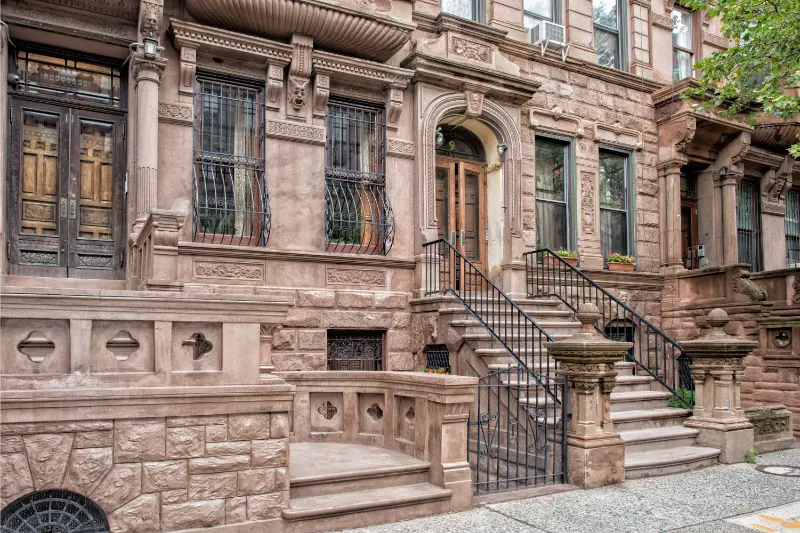
One of Harlem’s pleasures is architectural. Move south or west from 125th Street and explore streets lined with brownstones, townhouses and historic apartment buildings. The blocks around Mount Morris Park Historic District, Strivers’ Row and Hamilton Heights show very different expressions of Upper Manhattan architecture.
Strivers’ Row, on West 138th and 139th Streets between Adam Clayton Powell Jr. Boulevard and Frederick Douglass Boulevard, is especially memorable. The rows of elegant late-19th-century homes were designed by prominent architects and are still private residences, so admire them from the public sidewalk without treating doorsteps as photo sets.
4. Marcus Garvey Park
Marcus Garvey Park offers a natural pause between sightseeing stops. The park sits between East 120th and East 124th Streets and is surrounded by some of Harlem’s most attractive residential streets. Its rocky rise, trees and community spaces make it a useful place to slow down before continuing north or east.
If you are visiting on a warm day, this is a good reminder that Harlem is best explored at neighborhood pace. Build in time for a bench, coffee or unplanned detour rather than moving from landmark to landmark.
5. The Studio Museum in Harlem
The Studio Museum has played a major role in presenting artists of African descent and shaping conversations around contemporary art. Its new building on West 125th Street is a major cultural project for the neighborhood. Opening schedules and visitor arrangements can evolve, so check the Studio Museum’s official website shortly before your trip rather than relying on an old guidebook.
Art-focused visitors can combine the museum area with the Apollo, nearby galleries and public art along 125th Street.
6. The Schomburg Center
The Schomburg Center for Research in Black Culture, part of the New York Public Library, is one of the world’s leading institutions devoted to the history and culture of people of African descent. Located at 515 Malcolm X Boulevard, it hosts exhibitions, talks and research collections.
For travelers interested in history, literature or civil rights, the Schomburg adds depth that a purely entertainment-focused Harlem visit can miss. Exhibition access and event schedules vary, so consult the official NYPL calendar before going.
7. Abyssinian Baptist Church and gospel: visit respectfully
Many travelers associate Harlem with gospel services. Churches such as Abyssinian Baptist Church are first and foremost places of worship and community life. If a church welcomes visitors, follow its current rules, arrive on time, dress appropriately, avoid intrusive photography and remember that a worship service is not a staged performance.
Rules can change, and some congregations limit tourist access. Never rely on an old blog post that says visitors can simply walk in. Check the church’s own website or choose a professionally organized music experience that clearly explains visitor etiquette.
8. Harlem food: go beyond one famous dish
Harlem has deep connections to soul food, but the neighborhood’s food scene is broader: African, Caribbean, Latin American, contemporary American and international restaurants are part of today’s Harlem. If you want a historic soul-food reference, Sylvia’s at 328 Malcolm X Boulevard has been a neighborhood institution since 1962. Nearby, Red Rooster Harlem at 310 Lenox Avenue offers a more contemporary interpretation of the area’s culinary and musical energy.
Do not plan lunch based only on social-media fame. Check current opening hours and reservations, then walk a few blocks and see what is actually busy with local diners. Our New York food guide has more practical ideas for eating across the city.
9. Hamilton Heights and Sugar Hill
If you have a full day, continue north and west into Hamilton Heights and Sugar Hill. These areas feel more residential and offer beautiful architecture, steep streets and a different perspective on Manhattan. Hamilton Grange National Memorial, associated with Alexander Hamilton, is one possible historical stop.
This is also where you should slow your pace. The value is not a concentration of famous attractions; it is the chance to experience a part of Manhattan that many short itineraries completely ignore.
10. Northern Central Park
Harlem pairs naturally with the northern end of Central Park. The Harlem Meer, North Woods and Conservatory Garden feel very different from Bethesda Terrace and Bow Bridge. If you already visited the southern park on another day, enter around 110th Street and use the northern landscape as the quieter end of a Harlem walk.
See our Central Park guide for routes and practical tips.
A half-day Harlem itinerary
For a first visit of roughly four hours, arrive around 125th Street, see the Apollo area, walk toward the brownstone blocks around Mount Morris Park, stop for lunch, then continue toward the Schomburg Center or northern Central Park. This route gives you culture, architecture, food and neighborhood atmosphere without pretending to cover all of Harlem.
A full-day Harlem itinerary
With a full day, begin at 125th Street and the Apollo, continue through central Harlem and Marcus Garvey Park, choose the Studio Museum or Schomburg Center depending on current exhibitions, have a relaxed lunch, then explore Strivers’ Row and Hamilton Heights. Finish in northern Central Park or with an evening performance if one fits your dates.
If your broader trip is still taking shape, our 7-day New York itinerary shows where a Harlem day fits naturally into a first visit.
Best time to visit Harlem
Harlem works year-round. Spring and fall are particularly pleasant for long walks. Summer brings outdoor events and street life, while winter makes museums, restaurants and music venues more important. Sunday morning can be busy around churches, and visitors specifically hoping for gospel should research current visitor policies well in advance.
Is Harlem safe for visitors?
Harlem is a large, lived-in neighborhood rather than a single tourist zone. Most visitors explore its main cultural and commercial areas without difficulty, but the same big-city habits apply here as elsewhere in New York: stay aware of your surroundings, keep valuables secure, choose well-lit routes at night and check transit changes before returning late.
Avoid outdated stereotypes. They are not useful for planning and they can prevent visitors from seeing one of Manhattan’s most culturally important areas.
Harlem with children
Families can enjoy Harlem, especially when the day includes parks, a relaxed lunch and age-appropriate cultural stops. Do not overload children with historical explanations at every corner. Choose one story, one institution and one outdoor break. Northern Central Park works especially well as the second half of a family visit.
For pacing and transport advice, see our New York with kids guide.
Common mistakes to avoid
- Visiting only the Apollo sign and saying you have seen Harlem.
- Treating a church service as a tourist show.
- Photographing residents or private homes intrusively.
- Arriving with outdated information about venues under renovation.
- Eating only at the most famous restaurant without checking nearby alternatives.
- Trying to combine Harlem with Lower Manhattan in the same half day.
- Ignoring East Harlem, Hamilton Heights and northern Central Park on repeat visits.
Frequently asked questions
How long should I spend in Harlem?
A half day is enough for a strong introduction. A full day is better if you want a cultural institution, a meal, architecture and northern Manhattan.
Can I visit the Apollo Theater in 2026?
The historic theater is undergoing renovation and is expected to reopen later in 2026. Apollo programming continues at The Victoria, and selected tours are available by reservation. Check official information for your exact dates.
Is Harlem worth visiting on a first trip?
Yes, especially if you have five days or more. It adds cultural and historical context that is very different from Midtown sightseeing.
Can I combine Harlem and Central Park?
Yes. The northern part of Central Park is one of the most logical additions to a Harlem day.
Final advice
The best Harlem visit is built around curiosity and respect. Come for the history, but pay attention to the neighborhood that exists today. See the Apollo, learn something at a cultural institution, admire the architecture, eat locally and leave enough time to walk without a checklist. Harlem rewards travelers who want to understand New York rather than simply collect its most famous images.