

Winter in New York can be beautiful, dramatic and occasionally uncomfortable. The city is quieter after the December holidays, hotel prices can improve on many dates, museums become especially appealing and a cold clear day can produce some of the sharpest skyline views of the year. At the same time, wind, slush, short daylight and occasional snowstorms can disrupt even a carefully planned itinerary.
This New York in winter guide explains what the season is really like, what to wear, what to do, how to plan around weather and why January and February can be surprisingly good months for travelers who value lower crowds over perfect conditions.
When is winter in New York?
Meteorological winter runs from December through February, but cold weather can arrive earlier and continue into March. For travel planning, think of three different periods: December holiday season, with high demand and festive crowds; January, often quieter after New Year’s; and February, still cold but gradually moving toward longer daylight.
If your primary goal is Christmas atmosphere, read our Christmas in New York guide. This article focuses on winter travel more broadly.
How cold does New York get?
Winter temperatures fluctuate significantly. Some days are crisp and sunny; others bring freezing conditions, rain, wet snow or strong wind. The wind between tall buildings and along the rivers can make the city feel colder than the thermometer suggests.
Do not plan clothing from one long-range forecast checked before departure. Bring layers that let you adapt throughout the week, and check the National Weather Service forecast each day.
Does it snow in New York every winter?
Snow is possible, but a snowy Manhattan is never guaranteed during a particular trip. Some winters bring several meaningful snow events; others have long stretches with little accumulation. Even when snow falls overnight, busy streets can become wet and slushy quickly.
If you are lucky enough to get a fresh snowfall, Central Park is one of the best places to enjoy it. Do not, however, postpone all sightseeing waiting for snow that may never arrive.
What to wear in New York in winter
The most useful approach is layering. Start with a warm base, add a sweater or fleece, then use a wind-resistant winter coat. Gloves, a hat and a scarf make long outdoor walks far more comfortable.
Footwear matters more than fashion. You may walk 15,000–25,000 steps in a day, sometimes through wet sidewalks or salty slush. Wear comfortable, water-resistant shoes or boots with good grip. New shoes that have never been worn for long walks are a poor choice.
1. Central Park in winter
Central Park becomes more open visually after leaves fall, revealing buildings and rock formations that are partly hidden in summer. On cold sunny days, the park can be calm and beautiful. After snow, areas around the Mall, Bethesda Terrace and the Reservoir are especially photogenic.
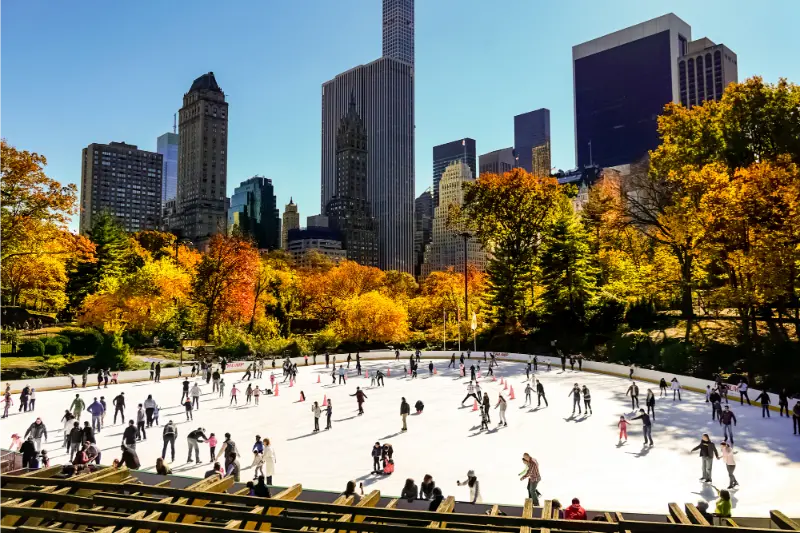
Limit the time you spend standing still. A two-hour winter walk followed by a museum is often better than a five-hour park marathon. Our Central Park guide helps you choose a shorter route.
2. Ice skating
Winter skating is one of New York’s classic seasonal activities. Bryant Park, Rockefeller Center and Wollman Rink provide different experiences. Rockefeller is the most iconic, Bryant Park can be economical if you bring skates, and Wollman Rink offers a larger Central Park setting.
For the 2026–27 season, Bryant Park’s Winter Village rink is scheduled from October 28, 2026 through February 28, 2027. Reservations and rental prices vary, so use current official information.
3. Museums become even more valuable
Winter is an ideal season for the Met, MoMA, American Museum of Natural History, Whitney, Guggenheim, Museum of the Moving Image and other institutions. Instead of thinking of museums as backup plans, build at least one into your winter itinerary from the start.
The advantage of a flexible schedule is that you can move a museum to the coldest or wettest day and protect your better outdoor day for Brooklyn Bridge, Central Park or the High Line.
See our best museums in New York guide for options.
4. Observation decks on clear winter days
Cold winter air can produce exceptionally clear skyline views. If the forecast shows a bright, cloudless afternoon, that may be your best observation-deck day of the trip.
The drawback is outdoor terraces. Edge, Top of the Rock and other open-air components can feel much colder at elevation. Dress for wind and avoid booking solely for sunset if the forecast is poor.
5. Broadway and live performance
Winter evenings are perfect for Broadway, jazz, comedy and concerts because you spend the coldest hours indoors. January and February can also feel less frantic than the peak holiday period.
Our Broadway guide covers TKTS, rush, lotteries and ticket strategy.
6. Grand Central Terminal and Midtown interiors
Grand Central is especially useful in winter because it combines architecture, food and transport indoors. Nearby, the New York Public Library, department stores and museums can help create a Midtown day with short outdoor segments rather than hours of exposure.
7. Food neighborhoods
Cold weather is an excellent excuse to explore New York through food. Chinatown, Flushing, Jackson Heights, Koreatown and the Lower East Side can turn a winter afternoon into a sequence of warm indoor stops.
Choose geographically compact food walks. Our New York food guide includes useful neighborhoods and classic addresses.
8. Brooklyn in winter
Brooklyn Bridge Park and DUMBO can be windy, but clear winter light is excellent for photography. Walk the bridge only if conditions are comfortable, then move into Brooklyn Heights, a cafe or museum.
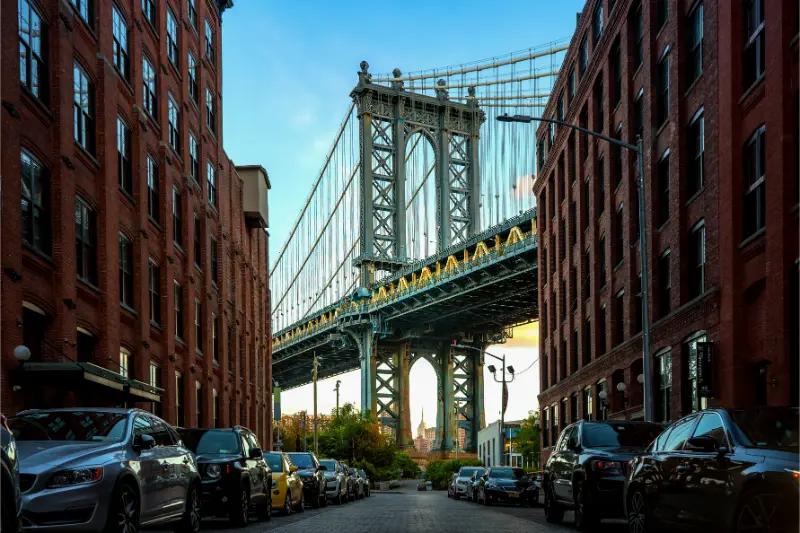
Do not force a long waterfront route during freezing wind. Winter rewards flexibility more than determination.
9. Roosevelt Island Tram
The Roosevelt Island Tram offers a short aerial ride over the East River and can be especially dramatic on a clear winter afternoon. Once on Roosevelt Island, however, waterfront wind may be intense. Keep the outdoor walk short in severe cold and return by subway if conditions change.
10. Indoor markets and food halls
Chelsea Market and other indoor food halls become useful winter breaks. Combine Chelsea Market with a short High Line walk rather than abandoning the west side completely because of cold weather.
New York in December
December offers maximum holiday atmosphere and maximum crowd pressure. Hotel prices can be high, popular restaurants fill and Midtown becomes intensely busy. The trade-off is unique: holiday lights, markets, skating and seasonal shows create a version of New York many travelers dream about.
New York in January
January is often the most underrated winter month. After New Year’s, visitor demand can fall on many dates and the city feels more local. Weather can be severe, but travelers who prioritize museums, food and theatre may find excellent value.
Check for seasonal hotel promotions and Broadway offers, but compare actual dates rather than assuming every January night is cheap.
New York in February
February remains cold, but daylight gradually increases. Valentine’s Day and long weekends can create price spikes. Otherwise, it can be another good month for travelers comfortable with winter conditions.
How to build a winter day
A strong winter itinerary alternates indoor and outdoor blocks. For example: Central Park for two hours, the Met for three hours, an early dinner, then Broadway. Another good combination is Brooklyn Bridge in the late morning, lunch in DUMBO, an indoor Downtown museum and an observation deck if skies remain clear.
What to do on a rainy or snowy day
Move toward museums, Grand Central, libraries, food halls, department stores and theatre. Do not assume taxis will solve bad weather; demand and traffic can increase. The subway is often still the most reliable way to move around, though severe storms can affect service.
Winter transportation tips
Subway station stairs can become slippery after snow or rain. Walk carefully and avoid rushing. Service changes occur year-round, so check the MTA before timed reservations.
If a significant storm is forecast, allow extra airport transfer time. Our New York airports guide compares JFK, LaGuardia and Newark routes.
Winter with children
Families should reduce outdoor exposure and increase warm breaks. One outdoor highlight, one museum and one simple evening activity are enough for many children. Gloves and spare socks can make an enormous difference if snow or rain gets into shoes.
Do not rely on long stroller naps outdoors in freezing weather. Use indoor attractions to reset the day.
Is winter cheaper?
It depends on dates. Christmas and New Year’s can be very expensive, while parts of January and February may offer better hotel rates. Airfares fluctuate with school holidays, events and weather.
Compare exact weeks using our best time to visit New York guide.
What to pack
- Warm, wind-resistant coat.
- Layering pieces rather than one extremely heavy top.
- Comfortable water-resistant shoes or boots.
- Gloves, hat and scarf.
- Compact umbrella for rain, though wind can make umbrellas difficult.
- Lip balm and moisturizer for dry indoor heating.
- Portable charger, because cold can reduce phone battery performance.
Common winter mistakes
- Wearing fashionable shoes that cannot handle long, wet walks.
- Expecting guaranteed snow.
- Booking every outdoor attraction before seeing the forecast.
- Spending six consecutive hours outside because the itinerary says so.
- Underestimating wind on bridges, waterfronts and observation decks.
- Choosing a remote hotel only because January rates look lower.
- Leaving no extra airport time when a storm is forecast.
Frequently asked questions
Is New York worth visiting in winter?
Yes, especially for museums, theatre, food and lower post-holiday crowds. You need proper clothing and a flexible itinerary.
What is the coldest month?
January is typically among the coldest periods, but individual weeks vary and February can also bring severe cold.
Does the subway run in snow?
Usually, but major storms can affect service. Always check official MTA updates during severe weather.
Is Central Park open in winter?
Yes, though specific facilities, lawns and activities can have seasonal restrictions.

Final advice
Winter New York rewards travelers who are willing to change plans. Dress properly, use museums and food as part of the itinerary rather than emergency backups, and take advantage of clear days when they appear. You may not get postcard snow, but you can get quieter streets, brilliant skyline views and a version of the city that feels much less like peak tourist season.
[…] New York in winter […]