

Manhattan’s Chinatown is one of the easiest places in New York to turn a meal into a walking experience. Restaurants, bakeries, produce shops and tea businesses sit within a dense network of short streets, so you can taste several things without spending the day on transit. The best approach is not a giant lunch at the first restaurant; it is deciding whether you want one sit-down meal or a small food crawl.
New York rewards travelers who treat food as part of the route rather than a separate attraction. The smartest choice is rarely the restaurant with the longest social-media line; it is the place that fits your neighborhood, your appetite and the amount of time you actually have. This guide focuses on places that are useful to visitors, but it also explains how to make the category work across a real New York itinerary.
Addresses and opening status can change, so check the venue directly shortly before you go. We deliberately avoid hard-coding menu prices because New York restaurant prices move much faster than a travel article should.
Quick picks
| Place | Area | Best for |
|---|---|---|
| Nom Wah Tea Parlor | Doyers Street | Historic atmosphere and dim sum |
| Great NY Noodletown | Bowery / Chinatown | Cantonese noodles and a classic Chinatown meal |
| Uncle Lou | Mulberry Street | Cantonese dishes for a sit-down group meal |
| Mei Lai Wah | Mott Street | A quick baked-bun stop |
| Joe’s Shanghai | Bowery / Chinatown | Soup dumplings in a sit-down setting |
How to use this guide
Choose between a single meal and a crawl. A sit-down dim-sum or Cantonese meal is easier for families and groups. A crawl works well for adventurous eaters who want one bun, one dumpling order and perhaps noodles shared between two people.
The neighborhood is compact enough that you do not need a perfect master plan. Save two or three candidates, begin walking and make decisions based on queues and appetite. That flexibility is part of the Chinatown experience and prevents food from turning into an appointment schedule.
1. Nom Wah Tea Parlor
Address: 13 Doyers Street, New York, NY 10013. Nom Wah Tea Parlor occupies one of Chinatown’s most recognizable streets and is associated with the neighborhood’s long dim-sum history. The setting is a major part of the appeal for first-time visitors.
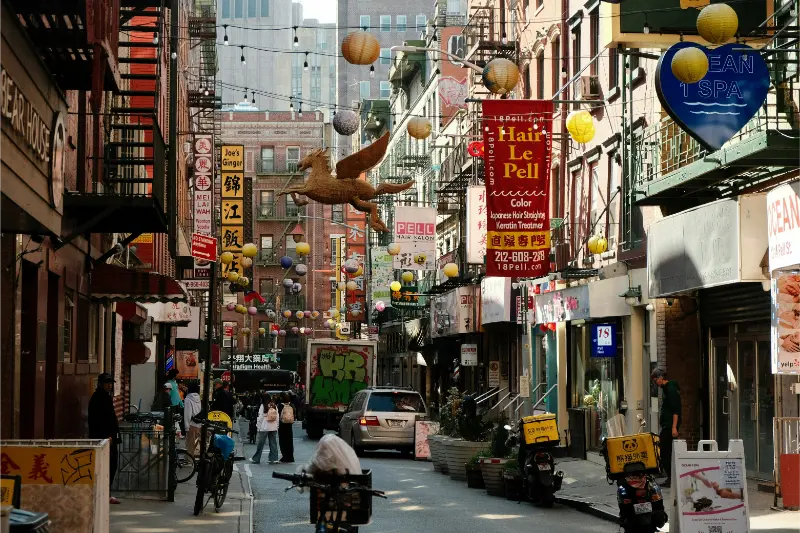
Doyers Street is already worth seeing, and the restaurant gives you a natural reason to slow down there. Pair it with Pell Street, Columbus Park and the nearby lanes rather than arriving only to eat.
Practical tip: If atmosphere matters more than speed, this is a logical sit-down stop. If you are doing a crawl, order selectively so you still have room for buns or dumplings elsewhere.
2. Great NY Noodletown
Address: 28 Bowery, New York, NY 10013. Great NY Noodletown is a long-running Cantonese restaurant near the Bowery edge of Chinatown. The menu offers a different experience from dim sum or a bakery counter and works well as a straightforward lunch or dinner.
It sits close to the Manhattan Bridge, Confucius Plaza and the eastern side of Chinatown, so it can anchor a route continuing toward the Lower East Side.

Practical tip: If you are sharing, choose dishes with contrast rather than several versions of the same noodle or rice format. Chinatown is ideal for tasting breadth.
3. Uncle Lou
Address: 73 Mulberry Street, New York, NY 10013. Uncle Lou offers Cantonese cooking in a comfortable sit-down format on Mulberry Street. It can work especially well for families or groups who want to share several dishes instead of eating at multiple counters.
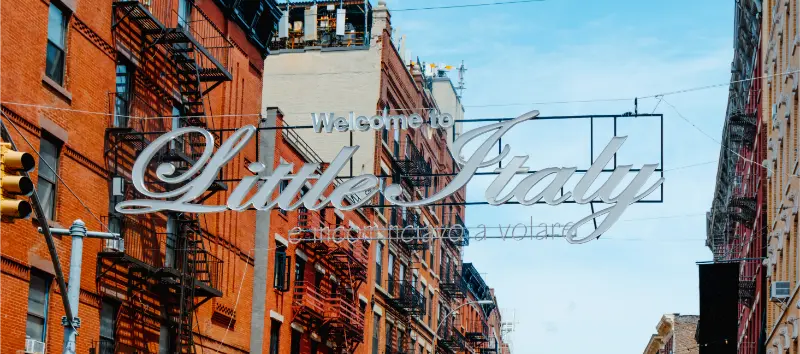
The location connects easily with Columbus Park, Little Italy and the Civic Center. It is a good bridge between a Chinatown meal and a broader Lower Manhattan walk.
Practical tip: Group dining is where a broad menu becomes most useful. Ask about portion sizes and order for the table rather than treating every dish as an individual entrée.
4. Mei Lai Wah
Address: 41 Mott Street, New York, NY 10013. Mei Lai Wah is a small bakery-style stop known for roast-pork buns and other quick Chinatown snacks. It is exactly the kind of place that works better as one part of a food crawl than as a long sit-down meal.
Mott Street is central to a first Chinatown walk, so the stop costs almost no extra sightseeing time. You can taste something, continue walking and keep the day flexible.
Practical tip: Small popular counters can feel hectic. Know what you want, keep belongings close in crowded spaces and step away from the entrance once you have your order.
5. Joe’s Shanghai
Address: 46 Bowery, New York, NY 10013. Joe’s Shanghai is strongly associated with soup dumplings for many visitors and remains a recognizable Chinatown dining stop. It offers a sit-down contrast to bakery counters and quick noodle shops.
It is easy to pair with the eastern Chinatown streets or a walk toward the Lower East Side. For first-time visitors who specifically want soup dumplings, it provides a clear, accessible reference point.
Practical tip: Soup dumplings are hot inside. Take your time and follow the restaurant’s serving advice rather than biting straight into one immediately.
How to build it into a sightseeing day
Start around Columbus Park and Mott Street, continue through Pell and Doyers Streets, then decide whether to finish toward Bowery or the Lower East Side. Mei Lai Wah can be a snack; Nom Wah can be a sit-down anchor; Great NY Noodletown or Joe’s Shanghai can become the main meal. If you are continuing to Little Italy, keep dessert or coffee for Nolita instead of overeating in the first hour.
Ordering, timing and local etiquette
Service style varies from bakery counters to busy dining rooms. Be ready to share tables or move quickly where space is tight. Payment policies can differ, so carry a small cash backup without assuming every Chinatown business is cash-only. In shared meals, order multiple dishes for the table and use serving utensils where provided.
Budget and value
Chinatown can still offer strong value, but avoid relying on old internet posts that quote exact prices from years ago. A crawl can become expensive if you order full portions at every stop. Share, taste and choose one main meal.
Dietary needs and accessibility
Vegetarian-looking dishes may contain meat broth, oyster sauce or other animal ingredients, while dumplings and buns can contain hidden fillings. Ask clearly. Travelers with severe allergies should be especially cautious about cross-contact in small, high-volume kitchens.
Common mistakes to avoid
- Eating a full meal at the first stop and having no room for the neighborhood’s variety.
- Assuming every business accepts the same payment method.
- Ordering only the dishes you already know from home.
- Blocking narrow entrances while deciding what to order.
- Treating Chinatown as a restaurant destination without walking its streets and parks.
Useful Dreaming New York guides
- Chinatown and Little Italy guide
- Lower Manhattan guide
- Lower East Side guide
- where to eat in New York City
How to keep a food stop from taking over the day
New York makes it easy to underestimate transition time. A restaurant may be only twenty minutes away on a map, yet reaching it can involve walking to the subway, waiting for a train, climbing stairs and then finding the correct entrance. If a food stop is not a destination meal, keep it inside the same neighborhood as the attractions around it. Save destination restaurants for evenings when you can enjoy the journey and the area around them.
It also helps to keep two backup options near every major sightseeing zone. Restaurants can close for private events, change hours, develop an unexpected queue or simply feel wrong when you arrive. A backup is not a compromise; it is one of the easiest ways to keep a New York itinerary resilient. Save alternatives on your map before the trip rather than searching while everyone is already hungry.
Tax, tips and the number on the menu
Menu prices are not always the final amount you will pay. New York City sales tax applies to restaurant meals, and table-service dining normally involves a gratuity as well. Some restaurants add service charges or have special policies for larger groups, so read the check rather than automatically adding a second gratuity. Our New York tipping guide explains the practical details.
For travelers comparing costs before the trip, use menu prices as a starting point rather than a guaranteed budget. Food inflation, seasonal menus and special-event periods can change the total. The most stable approach is to decide which meals deserve a splurge and keep the rest flexible with bagels, pizza, food halls and counter-service restaurants.
Frequently asked questions
What food should I try in Chinatown?
Dim sum, dumplings, roast meats, noodles and bakery items are useful starting points, but the neighborhood represents multiple regional Chinese traditions rather than one menu.
Is a Chinatown food crawl worth it?
Yes, particularly if you share small portions. The compact street grid makes it easy to sample without using transport between stops.
Do Chinatown restaurants take cards?
Policies vary. Check each business and keep a modest cash backup rather than relying on a stereotype about the whole neighborhood.
Where should I start walking?
Columbus Park, Mott Street, Pell Street and Doyers Street create an easy central loop before you move toward Bowery or the Lower East Side.
Is Chinatown good with children?
It can be, especially with a sit-down restaurant as the main meal. Crowded sidewalks and small dining rooms mean strollers require a little more planning.
Final recommendation
Treat Chinatown as a neighborhood to taste gradually. Pick one sit-down anchor, add one or two small snacks and spend the rest of the time walking. The variety—and the contrast between streets, counters and dining rooms—is the real experience.