

Chinatown and Little Italy are next-door neighborhoods that many visitors treat as a single quick stop. That is a mistake. Chinatown is a large, living community with markets, bakeries, temples, historic associations, restaurants and layers of Chinese American history. Little Italy is much smaller today, but its remaining streets still tell a story about immigration, family businesses and how Manhattan neighborhoods evolve.
This Chinatown and Little Italy guide helps you explore both areas respectfully, eat well without chasing every viral queue, understand the history behind the streets and connect the walk naturally with SoHo, Nolita or the Lower East Side.
Where are Chinatown and Little Italy?
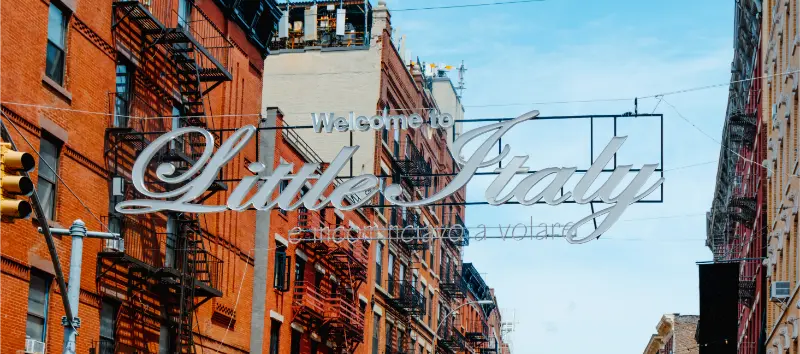
Manhattan’s Chinatown spreads around Canal Street, Mott Street, Bayard Street, Pell Street, East Broadway and surrounding blocks. Little Italy is concentrated mainly around Mulberry Street north of Canal. The Canal Street subway complex is the most obvious arrival point, but Grand Street and East Broadway can also be useful depending on your route.
Walking is essential here. Side streets change character quickly, and the most interesting details are often between major intersections.
1. Begin away from Canal Street
Canal Street is famous, but it is also loud, congested and dominated by traffic and retail. Use it as an orientation line, then move immediately onto smaller streets. Mott, Pell, Bayard and Doyers reveal much more about Chinatown’s history and daily life.
Look at upper floors, association buildings, signage and old tenement facades. The neighborhood is not a themed district; people live and work here, so keep doorways and sidewalks clear.
2. Doyers Street
Doyers Street is short, curved and visually distinctive. Its unusual shape is one reason it became famous, but the street also carries a complicated history connected to early Chinese immigrant life, discrimination and community institutions.
Today it is far calmer than sensational old stories suggest. Visit for the street shape, small businesses and historical context rather than turning its past into entertainment.
3. Columbus Park
Columbus Park is one of the best places to see Chinatown as a neighborhood rather than an attraction. Residents gather for conversation, music, games and exercise. Sit for a few minutes and observe without intruding.
The park sits on land associated with the former Five Points district, one of 19th-century New York’s most notorious and diverse immigrant neighborhoods. That history makes this a strong transition point between Chinatown and the Civic Center.
4. Museum of Chinese in America
The Museum of Chinese in America (MOCA) at 215 Centre Street is one of the most valuable cultural stops in the area. It preserves and interprets Chinese American history, including immigration, exclusion, labor, family life and cultural identity.
In 2026 the museum lists public hours Wednesday through Sunday, with no regular public hours Monday and Tuesday. Confirm current details on the official MOCA website before visiting. A museum stop makes the surrounding streets much easier to understand.
5. Mahayana Buddhist Temple
Near the Manhattan Bridge, the Mahayana Buddhist Temple is one of the neighborhood’s visible religious landmarks. If visitors are welcome when you arrive, enter quietly, dress respectfully and remember that the space is first a place of worship.
Do not photograph worshippers without permission. Religious spaces should never be treated as free theatrical backdrops.
6. Explore the markets
Produce stands, fish markets, herb shops, bakeries and specialty groceries are a major part of Chinatown’s street life. Walk along Mott Street and East Broadway and you will see a side of food culture that restaurants alone cannot show.
If you buy something unfamiliar, ask politely how it is eaten or prepared. Small purchases support local businesses and often become better travel memories than generic souvenirs.
7. Eat strategically, not competitively
Chinatown is one of the best places in Manhattan for an affordable meal, but social media can create absurd queues at a small number of businesses. Unless a specific dish is essential to you, use the crowd as information: if one place has a forty-minute line and three nearby restaurants are busy with local diners, you have options.
Dim sum, dumplings, noodles, roast meats, bakeries and regional Chinese cuisines all deserve attention. Do not try to eat everything in one afternoon. Choose two or three small stops rather than one giant meal if you want variety.
Our New York food guide has more neighborhood food strategy.
8. Little Italy today
Walk north on Mulberry Street and the transition into Little Italy happens quickly. The historic Italian American community once covered a much larger area, but Chinatown, SoHo and Nolita have expanded around it. What remains is a compact cluster of restaurants, cafes, religious sites and businesses.
Understanding that contraction is important. Little Italy is not a perfectly preserved immigrant village; it is a visible fragment of a much larger historical neighborhood.
9. Mulberry Street
Mulberry Street is the central spine. Outdoor restaurant seating, Italian flags and souvenir shops make it feel more tourist-oriented than Chinatown. Walk it once, but also look north toward Nolita where the atmosphere becomes more local and design-focused.
If you want Italian food, do not assume the most aggressive street host represents the best kitchen. Compare menus, recent reviews and what appears on nearby tables.
10. Church of the Most Precious Blood
The Church of the Most Precious Blood is closely linked to the Feast of San Gennaro, the neighborhood’s major annual celebration. The feast typically transforms Mulberry Street with food stands, processions and dense crowds in September.
If your trip coincides with the event, expect a completely different experience from an ordinary weekday. Check current festival dates and road closures before planning a quiet walking tour.
11. Nolita is the natural next step
Continue north of Little Italy into Nolita and the streets become calmer, with boutiques, cafes and smaller restaurants. This is one of the best ways to understand how neighborhood boundaries blur in Lower Manhattan.
From Nolita, SoHo is immediately west. Read our SoHo guide if you want to continue on foot.
12. Lower East Side connection
Walk east from Chinatown and you reach the Lower East Side, another neighborhood shaped by immigration. The Tenement Museum, Essex Market and streets around Orchard and Ludlow make a natural historical continuation.
A strong full day can connect Chinatown, Little Italy and the Lower East Side without using the subway once.
13. Manhattan Bridge entrance and East Broadway
If you want a less-touristed side of Chinatown, continue toward East Broadway and the Manhattan Bridge approach. The streets here show a different mix of community institutions, apartment buildings, small businesses and newer development.
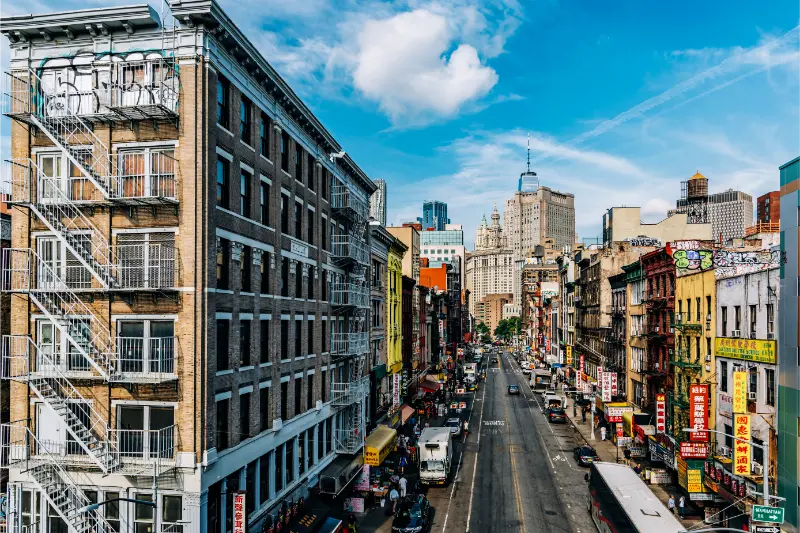
This is also a reminder that Chinatown extends beyond the restaurant blocks most visitors photograph. Walk with purpose but without trying to turn every residential block into a sightseeing attraction.
A two-hour Chinatown route
Start around Mott and Canal, walk Mott Street south, turn into Pell and Doyers, continue to Columbus Park, then loop east toward East Broadway before returning through Bayard Street. Add one food stop and you have a compact introduction.
A half-day Chinatown and Little Italy itinerary
Begin in Chinatown before lunch, visit MOCA if open, explore markets and side streets, choose one or two food stops, then walk north through Little Italy and finish in Nolita. Allow four hours if you want to move slowly.
Do not schedule a huge dinner immediately afterward; the best Chinatown visit usually involves eating along the way.
Chinatown with children
Families can enjoy bakeries, dumplings, parks and colorful markets, but sidewalks are crowded and traffic is intense around Canal Street. Hold hands with younger children at major intersections and avoid peak weekend midday if strollers make dense crowds difficult.
MOCA can add context for older children, while Columbus Park offers a useful break from walking.
Best time to visit
Late morning through early evening gives you the most activity. Very early mornings can be fascinating around markets but some visitor-oriented businesses are not yet open. Weekend afternoons are busiest.
Lunar New Year transforms Chinatown with celebrations and crowds, while San Gennaro does the same for Little Italy in September. These periods are exciting if you want events and frustrating if you want quiet streets.
Photography and etiquette
Street photography is tempting here, but be thoughtful. Do not put a camera inches from market workers, diners or older residents without permission. Photograph streets and storefronts broadly, and ask before taking close portraits.
Restaurants are working businesses, not film sets. If you occupy a table, order appropriately and do not spend twenty minutes rearranging dishes for photographs while people wait.
Common mistakes to avoid
- Staying only on Canal Street.
- Treating Chinatown as a cheap-food theme park.
- Waiting an hour for one viral dumpling shop without considering alternatives.
- Assuming Little Italy is as geographically large as it once was.
- Taking intrusive photos in markets or temples.
- Trying to combine Chinatown, SoHo, the Brooklyn Bridge and Wall Street in two hours.
- Ignoring the neighborhood’s immigration history.
Frequently asked questions
How long should I spend in Chinatown?
Two to four hours works well, depending on whether you visit a museum and how many food stops you make.
Is Little Italy worth visiting?
Yes, especially when understood as a small historic remnant rather than a large modern Italian neighborhood. It pairs naturally with Chinatown and Nolita.
Is Chinatown expensive?
It can still be one of Manhattan’s better-value food areas, although prices vary by restaurant and dish. Cash remains useful at some small businesses.
Can I walk from Chinatown to the Brooklyn Bridge?
Yes. The Manhattan-side bridge entrance is within walking distance. Leave extra time because Civic Center streets and security crossings can slow the route.
Final advice
Come hungry, but also come curious. Chinatown becomes far more rewarding when you notice associations, parks, temples, markets and migration history alongside the food. Little Italy makes more sense when you see it as part of a changing Downtown map. Together, the neighborhoods show how New York continually reinvents itself without completely erasing what came before.