

Williamsburg is one of those New York neighborhoods that visitors often think they already understand before they arrive. It has been labeled hipster, fashionable, expensive, artistic, nightlife-heavy and overexposed—sometimes all at once. The reality is more interesting. Williamsburg mixes old industrial streets, Hasidic Jewish communities, luxury waterfront development, music venues, vintage shops, parks, restaurants and some of the best East River views in Brooklyn.
This Williamsburg Brooklyn guide is built for travelers who want to spend more than an hour around Bedford Avenue. It covers the waterfront, local streets, food, shopping, transport and an easy route that shows several sides of the neighborhood.
Where is Williamsburg?
Williamsburg sits in northern Brooklyn along the East River, immediately south of Greenpoint and north of Bedford-Stuyvesant. Manhattan is directly across the water. The L train reaches Bedford Avenue from 14th Street in Manhattan in minutes, while the G train connects Williamsburg with other parts of Brooklyn and Queens. NYC Ferry also serves the waterfront.
If Brooklyn is a major part of your trip, combine this guide with our broader Brooklyn travel guide and the nearby DUMBO and Brooklyn Heights walking guide.
Start around Bedford Avenue
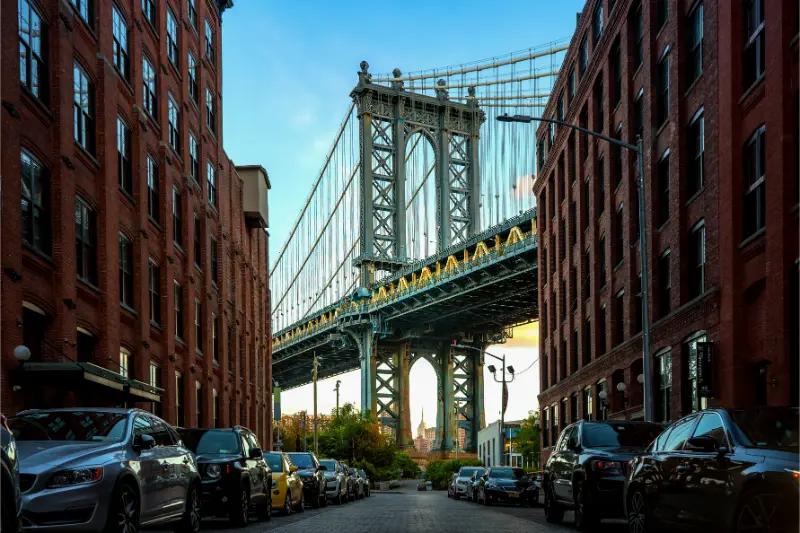
Bedford Avenue is the simplest introduction to Williamsburg. The blocks near the L train are packed with cafes, boutiques, bars and restaurants. This is the commercial core many visitors associate with the neighborhood, but do not stay only on Bedford. The more interesting walk zigzags toward the waterfront using North 6th, North 7th and neighboring streets.
Look for converted industrial buildings, small shops and the contrast between older brick structures and new residential towers. Williamsburg’s identity is visible precisely in those transitions.
Walk to the East River waterfront
The waterfront is where the neighborhood’s recent transformation is most obvious. Former industrial land has become parks, housing and public promenades, giving visitors broad views across the East River toward Midtown and Lower Manhattan.
Domino Park
Domino Park was created on part of the former Domino Sugar Refinery site. Industrial artifacts, elevated walkways, lawns and riverfront seating reference the site’s history while creating a modern public space. The park is especially attractive in late afternoon when the light falls across the Manhattan skyline.
Walk slowly enough to notice the preserved equipment and the enormous refinery building rather than treating the park only as a skyline viewpoint. It tells a story about Brooklyn’s manufacturing past and waterfront redevelopment.
Marsha P. Johnson State Park
Farther north, Marsha P. Johnson State Park occupies another section of the Williamsburg waterfront. The park is associated with events and open-air activities and provides excellent views of Manhattan. Seasonal food events such as Smorgasburg have historically used the space; schedules vary, so check current event information before planning a trip around a specific market day.
The park was renamed in honor of Marsha P. Johnson, a prominent LGBTQ+ activist and figure in New York history. Treat the site as more than a food-market backdrop: its name connects the public space to a much larger civil-rights story.
Williamsburg Bridge
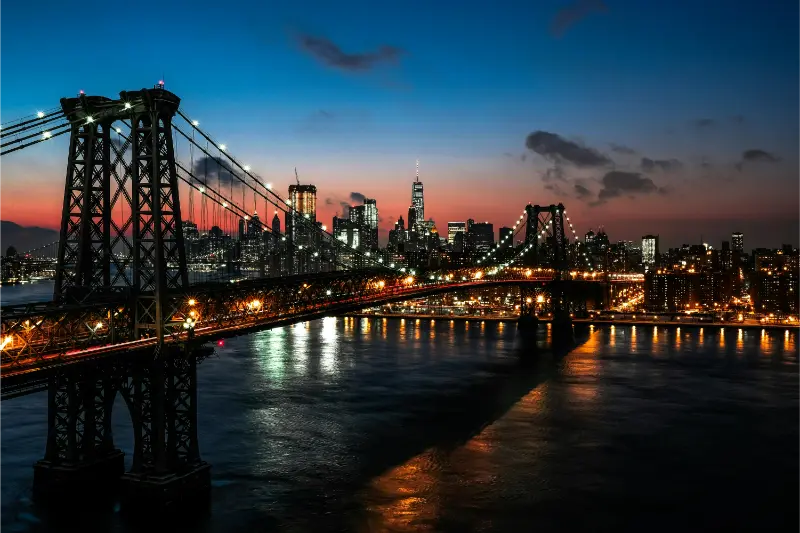
The Williamsburg Bridge connects Brooklyn with Manhattan’s Lower East Side and carries subway trains, vehicles, cyclists and pedestrians. Walking across is less postcard-perfect than the Brooklyn Bridge but often feels more local and less ceremonial.
A full crossing takes roughly 30 to 40 minutes depending on pace and stops. If your day continues in the East Village or Lower East Side, the bridge can be transportation rather than a separate attraction. See our East Village and Lower East Side guide for the Manhattan side.

Shopping and vintage stores
Williamsburg remains one of New York’s best neighborhoods for vintage clothing, independent labels, jewelry and small design stores, although rents have pushed the retail mix steadily upscale. Bedford Avenue and the blocks toward North 6th Street are easy starting points.
Do not build the day around one specific vintage shop unless you have checked that it is still open. Independent retail changes quickly. Instead, treat shopping as part of the walk and browse whatever catches your attention. Our New York shopping guide compares Williamsburg with SoHo, Fifth Avenue and other districts.
Food in Williamsburg
Williamsburg has enough dining to support an entire food-focused day. Options range from pizza and bagels to bakeries, tacos, modern American restaurants and international kitchens. The neighborhood also has strong coffee culture and many places designed for lingering rather than rushing through a meal.
One useful strategy is to keep lunch casual and reserve dinner only if you have a particular restaurant in mind. That preserves flexibility if you discover a food market, bakery or unexpected spot during the afternoon.
Brooklyn Brewery and local beer
The modern Brooklyn craft-beer story is closely associated with Brooklyn Brewery, founded in 1988. Its Williamsburg location has long been a neighborhood landmark. Tours, taproom access and opening schedules can change, so check the official brewery website before making it a fixed stop.
If you do drink, remember that New York days often involve much more walking than expected. Alternate with water and do not schedule a long bridge walk after several drinks.
Music and nightlife
Williamsburg helped shape Brooklyn’s reputation as a live-music destination in the 2000s and remains strong for concerts, clubs, bars and performance spaces. Venue calendars matter more than generic recommendations because the best choice depends on the night.
Check what is actually playing, then plan dinner nearby. This is one neighborhood where staying into the evening can make more sense than visiting only during the day.
Street art and industrial streets
Parts of Williamsburg and nearby Bushwick are known for murals, but do not expect every block to resemble an outdoor gallery. Street art changes, gets painted over and moves. The area around industrial side streets can still produce interesting details for photographers: loading bays, old signs, brick walls and skyline glimpses.
If murals are your priority, extend the trip east toward Bushwick rather than forcing Williamsburg to be something it is not.
A practical half-day route
- Arrive at Bedford Avenue on the L train
- Walk North 6th and neighboring streets
- Browse local shops
- Continue to Marsha P. Johnson State Park
- Walk south along the waterfront
- Spend time in Domino Park
- Eat or have coffee nearby
- Return by subway, ferry or walk the Williamsburg Bridge toward Manhattan
Allow four to five hours. Add dinner and live music to turn it into a full afternoon and evening.
Williamsburg by ferry
Arriving by NYC Ferry is one of the nicest ways to understand the neighborhood’s relationship with Manhattan. You see the skyline, bridges and waterfront before you step into the streets. Ferry service is not a replacement for the unlimited convenience of the subway, but it can be an experience as well as transportation.
Check current routes and fares on the official NYC Ferry website. Weather and service changes can affect schedules.
Best time to visit Williamsburg
Late morning works well for coffee, shopping and quiet waterfront walks. Weekend afternoons are livelier and may coincide with seasonal markets or events. Evening is best for restaurants, bars and concerts.
Sunset is especially good along the river. If you want skyline photographs, arrive 45 minutes before sunset and stay until the city lights begin to appear.
Where to stay
Williamsburg has several design-focused and upscale hotels, especially near the waterfront. It can be a great base for repeat visitors, couples and travelers who value restaurants and nightlife. The trade-off is that many classic Manhattan attractions require a subway trip.
For a first three-day trip, Midtown may be more efficient. For a week in New York, splitting more time across Brooklyn becomes easier. Compare options in our New York hotel neighborhood guide.
Practical tips
- Use Bedford Avenue as a start, not the entire plan.
- Check event schedules: seasonal markets and concerts do not run every day.
- Bring a layer near the river: waterfront wind can feel cooler than inland streets.
- Use the ferry strategically: it is scenic but less frequent than the subway.
- Respect residential areas: many photogenic streets are ordinary places where people live.
Frequently asked questions
Is Williamsburg worth visiting for first-time tourists?
Yes if you have at least four or five days and want to experience Brooklyn beyond the bridge. On a very short trip, prioritize your main Manhattan sights first.
How long should you spend in Williamsburg?
Half a day is enough for Bedford Avenue, the waterfront and a meal. A full afternoon and evening works better if you want shopping, dinner and nightlife.
Is Williamsburg walkable?
Very. The main visitor area is compact, but comfortable shoes are still important because a natural day easily reaches several miles.
Can you walk from Williamsburg to Manhattan?
Yes. The Williamsburg Bridge has a pedestrian path that leads toward the Lower East Side.
Final thoughts
Williamsburg is interesting not because it represents a single version of Brooklyn, but because several versions occupy the same neighborhood. Industrial history, creative culture, residential life and high-end development sit close together. Spend time on the waterfront, but also walk inland. Shop if something genuinely interests you, eat locally and stay long enough to see how the mood changes after dark.