

Brooklyn is not a side trip from New York; it is a city-sized borough with waterfront parks, brownstone neighborhoods, art, food, beaches, nightlife and some of the best views of Manhattan. First-time visitors often experience only DUMBO and the Brooklyn Bridge, which are absolutely worth seeing, but they reveal only a small part of the borough.
This Brooklyn travel guide helps you choose the neighborhoods that fit your interests, plan a realistic first day, understand transportation and combine iconic waterfront areas with places that feel more local.
How much time should you spend in Brooklyn?
On a first trip to New York, dedicate at least half a day to DUMBO, Brooklyn Bridge Park and Brooklyn Heights. A full day lets you add Williamsburg or Prospect Park. With a week in New York, you can easily spend two separate days in Brooklyn without running out of worthwhile things to do.
Do not try to visit DUMBO, Williamsburg, Prospect Park and Coney Island in one day. They are in different parts of a large borough and the transit time will dominate the experience.
DUMBO: the classic first Brooklyn stop
DUMBO sits between the Brooklyn and Manhattan Bridges and combines converted warehouses, cobblestone streets, waterfront parks and famous skyline views. The Washington Street view toward the Manhattan Bridge is one of New York’s most photographed scenes, so expect crowds.
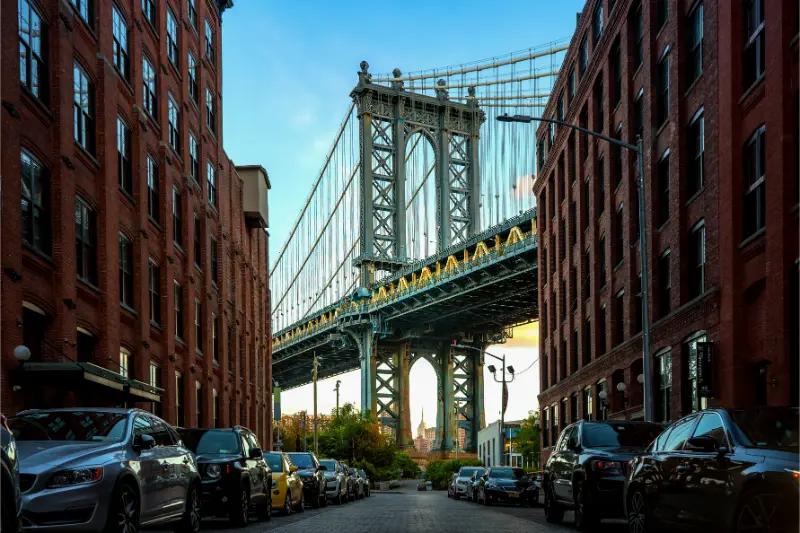
Walk beyond the photo spot. The waterfront gives better context, and the old industrial buildings explain why the neighborhood feels so different from Midtown Manhattan.
Brooklyn Bridge Park
Brooklyn Bridge Park stretches along the East River with lawns, piers, playgrounds, sports areas and expansive Manhattan views. It is free to enter and, according to the official park site, generally open 6 a.m. to 1 a.m. daily, though specific facilities have their own schedules.
Check Brooklyn Bridge Park’s official visitor information for current hours and temporary closures. For families, the park is particularly useful because children can run and play while adults still get some of the best skyline scenery in the city.
Brooklyn Heights
Walk south from DUMBO into Brooklyn Heights for tree-lined brownstone streets and the Brooklyn Heights Promenade. The neighborhood feels calm compared with the bridge approaches and gives you a sense of residential Brooklyn.
A strong first-time route is to cross the Brooklyn Bridge from Manhattan, explore DUMBO, walk the waterfront and finish in Brooklyn Heights. Return by subway rather than crossing the bridge twice unless you genuinely want the extra walk.
Crossing the Brooklyn Bridge
The Brooklyn Bridge is one of the city’s essential free experiences. Early morning is best for lighter crowds; sunset is visually beautiful but much busier. Stay in the pedestrian area, pay attention to bike lanes and avoid stopping in the middle of the flow for long photo sessions.
For many first-time visitors, walking from Manhattan toward Brooklyn works well because the experience naturally ends at DUMBO and Brooklyn Bridge Park.
Williamsburg
Williamsburg is one of Brooklyn’s best-known dining, nightlife and shopping areas. The waterfront offers Manhattan views, while Bedford Avenue and surrounding streets are filled with restaurants, cafes, boutiques and bars. The neighborhood has changed dramatically over the years, but it still provides a useful contrast to Midtown.
Use the subway for speed or NYC Ferry when you want the journey itself to become part of the sightseeing. Ferry service is weather-dependent and operates on its own fare system, so check current schedules before relying on it for a timed reservation.
Greenpoint
North of Williamsburg, Greenpoint feels more residential and retains a strong Polish heritage alongside newer restaurants and cafes. It is an excellent extension for repeat visitors or anyone who wants to spend a slower afternoon away from the main sightseeing circuit.
Prospect Park
Designed by Frederick Law Olmsted and Calvert Vaux, who also designed Central Park, Prospect Park is Brooklyn’s major green space. It feels less dominated by tourist landmarks and more integrated into local life. Walking, picnics, sports and family time are the main reasons to visit.
The park connects naturally with the Brooklyn Museum, Brooklyn Botanic Garden and Park Slope, making this one of the best full-day clusters outside Manhattan.
Brooklyn Museum
The Brooklyn Museum is a major art institution with collections spanning cultures and periods. It is large enough to reward several hours but usually feels less obligatory than Manhattan’s biggest museums. That can make it more enjoyable for travelers who prefer exploring at their own pace.
Pair it with Prospect Park or Brooklyn Botanic Garden rather than crossing back to Manhattan immediately.
Park Slope
Park Slope is known for brownstones, family life, local restaurants and its relationship with Prospect Park. It is not a checklist neighborhood. Walk residential streets, eat locally and use it as a contrast to the more industrial-feeling waterfront districts.
Cobble Hill, Boerum Hill and Carroll Gardens
These adjoining brownstone neighborhoods are excellent for travelers who enjoy architecture, small shops and restaurants more than headline attractions. Smith Street and Court Street provide useful commercial corridors, while residential side streets are ideal for a slower walk.
They can be combined with Downtown Brooklyn, the Transit Museum or Brooklyn Heights.
Bushwick
Bushwick is known for street art, creative spaces, nightlife and an industrial urban texture. Murals change over time, which is part of the appeal. Visit with the mindset that this is a living neighborhood, not an open-air museum created solely for photographs.
Travelers who want a polished, landmark-heavy day may prefer DUMBO. Those who enjoy contemporary city culture may find Bushwick more interesting.
Coney Island
Coney Island offers a completely different New York experience: Atlantic Ocean, boardwalk, amusement rides and beach culture. It is seasonal in character even though the neighborhood exists year-round. Summer is the classic time for the beach and amusement atmosphere.
From Manhattan, the subway ride is significant, so give Coney Island at least half a day. Do not pair it with a packed DUMBO-Williamsburg itinerary.
Best first-time Brooklyn itinerary
Morning: Brooklyn Bridge
Start early on the Manhattan side and cross into Brooklyn before peak crowds.
Late morning: DUMBO
Explore Washington Street, waterfront viewpoints and the streets beneath the bridges.
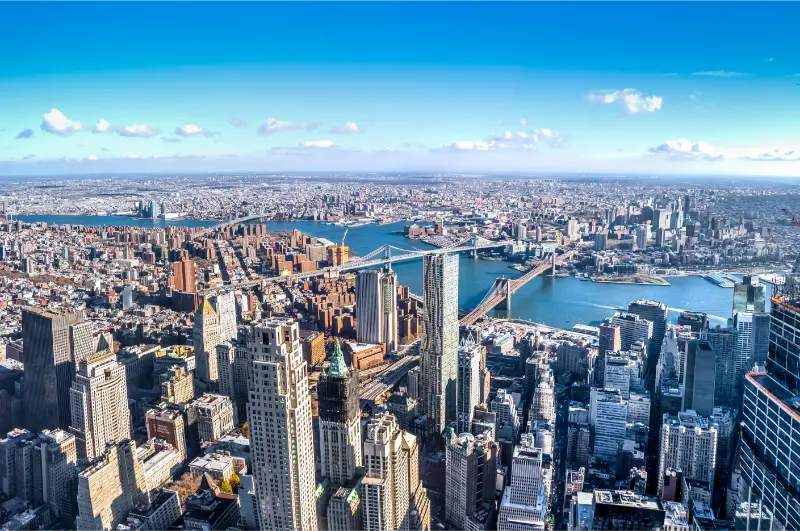
Lunch: waterfront or Brooklyn Heights
Choose food based on appetite rather than queueing for one famous place simply because it appears on every list.
Afternoon: Brooklyn Heights and promenade
Walk through residential streets and enjoy the skyline from the promenade.
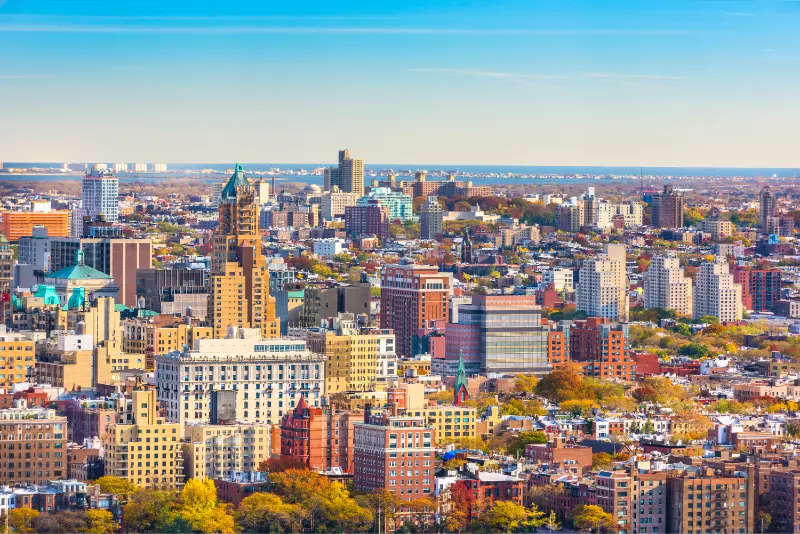
Late afternoon/evening: Williamsburg
Take the subway or ferry north for shops, food and sunset views. If you prefer a calmer day, stay around Brooklyn Heights and Cobble Hill instead.
Brooklyn with kids
Brooklyn Bridge Park is one of the best family stops because it combines playgrounds, lawns and views. Prospect Park is another excellent reset day after busy Manhattan sightseeing. The Transit Museum can appeal to children who love trains and to adults interested in New York history.
For younger children, choose one Brooklyn cluster rather than dragging them between distant neighborhoods. Our family New York guide has more practical advice.
Where to stay in Brooklyn
Brooklyn can be an excellent hotel base if you choose transit carefully. Downtown Brooklyn and Brooklyn Heights offer strong Manhattan access. Williamsburg can suit nightlife and dining travelers. Other neighborhoods may offer better value but require longer daily commutes.
Always check the actual subway line and travel time to the places you plan to visit. Read our where to stay in New York City guide before booking.
Getting around Brooklyn
The subway is the backbone, but Brooklyn travel can be less intuitive than Manhattan because routes do not always connect neighboring areas directly. A place that looks geographically close may require a transfer. Buses and ferries sometimes solve these cross-neighborhood gaps.
Plan by clusters rather than by a list of “top Brooklyn attractions.” This is even more important here than in Manhattan.
Best time to visit
Spring and fall are excellent for walking. Summer is ideal for parks, waterfronts and Coney Island but can be hot. Winter can be atmospheric in brownstone neighborhoods, and DUMBO skyline views can be crisp, but waterfront wind is intense on cold days.
Brooklyn food strategy
Brooklyn has destination restaurants, old-school institutions, immigrant cuisines, bakeries, pizza, cafes and food markets. Do not turn the day into a queue tour. Choose one or two places you genuinely care about and leave room for something you discover while walking.
Common mistakes
- Treating Brooklyn as only the bridge and DUMBO.
- Trying to cover four distant neighborhoods in one day.
- Ignoring subway geography.
- Planning Coney Island as a quick add-on.
- Visiting residential streets without respecting local life.
- Assuming every waterfront restaurant has good value just because the view is famous.
Frequently asked questions
Is Brooklyn worth visiting on a first trip?
Yes. Even half a day around the Brooklyn Bridge, DUMBO and Brooklyn Heights adds a different perspective to a Manhattan-heavy itinerary.
Is Brooklyn cheaper than Manhattan?
Some areas and hotels can be cheaper, but popular neighborhoods such as Williamsburg and DUMBO are not automatically budget destinations.
How do I get from Manhattan to Brooklyn?
Subway, ferry, bus, taxi and walking across major bridges are all options. The best choice depends on the neighborhood.
Can I walk Brooklyn Bridge at night?
The bridge is accessible beyond daylight hours, but use normal city awareness and follow current conditions. Sunset and early evening are popular times.
Final advice
Brooklyn is best when you stop thinking of it as one attraction. Start with the iconic waterfront if it is your first visit, then choose one additional neighborhood that reflects your interests. The borough rewards travelers who are willing to spend a little less time checking boxes and a little more time walking, eating and noticing how dramatically New York changes across the East River.