

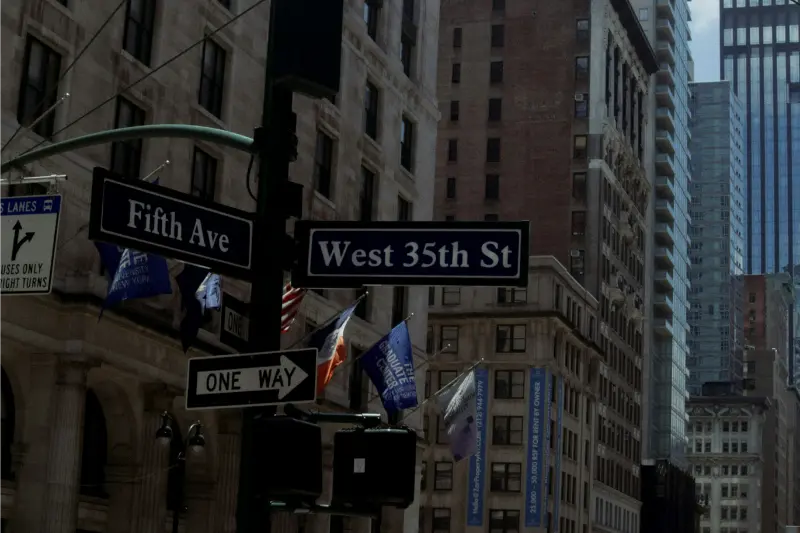
Fifth Avenue is New York’s most famous shopping address, but it is not a single continuous shopping mall. The strongest visitor stretch runs through Midtown, where luxury flagships and department stores sit beside St. Patrick’s Cathedral, Rockefeller Center, the New York Public Library and major office towers. That mix makes the avenue ideal for travelers who want to see iconic Manhattan even if they buy very little. It also means you should plan the route by blocks, because walking from the Flatiron District to Central Park while stopping everywhere can consume most of a day.

This guide is designed for travelers who want to make shopping part of a New York itinerary without allowing it to consume the whole trip. The goal is to explain where the experience fits, what deserves your time, what to verify before going and how to combine it with nearby sightseeing.
Quick facts
- The classic luxury concentration is strongest around the 40s, 50s and upper 50s toward Central Park.
- Saks Fifth Avenue faces Rockefeller Center and St. Patrick’s Cathedral, making the area one of the easiest places to combine shopping and sightseeing.
- Bergdorf Goodman sits near Fifth Avenue and 58th Street at the southern edge of Central Park.
- Apple Fifth Avenue and other major flagships around the Plaza area can stay busy long after ordinary boutique hours.
Why this shopping experience can be worth your time
Fifth Avenue is New York’s most famous shopping address, but it is not a single continuous shopping mall. What makes it useful is not only the possibility of buying something. In New York, retail districts often overlap with architecture, public spaces, restaurants and transit hubs. A well-planned shopping stop can therefore replace dead time between attractions rather than compete with sightseeing.
The strongest approach is to decide your purpose before arrival. Are you looking for one specific product, comparing prices, browsing for inspiration, buying gifts, hunting vintage pieces or simply experiencing an iconic New York retail environment? The answer changes how much time you should allow. A targeted purchase may need 45 minutes; a serious outlet or vintage-shopping day may deserve several hours.
What to focus on
Rockefeller Center and Saks zone
Use the blocks around 49th and 50th Streets as the central anchor. Shopping, St. Patrick’s Cathedral and Rockefeller Center can all be combined without extra transport.
Before making a special trip for a single brand or product, confirm the current store directory or location page. New York retail changes quickly: leases end, departments move, pop-ups open, renovations change entrances and seasonal hours can differ from the normal weekly schedule.
Luxury flagships north of 50th
The approach toward Central Park contains many of the avenue’s highest-profile fashion and jewelry stores. Window-shopping is part of the experience even if your budget is elsewhere.
Before making a special trip for a single brand or product, confirm the current store directory or location page. New York retail changes quickly: leases end, departments move, pop-ups open, renovations change entrances and seasonal hours can differ from the normal weekly schedule.
Bergdorf Goodman and the Plaza area
The blocks around 57th to 59th Streets feel like the climax of the luxury walk. From here you can enter Central Park instead of continuing to shop indefinitely.
Before making a special trip for a single brand or product, confirm the current store directory or location page. New York retail changes quickly: leases end, departments move, pop-ups open, renovations change entrances and seasonal hours can differ from the normal weekly schedule.
South toward Bryant Park
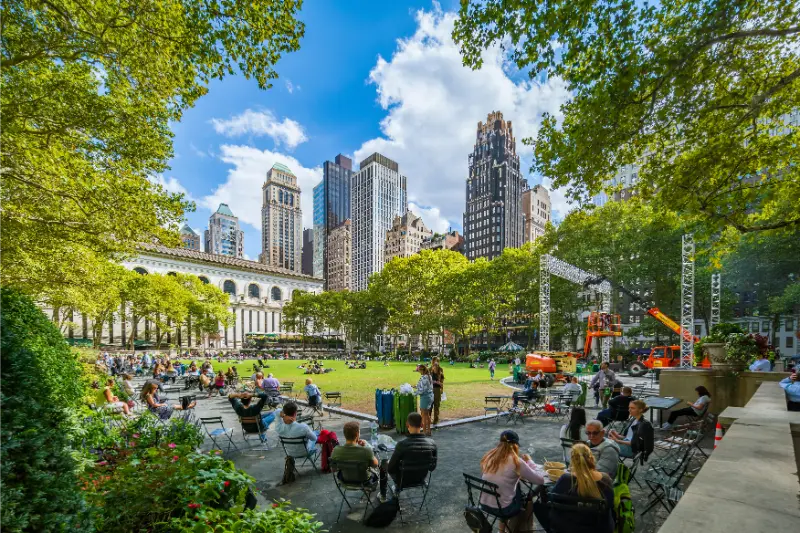
If your priorities are more mixed, begin near the New York Public Library and walk north. The avenue becomes progressively more luxury-focused as you approach Rockefeller Center.
Before making a special trip for a single brand or product, confirm the current store directory or location page. New York retail changes quickly: leases end, departments move, pop-ups open, renovations change entrances and seasonal hours can differ from the normal weekly schedule.
Holiday windows
Late November and December make Fifth Avenue a sightseeing attraction after dark. Crowds are heavy, so serious shopping is usually easier earlier in the day and window viewing later.
Before making a special trip for a single brand or product, confirm the current store directory or location page. New York retail changes quickly: leases end, departments move, pop-ups open, renovations change entrances and seasonal hours can differ from the normal weekly schedule.
A practical route
Begin at the New York Public Library around 42nd Street, walk north on Fifth Avenue, pause at Rockefeller Center and St. Patrick’s Cathedral, continue through the flagship blocks around the 50s, then finish at Central Park. This direction creates a natural sightseeing progression and gives you an outdoor finish after the indoor retail stops.
Keep the route geographically compact. Repeatedly jumping between Midtown, SoHo and Brooklyn for individual stores is one of the fastest ways to waste a New York day. If you have several shopping priorities, group them by neighborhood and place the heaviest purchases near the end of the day.
Sales tax: what international visitors should know
New York City’s general sales-tax rate is 8.875% on many taxable purchases. One important exception is qualifying clothing and footwear priced below $110 per item or pair, which is exempt from New York State and New York City sales tax under the current rules. Clothing or footwear at $110 or more per item is generally subject to the full city rate. Accessories, jewelry, electronics and many other goods follow different rules, so do not apply the clothing exemption to everything you wear or carry.
The threshold applies item by item, not to the total basket. Two qualifying shirts can each be below the threshold even if the combined transaction exceeds $110. Conversely, one coat priced above the threshold is not made exempt because you use a coupon on another item. When a promotion changes the actual selling price, ask the retailer how tax is calculated on the final transaction rather than guessing from the ticket price.
For a deeper explanation, use our New York taxes and fees guide. Tax rules can change, so large purchases should always be checked against current state guidance and the receipt before you leave the store.
Paying by card, cash and foreign currency
Cards and digital wallets are widely accepted, but international travelers should check foreign-transaction fees with their own bank. If a payment terminal offers to charge your home currency, remember that dynamic currency conversion can include a less favorable exchange rate. Choosing US dollars often lets your card issuer handle the conversion, but the cheapest option depends on your specific card.
Keep at least one backup payment method stored separately. A large shopping day is a bad moment to discover that one bank has blocked a transaction as suspicious. If you expect an unusually expensive purchase, consider notifying the issuer or confirming that travel controls are not active.
Returns, receipts and warranties
Return policies are set by the retailer and can be stricter for outlet, clearance, beauty, personalized, vintage or final-sale merchandise. International visitors have an additional problem: returning an item after flying home may be expensive or impossible. Read the receipt before leaving, especially when a purchase is costly or size-sensitive.
For electronics, check voltage, plug compatibility, regional warranties and whether the manufacturer provides service in your home country. For luxury goods, keep original packaging and documentation if practical. For vintage items, inspect seams, zippers, stains, soles and alterations because condition is part of the purchase decision.
How to fit shopping into a New York itinerary
Shopping works best when it follows the geography of the day. Midtown retail can sit between Bryant Park, Rockefeller Center and Central Park. SoHo shopping connects naturally with Nolita and Chinatown. Brooklyn shopping works better with a waterfront or neighborhood day. Outlet trips outside central Manhattan should be treated as dedicated excursions rather than squeezed between timed attractions.
Do not carry expensive or bulky purchases into every attraction. Museums, observation decks, theaters and sports venues can have bag rules, and security lines become slower with large shopping bags. If the hotel is nearby, a 20-minute drop-off can be more efficient than dragging purchases across the city for five hours.
Best time of day and best day of the week
Weekday mornings are generally the easiest period for serious shopping because sidewalks, fitting rooms and cash desks are less crowded. Saturday afternoon is often the opposite. Holiday season changes the equation: window displays are most atmospheric after dark, while actual buying is easier earlier.
For outlets and flea markets, opening time matters more because selection can be part of the value. For department stores, later hours give flexibility. Independent boutiques may open later in the morning, so a 9 a.m. shopping plan in SoHo can leave you walking past closed doors.
What not to do
- Treating Fifth Avenue as only a luxury-shopping trip and missing the architecture and landmarks between stores.
- Starting too late during holiday season, when sidewalks become extremely crowded.
- Assuming every flagship carries outlet-level discounts; Fifth Avenue is primarily about selection, service and experience.
- Carrying large purchases into timed attractions with bag restrictions without checking policies first.
Useful official links
Store lineups and opening hours can change quickly. Check the official website of any must-visit retailer on the day of your visit rather than relying on an old screenshot or social post.
Related Dreaming New York guides
Frequently asked questions
Is shopping in New York cheaper than shopping at home?
Sometimes, but not automatically. Exchange rates, sales tax, outlet pricing, brand strategy and customs allowances all matter. Compare the exact product rather than assuming the US price is always lower.
Can tourists get a sales-tax refund when leaving the United States?
New York does not operate a general VAT-style tourist refund system like some countries. Build sales tax into the purchase decision instead of expecting to reclaim it at the airport.
Should I bring my passport while shopping?
Most normal purchases do not require a passport, but identification can be useful for certain payments, age-restricted goods or specific retailer services. Carry only the identification you actually need and store important documents securely.
When should I buy souvenirs?
Small items can be collected during the trip, but heavy, fragile or expensive purchases are easier near the end. This reduces carrying and packing risk.
Is outlet shopping worth a day of a short New York trip?
Usually only if shopping is a major priority or you have a specific brand list. First-time visitors with three or four days often get more value from city neighborhoods and attractions.
Final advice
The best New York shopping plan is selective. Choose the experience that fits your route, confirm the current hours and store lineup, understand the tax and return rules, and protect the rest of your sightseeing time. A few well-chosen stops will usually produce better purchases and better travel memories than an entire day spent chasing every famous store on a list.