

Downtown Brooklyn is not the borough’s prettiest neighborhood, but it is one of its most useful. Subway lines converge here, civic buildings sit beside shopping streets and new residential towers, and several of Brooklyn’s most attractive districts begin within walking distance. For travelers, the value is less about one postcard view and more about connectivity.
The New York Transit Museum is the strongest standalone attraction, while Borough Hall, Fulton Mall and City Point provide a sense of the commercial center. From here you can walk into Brooklyn Heights, Fort Greene, Boerum Hill or toward DUMBO without returning to Manhattan between each neighborhood.
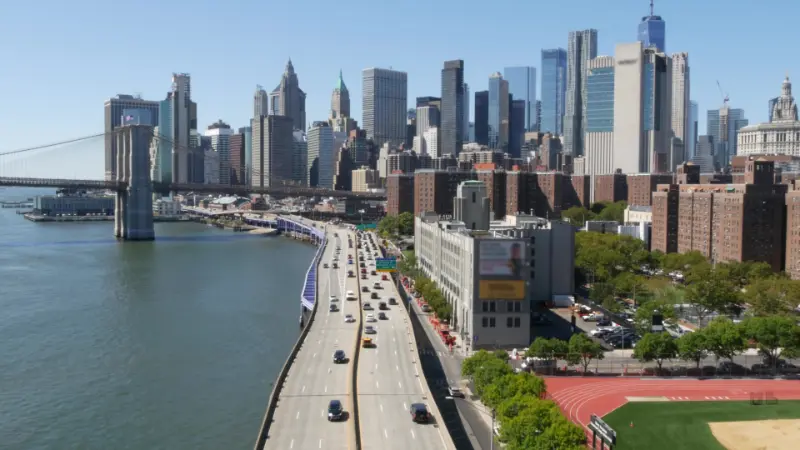
This is the kind of New York neighborhood where over-planning can make the experience worse. A loose route works better than a packed timetable. If this is your first trip, our New York travel guide for first-time visitors helps you place the neighborhood within a larger itinerary.
Why visit Downtown Brooklyn?
The New York Transit Museum is the strongest standalone attraction, while Borough Hall, Fulton Mall and City Point provide a sense of the commercial center. From here you can walk into Brooklyn Heights, Fort Greene, Boerum Hill or toward DUMBO without returning to Manhattan between each neighborhood. The area is most rewarding when you approach it for its own character rather than as a place to race through between famous Manhattan landmarks.
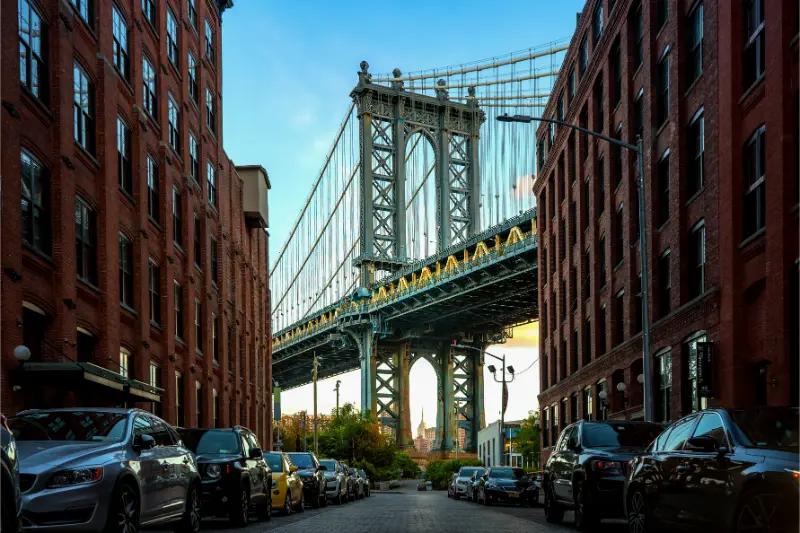
Best things to see and do
Borough Hall and Columbus Park
Brooklyn Borough Hall is the civic landmark at the western edge of downtown. The surrounding plaza and courthouse buildings establish the area’s government-center character and provide an easy starting point for walks toward Brooklyn Heights.
New York Transit Museum
Located in a decommissioned subway station, the Transit Museum is one of New York’s most distinctive museums. Vintage subway cars, system history and hands-on displays make it especially good for families, transit fans and anyone curious about how the city works.
Fulton Mall
Fulton Street is a major retail corridor with chain stores, local businesses and constant pedestrian traffic. It is practical rather than romantic, but useful if you need shopping, food or a sense of everyday commercial Brooklyn.
City Point and DeKalb Market Hall
City Point combines shopping, entertainment and food in a modern complex. The food hall is convenient for groups who want different cuisines, though it should complement rather than replace exploring neighborhood restaurants elsewhere in Brooklyn.
Albee Square
This public space interrupts the dense shopping district and hosts changing activities and seasonal programming. It is a useful orientation point between Fulton Street and City Point.
Historic civic architecture
Courthouses, municipal buildings and older commercial structures survive among modern towers. Looking up reveals more architectural variety than the street-level retail suggests.
Brooklyn Heights next door
Walk west for quieter streets and the Brooklyn Heights Promenade. The transition is abrupt and makes a strong paired itinerary: busy downtown first, residential and waterfront Brooklyn second.

Fort Greene and BAM nearby
Walk east toward Fort Greene and the Brooklyn Academy of Music for parks, brownstones and performance culture. This makes Downtown Brooklyn a useful bridge between two very different sides of the borough.
A practical half-day walking route
This route keeps the day geographically sensible and leaves room for food, photographs and small detours:
- Begin at Borough Hall and look at the civic buildings around Columbus Park.
- Walk east along Fulton Street, using side streets when the shopping corridor becomes too crowded.
- Visit the New York Transit Museum if it matches your interests and opening day.
- Continue toward City Point and DeKalb Avenue for food or shopping.
- Finish by walking into Fort Greene, Boerum Hill or Brooklyn Heights rather than treating Downtown Brooklyn as an isolated destination.
Do not treat the route as a race. New York blocks can look short on a map while traffic lights, subway stairs, queues and spontaneous stops add time. If one place captures your attention, stay longer and drop the least important stop. A neighborhood day is successful when it feels coherent, not when every saved pin is checked off.
How long do you need?
Three to five hours is a realistic first visit for most travelers, depending on whether you include a museum, long meal or park. If your plan contains a paid attraction, allow its real visit time plus at least thirty minutes of buffer. If you are mostly walking, two or three focused hours can still give you a strong sense of Downtown Brooklyn.
One of the easiest mistakes in New York is pairing neighborhoods because they look close on a schematic subway map rather than because they connect well on the ground. Before adding a second area, check the actual door-to-door travel time and decide whether the transfer improves the day.
Where to eat
Downtown Brooklyn is strongest for convenience and variety. Food halls, fast-casual restaurants and chain options are easy, while Boerum Hill, Fort Greene and Brooklyn Heights offer more neighborhood atmosphere nearby. If you have only one meal in Brooklyn, consider walking ten minutes beyond the busiest retail blocks rather than eating wherever you exit the subway.
For a broader strategy, our where to eat in New York guide explains neighborhoods, iconic foods, reservations and tourist traps. On a neighborhood-focused day, the best meal is often the one that does not force you to leave the area and come back.
Best time to visit
Weekdays show the civic and business side at full energy, while weekends can feel more shopping-focused. Rainy days are practical because the Transit Museum, City Point and multiple subway connections give you indoor options. Early evening works well before BAM or Barclays events but crowds rise quickly around major performances.
Light also matters. Residential streets and waterfronts usually photograph better in the morning or late afternoon than under harsh midday sun. If your itinerary is flexible, use weather and sunset time to decide which day should be outdoors and keep museums as a backup for rain.
How to get there and get around
Few Brooklyn neighborhoods have better transit. Borough Hall, Jay Street–MetroTech, Hoyt–Schermerhorn, DeKalb Avenue and Atlantic Avenue–Barclays Center collectively provide access to numerous subway lines. Choose the station closest to your first stop rather than defaulting to Atlantic Terminal.
Once you arrive, walking is usually the best way to understand the area. Use transit for the long jump from your hotel, then avoid repeatedly descending underground for one- or two-stop trips that are more enjoyable on foot. Our New York transportation guide explains subway, bus, ferry and OMNY basics.
Should you stay here?
Downtown Brooklyn is one of the borough’s most practical hotel bases. You sacrifice some residential charm, but gain fast subway access to Manhattan plus walkability to Brooklyn Heights, Fort Greene and DUMBO. For travelers who want to sleep in Brooklyn without making every day a long commute, that trade-off can be excellent.
When comparing hotels, look at the exact walking route to the nearest useful subway station, not only the neighborhood name. Two hotels in the same district can create very different daily travel times. Our where to stay in New York guide provides a broader comparison.
Who will enjoy this neighborhood most?
Downtown Brooklyn is a strong choice for travelers who enjoy walking, food, architecture and the smaller details that show how New Yorkers use their city. It also suits repeat visitors who have already covered Midtown and Lower Manhattan icons. Travelers with only one or two days should first decide whether this area supports their main priorities; a short trip has less room for detours.
Respectful neighborhood travel
Many of the places described in this guide are residential streets rather than formal attractions. Keep stoops, driveways, shop entrances and narrow sidewalks clear. Ask before photographing people at close range, and do not assume a religious building, community center, marina or private garden is open simply because the door or gate is visible. Spending money with local businesses is more useful than treating the neighborhood as a free photo backdrop.
New York neighborhoods also change quickly. A restaurant that dominated social media two years ago may have moved or closed, while a new family business may be more interesting than anything in an old “best of” list. Use current opening information for any place that is essential, then leave room for discovery.
Common mistakes to avoid
- Expecting Downtown Brooklyn itself to look like a brownstone postcard.
- Ignoring the Transit Museum because it sounds child-focused.
- Eating only in the busiest shopping corridor when stronger neighborhood options are close.
- Taking the subway between nearby Brooklyn Heights and Fort Greene instead of walking when weather is good.
- Booking a hotel without checking which subway lines are actually closest.
Useful Dreaming New York guides
- Brooklyn travel guide
- New York Transit Museum guide
- Fort Greene guide
- DUMBO and Brooklyn Heights guide
- where to stay in New York
Practical tips before you go
Wear shoes you can comfortably use for several miles, even if your map suggests a short day. Carry a small power bank because maps, transit directions and photography consume battery quickly. Keep a contactless payment method accessible for transit, and move away from subway stairs or busy doorways before stopping to check directions.
If you are visiting a museum, cultural space, market or seasonal venue, check its official page the evening before. Opening days, timed-entry rules, construction and temporary closures can change. Restaurants and small shops change even faster, so treat older social-media lists as inspiration rather than guarantees.
For current destination information, see the NYC Tourism Downtown Brooklyn guide. Official and local sources should take priority for temporary events, construction and access conditions that a static travel article cannot predict.
Is it worth adding to a first New York trip?
Yes, if Downtown Brooklyn gives you something your main itinerary is missing: a neighborhood meal, residential architecture, waterfront space, local history or a different borough perspective. Do not add it only because it appears on a long list. A first New York trip is usually better when each half-day has a clear purpose and nearby stops support one another.
For many travelers, the most memorable moments happen between scheduled attractions: turning onto a beautiful residential block, finding a bakery, seeing the skyline from an unexpected angle or sitting in a park long enough to watch the neighborhood change around you. Build enough empty space into the plan for those moments to happen.