

Chelsea Market occupies a former industrial complex in Manhattan’s Meatpacking/Chelsea area and has become one of the city’s most recognizable food halls. The building is connected with the former Nabisco factory complex where the Oreo was developed, but today the reason most travelers come is simple: many food choices under one roof, distinctive architecture and an easy connection to the High Line.
The market can be excellent or frustrating depending on timing. At peak lunch hours, narrow passages fill quickly and the experience becomes more about navigating crowds than enjoying food. Visit with a plan, choose one or two things you genuinely want to eat, and combine the market with the neighborhood rather than treating it as an all-day attraction.
This guide is designed to help you decide whether the stop deserves space in your itinerary, how long to allow and what to combine nearby. For the wider planning picture, see our New York travel guide.
Why visit?
Chelsea Market is useful because groups with different tastes can eat in the same place, bad weather matters less, and the location connects naturally with the High Line, Little Island, Meatpacking District and Hudson River. It is also free to enter, so you only spend what you choose to eat or buy.
What to see and do
The main concourse
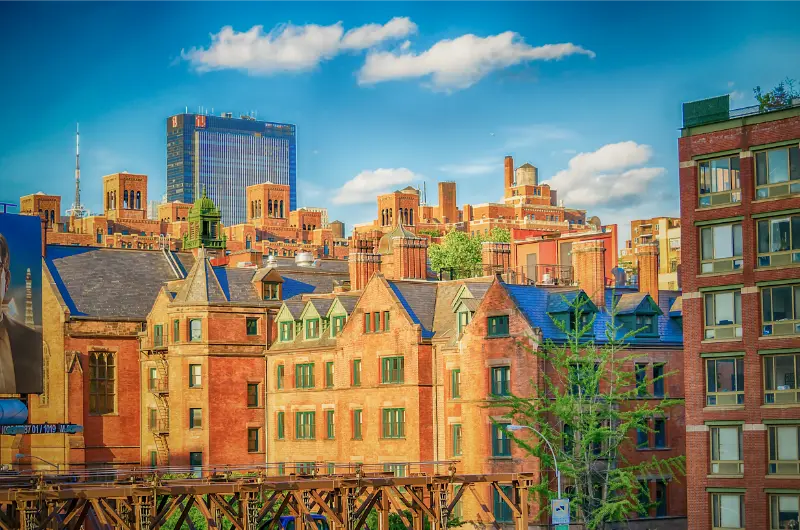
The brick, metal, old factory details and layered signage create much of the atmosphere. Walk the full concourse once before ordering if the market is not too crowded.
Food variety
Vendors cover bakeries, seafood, noodles, tacos, desserts and many other styles. Specific tenants change, so use the current directory instead of relying on an old “top ten” list.
Chelsea Market history
The industrial setting is not decorative imitation; the complex developed from buildings associated with Nabisco. Looking at the structure adds interest beyond the food.
Artists & Fleas and shopping
Retail spaces add independent makers, clothing, gifts and design items. Shopping hours can differ from general market hours.
Ninth Avenue entrance
The classic entrance puts you directly into the busiest part of the market. The Tenth Avenue side can be useful when approaching from the High Line.
High Line connection
Chelsea Market sits directly beside one of New York’s most popular elevated walks. Pairing the two is obvious, but choose the order based on weather and meal timing.
Meatpacking District
A few blocks south, cobblestone streets, Little Island and the Whitney turn the market into part of a larger half-day rather than an isolated food stop.
Evening atmosphere
Later afternoon and early evening can feel less rushed than peak lunch, though individual vendors may close earlier than the building itself.
Hours and current visitor information
Chelsea Market currently lists building hours of 7 AM–10 PM daily. Individual vendors choose their own operating hours and may close earlier, especially on holidays. Christmas Day is currently listed as closed for the market.
Admission, tickets and value
There is no admission fee. Food prices vary widely, and ordering from several vendors can become expensive quickly. A practical strategy is to choose one main item and share one dessert or snack rather than trying to sample everything.
Tickets, free-entry windows, tour routes and individual facility hours are among the details most likely to change. If the visit depends on one specific offer or gallery, recheck the official site shortly before you go rather than relying on a screenshot saved months earlier.
How long should you allow?
Forty-five minutes is enough for a quick look and snack; 90 minutes to two hours works better for a relaxed meal and shopping. Add another one to two hours if you combine the market with the High Line.
Add transition time to the headline duration. New York visits rarely begin the second you reach the building: you may need to clear security, find the correct entrance, use a restroom or walk several blocks from the subway. Protecting a little buffer makes the day feel much less rushed.
Best time to visit
Weekday mornings and mid-afternoons are easier than lunch on weekends. If you want breakfast, remember that not every vendor opens when the building opens at 7 AM. For dinner, verify the specific vendor’s closing time before walking across town.
How to get there
Chelsea Market is at 75 Ninth Avenue between 15th and 16th Streets. The A, C, E and L trains at 14th Street–Eighth Avenue are the most convenient subway options. The M11 bus runs on Ninth Avenue.
What to combine nearby
- High Line: Enter near 14th or 16th Street and continue north toward Hudson Yards.
- Little Island: A short walk west and south for river views and landscaped public space.
- Whitney Museum: Anchor the southern end of a High Line day with American art.
- Greenwich Village: Continue southeast if you want cafés and neighborhood streets after the market.
Keep the rest of the day geographically compact. One attraction, one neighborhood walk and a meal often create a better New York experience than repeatedly crossing Manhattan to collect famous names.
A practical first-visit strategy
Before leaving your hotel, choose the one feature you would be disappointed to miss. That might be a particular gallery, a skyline view, a tour, Monument Park, a performance or simply a meal. Build the visit around that priority first, then treat everything else as optional. This prevents a temporary closure or long queue from making the entire outing feel unsuccessful.
If you are traveling with children, older relatives or anyone with limited stamina, schedule the most important part early. New York days tend to become more tiring than expected because walking continues between attractions. A seated café break or a short park stop can be more useful than another 20-minute detour to a minor landmark.
Accessibility, families and comfort
Check the venue’s current accessibility information if elevators, step-free routes, seating, assistive listening or mobility services matter to your group. A building can be broadly accessible while still having temporary elevator outages, event-specific routes or areas reached by different entrances.
Families should locate restrooms and food options early rather than waiting until someone needs them urgently. For outdoor venues, weather becomes part of accessibility and comfort: waterfront wind, summer heat and cold stadium seating can change the experience more than distance alone.
Photography and visitor etiquette
- Do not stop in the center of narrow aisles to read menus.
- Move aside after ordering so other people can reach the counter.
- Share tables politely during busy periods.
- Check vendor-specific allergy information rather than assuming a food hall can guarantee separation.
- For organized groups, note that Chelsea Market restricts larger tours during peak periods.
Common mistakes to avoid
- Arriving at 1 PM Saturday with a large group and expecting easy seating.
- Assuming every vendor follows the 7 AM–10 PM building hours.
- Buying food from the first stall without seeing what else is available.
- Skipping the High Line even though it is directly adjacent.
- Treating the market as a cheap meal by default; some vendors are premium-priced.
Frequently asked questions
Is Chelsea Market free to enter?
Yes. There is no admission fee; you pay only for food, shopping or specific experiences.
What are Chelsea Market hours?
The building currently lists daily hours of 7 AM–10 PM, but individual vendor hours vary.
What subway is closest?
The A, C, E and L at 14th Street–Eighth Avenue are the most convenient.

When is the least crowded time?
Weekday mornings and mid-afternoons are generally easier than weekend lunch periods.
Can I combine it with the High Line?
Yes. This is one of the most natural half-day combinations in Manhattan.

Useful Dreaming New York guides
- Chelsea and High Line guide
- High Line tips
- Little Island guide
- Whitney Museum guide
- Greenwich Village guide
Check official information before you go
Opening hours, prices, programs, temporary closures and security procedures can change. Before a time-sensitive visit, check the Chelsea Market visitor information. Official same-day information should always take priority over any travel article.
Is it worth adding to your New York trip?
It is worth adding when it gives your itinerary a new kind of experience rather than repeating something you already did. A focused museum can be more rewarding than a third giant museum; a ballgame can add local culture after several landmark days; a waterfront park can reset the pace after Midtown. The goal is not to see every famous place but to build a trip with contrast and enough time to enjoy it.
How to eat well without turning the visit into a food marathon
The market works best when you arrive with a loose shortlist rather than trying to taste ten things. Walk the concourse once, compare queues and choose a main dish that is difficult to find near your hotel. Then split a dessert or bakery item if you still want to sample another vendor. This approach saves money, avoids food waste and leaves enough energy for the High Line.
If your group has very different preferences, agree on a meeting table or landmark before everyone joins separate queues. Mobile service can be inconsistent in crowded indoor spaces, and trying to locate four people while carrying hot food is unnecessarily stressful.