

Central Park is one of the world’s most filmed urban landscapes because it can look romantic, mysterious, luxurious, lonely or chaotic without leaving Manhattan. Directors return to the same bridges, terraces, lawns and paths because the locations are visually strong and instantly communicate New York. For travelers, that means a movie-location walk can also be one of the best first Central Park routes.
This itinerary begins at the southeast corner, where several famous film locations sit close together, and continues north-west through the park. You can stop after Bethesda Terrace for a short route or continue toward Bow Bridge and the west side for a longer half day.
Quick planning summary
| Best approach | Group locations by neighborhood instead of chasing them in movie order |
|---|---|
| Best time | Weekday mornings for residential exteriors and popular public landmarks |
| Important rule | Private homes, hotels and working institutions are not open film sets |
| Best tool | Save a map offline and verify current opening or access rules before leaving |
Locations to visit
1. The Pond and Gapstow Bridge
Where: Southeast Central Park
Gapstow Bridge appears in Home Alone 2 and The Devil Wears Prada, among other productions. The stone bridge, skyline backdrop and pond create a rare image where nature and Midtown occupy the same frame.
Planning tip: Enter near Fifth Avenue and 59th Street. Early morning is best for photographs with fewer people and softer light.

Inside Central Park, screen geography is often compressed by editing. A scene may cut between places that are much farther apart in real life, so use the park map rather than assuming the next location is just beyond the frame.
2. The Mall and Literary Walk
Where: Mid-park around 66th–72nd Streets
The straight elm-lined promenade has appeared in numerous films, including Breakfast at Tiffany’s and many romantic comedies. Its perspective makes it particularly useful for walking-and-talking scenes.
Planning tip: Walk the center briefly for the view, then keep moving so you are not blocking performers or heavy pedestrian flow.
Because this remains an active New York place, the experience can differ from what appears on screen. Entrances move, interiors are renovated, security procedures change and businesses evolve; the most reliable connection is usually the architecture or public setting rather than every background detail.
3. Naumburg Bandshell area
Where: Near the north end of the Mall
The bandshell and surrounding Mall area appear in classic films and contribute to Central Park’s recognizable old-New-York look.
Planning tip: Events can change access. If a performance or setup occupies the space, enjoy it from the edge and continue toward Bethesda Terrace.
Because this remains an active New York place, the experience can differ from what appears on screen. Entrances move, interiors are renovated, security procedures change and businesses evolve; the most reliable connection is usually the architecture or public setting rather than every background detail.
4. Bethesda Terrace and Fountain
Where: Around 72nd Street
Bethesda is one of the park’s most frequently filmed locations. It appears across genres, from Home Alone 2 to The Avengers and many television series.
Planning tip: The lower terrace can be very busy. Arrive early or visit in colder months for easier photographs and more time to appreciate the architecture.
Because this remains an active New York place, the experience can differ from what appears on screen. Entrances move, interiors are renovated, security procedures change and businesses evolve; the most reliable connection is usually the architecture or public setting rather than every background detail.
5. The Lake and Bow Bridge
Where: Central Park Lake
Bow Bridge is a favorite for romance scenes and establishing shots because its cast-iron curve opens views toward both trees and skyline.
Planning tip: Sunset is beautiful but crowded. If photography matters more than golden light, morning is usually easier.
Inside Central Park, screen geography is often compressed by editing. A scene may cut between places that are much farther apart in real life, so use the park map rather than assuming the next location is just beyond the frame.
6. The Central Park Boathouse area
Where: East side of the Lake
The boathouse and lake appear in films such as When Harry Met Sally and in many television productions.
Planning tip: Restaurant service and reservations change, but the surrounding paths are part of the normal park network and do not require dining.
Inside Central Park, screen geography is often compressed by editing. A scene may cut between places that are much farther apart in real life, so use the park map rather than assuming the next location is just beyond the frame.
7. Conservatory Water
Where: East Side around 74th Street
The model-boat pond area has appeared in classic New York films and offers a quieter East Side image than Bethesda.
Planning tip: It is a useful detour if you are continuing to the Upper East Side or the Met.
Because this remains an active New York place, the experience can differ from what appears on screen. Entrances move, interiors are renovated, security procedures change and businesses evolve; the most reliable connection is usually the architecture or public setting rather than every background detail.
8. Central Park West skyline edges
Where: West side of the park
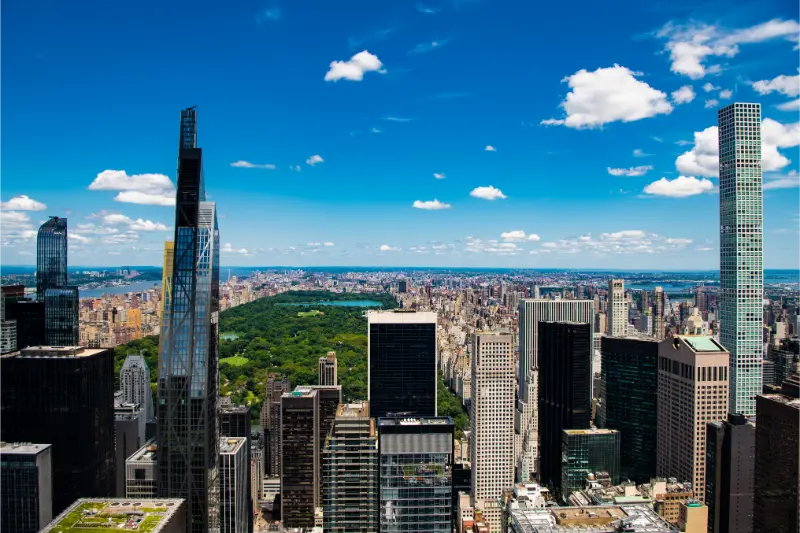
Buildings along Central Park West, including the one associated with Ghostbusters, frequently provide dramatic architectural backdrops from inside the park.
Planning tip: Use park viewpoints rather than approaching private residential entrances. The skyline is often more cinematic from across lawns or water.
Inside Central Park, screen geography is often compressed by editing. A scene may cut between places that are much farther apart in real life, so use the park map rather than assuming the next location is just beyond the frame.
9. Seasonal continuity: movies versus real visits
Where: Throughout the park
Film editing can make locations appear adjacent even when they are separated by substantial walking. Snow, foliage and lighting may also be enhanced or captured over multiple days.
Planning tip: Use a current park map and plan for real distance. A route that looks like ten minutes on screen can become several miles in person.
Because this remains an active New York place, the experience can differ from what appears on screen. Entrances move, interiors are renovated, security procedures change and businesses evolve; the most reliable connection is usually the architecture or public setting rather than every background detail.
How to build a self-guided route without wasting time
Start by marking the two or three locations you would be disappointed to miss. Then put every other stop into neighborhood clusters. In Manhattan, a location that is only two miles away can still require a subway ride, a transfer and extra walking. Film itineraries become frustrating when the schedule follows story chronology instead of city geography.
A practical formula is one downtown cluster, one Midtown cluster and, only if energy allows, one Uptown cluster. Greenwich Village, SoHo and Tribeca combine naturally. Fifth Avenue, Bryant Park, Grand Central and Rockefeller Center belong to a Midtown day. Central Park, the Upper East Side and Upper West Side should be handled together. If you need help with transport, our New York subway guide explains fares, OMNY and first-time route planning.

Leave at least fifteen to twenty minutes of slack around restaurant reservations or timed tickets. Screen-location trips invite spontaneous detours: you may recognize another building, find a street worth photographing or discover that a hotel courtyard is temporarily closed. A flexible route is far more enjoyable than a minute-by-minute checklist.
Private residences, working buildings and fan etiquette
Several famous New York screen locations are ordinary homes. A television exterior does not create a public right to climb a stoop, enter a lobby, look through windows or follow residents through a door. Stay on the public sidewalk, keep voices low and avoid large group poses that block neighbors. This is particularly important in the West Village and Upper West Side, where narrow sidewalks can become congested quickly.
The same principle applies to firehouses, hotels, universities, libraries and transportation hubs. Emergency services must remain unobstructed; hotel guests deserve privacy; students and researchers are not background extras. A respectful visitor usually gets a better experience because security staff have no reason to intervene.
What films and TV get “wrong” about New York geography
Editing routinely makes Manhattan smaller. A character can leave an Upper East Side building, turn a corner in Greenwich Village and arrive at a Midtown restaurant without the audience noticing. Interiors may be filmed on a soundstage or inside a completely different building. Seasonal scenes may combine footage made on different days. These are normal production techniques, not errors.
For travelers, the lesson is simple: verify an address before setting out and distinguish an exterior location from an interior set. When a location is uncertain, it is better to describe the screen connection conservatively than to repeat an internet myth as fact.
Where to stay for a film-location trip
Midtown is the easiest base if your list spans several neighborhoods because many subway lines converge there. Greenwich Village is more atmospheric for fans focused on downtown television locations, while the Upper West Side works beautifully for Central Park and residential-series settings. Compare the total price, transport connections and cancellation terms rather than choosing only by the headline nightly rate.
Disclosure: Dreaming New York may earn a commission from qualifying hotel bookings made through affiliate links, at no extra cost to you.
Compare New York City hotels on Booking.com
Useful official resources
- Central Park Conservancy film guide
- New York Public Library film history
- NYC Mayor’s Office of Media and Entertainment
Frequently asked questions
Are New York filming locations free to visit?
Many exteriors, streets, parks and public plazas are free to see. Museums, tours, restaurants and observation areas may require admission or reservations. A private building should be treated as an exterior-only stop unless it has an explicitly public business inside.
Can I go inside famous TV apartment buildings?
Usually no. Most are private residential properties. An exterior used on television does not mean the lobby or apartments were used, and it does not give visitors permission to enter.
Should I book a guided film tour?
A guided tour can be worthwhile if you want production stories and many locations in a short period. A self-guided route is better when you want to combine fan stops with museums, restaurants and normal sightseeing at your own pace.
What is the best way to photograph filming locations?
Use a small camera or phone, stand on public property and avoid blocking doors or pedestrian traffic. Early morning gives cleaner streets at many famous residential exteriors and park landmarks.
How accurate are online filming-location lists?
Quality varies. Some repeat fictional addresses, confuse interiors with exteriors or identify a modern business as the place used decades ago. Cross-check strong claims and prefer official institutions, production documentation or multiple reliable sources.
Related Dreaming New York guides
- Central Park Guide: Best Things to See, Walking Routes and Practical Tips
- Home Alone 2 Filming Locations in New York
- When Harry Met Sally Filming Locations in New York
- Ghostbusters Filming Locations in New York
- Best Photo Spots in New York
- Best Central Park Photo Spots
- New York Movie & TV Filming Locations
Final advice
Use film and television as a reason to notice New York more carefully, not as an excuse to race between addresses. The best screen-location days combine one or two genuinely meaningful fan moments with neighborhoods, parks, museums and meals you would have enjoyed anyway. That way, even if a doorway has changed or access is restricted, the day still feels like a successful New York experience.