

New York is one of the most photographed cities on Earth, which can make finding an original image feel impossible. The solution is not to avoid the famous viewpoints. It is to understand when to visit, where to stand and what changes when you move even half a block. Light, traffic, weather and street level can transform a familiar skyline into something that feels personal.
This New York photography guide covers classic photo spots and less obvious angles across Manhattan, Brooklyn and Queens, with practical advice for sunrise, sunset, night photography and respectful street shooting.
1. DUMBO and the Manhattan Bridge
The view along Washington Street in DUMBO, with the Manhattan Bridge framed by brick warehouses and the Empire State Building visible in the distance, is one of New York’s best-known compositions. It is also one of the easiest places to photograph badly because cars, delivery vehicles and crowds constantly move through the frame.
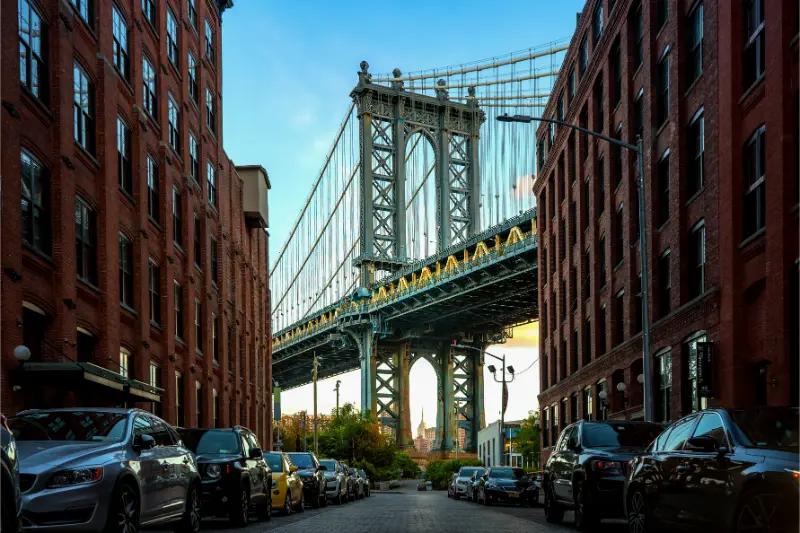
Go early in the morning for more breathing room. Do not stand in the roadway for photographs. Afterward, walk to Pebble Beach and Brooklyn Bridge Park for wider skyline views. Our DUMBO guide includes the full walking route.
2. Brooklyn Heights Promenade
The promenade offers a clean panorama of Lower Manhattan, the harbor and Brooklyn Bridge. It works particularly well in the blue hour after sunset, when the sky still holds color but office lights have begun to appear.
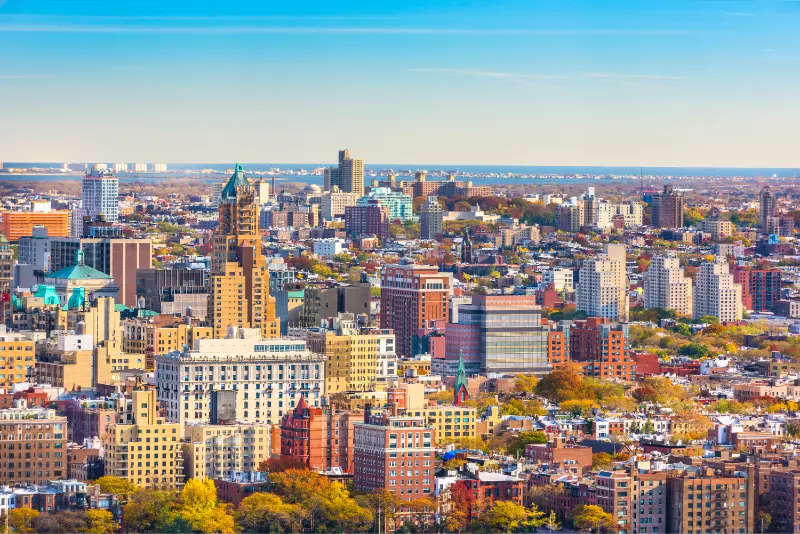
Bring a small lens cloth because river humidity and cold weather can create condensation. Tripod rules can vary in public spaces, so keep equipment compact and never block the walkway.
3. Brooklyn Bridge at sunrise
Sunrise is the best time for a less crowded Brooklyn Bridge. From the Brooklyn side, Manhattan grows larger as you cross; from Manhattan toward Brooklyn, morning light can illuminate parts of the bridge structure depending on season.
Use the cables as leading lines rather than focusing only on the skyline. Keep to the pedestrian area and watch for cyclists and fast-moving commuters.
4. Top of the Rock
For an elevated Manhattan photo with the Empire State Building in it, Top of the Rock remains one of the strongest choices. The north-facing view toward Central Park changes dramatically by season, while the south-facing skyline works in both daylight and darkness.
If you photograph through glass, press the lens close to the surface and shield reflections with a dark sleeve. Compare deck rules and viewpoints in our observation deck guide.
5. Gantry Plaza State Park
Long Island City’s waterfront is one of the best places to photograph Midtown from across the East River. Gantry Plaza State Park combines piers, historic gantries and open skyline views, with the Empire State and Chrysler Buildings appearing across the water.
Late afternoon into blue hour is ideal. The area is less compressed than DUMBO, giving you room to experiment with foreground elements, reflections and longer focal lengths.
6. Roosevelt Island Tram
The tram creates elevated views of the Queensboro Bridge, East River and Manhattan streets. Window reflections are the challenge. Stand near the glass before departure if space allows, but do not push past commuters for a shot.
Once on Roosevelt Island, the waterfront provides quieter compositions looking back toward Manhattan. See our Roosevelt Island guide.
7. Central Park from Gapstow Bridge
Gapstow Bridge gives you a classic combination of stone bridge, pond, trees and Midtown towers. Autumn color and winter snow make the scene particularly photogenic, but every season works.
Early morning reduces crowds and produces calmer water. Walk farther into the park afterward; Bow Bridge, Bethesda Terrace, The Mall and the Reservoir all offer completely different styles of photography.
8. Bethesda Terrace and Arcade
Bethesda Terrace is excellent for architecture, symmetry and people. The tiled arcade beneath the terrace creates rich patterns and softer light on bright days. Move away from the central staircase to find angles without a dense crowd.
Remember that performers and wedding groups may be working. Do not treat someone’s event as free staging for a prolonged photo session.
9. Fifth Avenue and the Flatiron Building
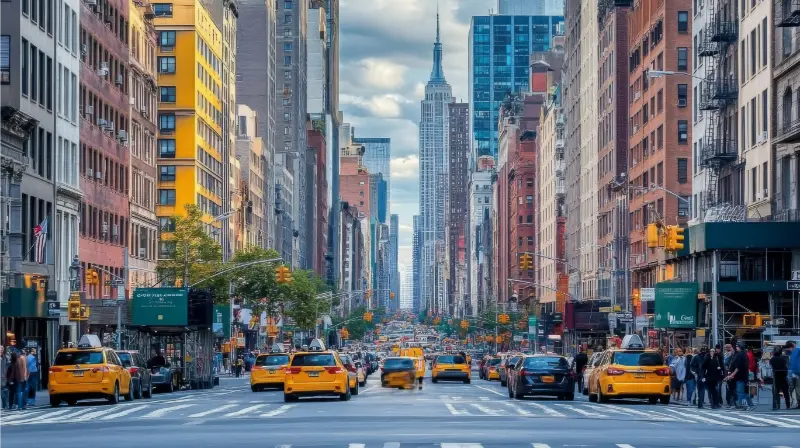
The Flatiron Building rewards movement. Its triangular shape changes as you walk around Madison Square Park and the pedestrian plazas. Wider lenses emphasize the geometry; a longer lens can compress the building with surrounding towers.
Continue north through NoMad for long views toward the Empire State Building. Our Flatiron and NoMad guide maps an easy route.
10. Grand Central Terminal
Grand Central is one of New York’s strongest indoor photography locations for architecture. The Main Concourse combines symmetry, celestial ceiling details, moving commuters and warm interior light.
Photography policies can change for professional equipment and commercial shoots. For ordinary travel photography, keep gear unobtrusive and check current terminal rules if you plan anything more elaborate than a handheld camera.
11. Tudor City Bridge area
The elevated streets around Tudor City create a dramatic view west along 42nd Street toward the Chrysler Building. The location became especially popular for Manhattanhenge-style compositions and long-lens city scenes.
It is a residential area and can become crowded with photographers. Leave room for residents and pedestrians and do not set up equipment across the full sidewalk.
12. Staten Island Ferry
The free Staten Island Ferry provides changing harbor views, including the Statue of Liberty, Lower Manhattan and passing boats. It is better for environmental city images than close portraits of the statue because the ferry does not approach Liberty Island as closely as the authorized sightseeing ferry.
Wind and vibration make long exposures difficult. Use a faster shutter speed and protect your camera from spray in bad weather.
13. Chinatown at street level
Chinatown is excellent for layered street photography: signs, produce markets, restaurants, pedestrians and narrow streets create density. The goal should be documenting public life respectfully, not treating residents as props.
Ask before taking a close portrait, especially inside shops or markets. Wider environmental frames can tell a stronger story than photographing someone’s face from a few feet away without consent.
14. SoHo cast-iron streets
SoHo’s cast-iron facades, fire escapes and cobbled streets work best early, before shoppers fill the sidewalks. Greene Street and Mercer Street offer architectural repetition, while reflections in store windows can add modern layers.
Our SoHo guide explains the neighborhood’s architecture and the best streets to walk.
15. Times Square after rain
Times Square is visually chaotic, but rain can make it more interesting. Wet pavement reflects signs and headlights, creating color beneath the screens instead of only above them.
Use a small umbrella or weather cover and keep gear close to your body. The busiest pedestrian areas are not good places for tripods. Our Times Square guide has practical crowd advice.
Best sunrise photo spots
- Brooklyn Bridge
- DUMBO waterfront
- Central Park
- SoHo streets
- Lower Manhattan waterfront
Sunrise is not only about light. It is the best strategy for photographing famous places with fewer people.
Best sunset and blue-hour spots
- Brooklyn Heights Promenade
- Gantry Plaza State Park
- Domino Park
- Observation decks
- Hudson River waterfront
Check sunset time for the exact date and arrive at least 30 to 45 minutes early. Buildings can block the sun sooner than a weather app suggests at street level.
Photography gear: what you really need
A phone or one versatile camera is enough for most travelers. A wide-to-normal zoom handles architecture and street scenes; a longer focal length is useful for skyline compression. Carrying too much gear can make you enjoy the city less.
Bring spare battery power, enough storage, a lens cloth and a small rain cover. A compact camera bag that closes securely is more practical than an open backpack in crowds.
Tripod etiquette
Tripods can be restricted in museums, observation decks, stations and private properties. Even where they are technically allowed, do not block a sidewalk, bridge path or viewing terrace. A small tabletop support or stabilized handheld technique is often easier.
Photographing people respectfully
Street photography is part of New York’s visual culture, but respect matters. Public-space legality and good etiquette are not the same thing. Avoid humiliating images, do not chase people who decline and be especially careful with children, people in vulnerable situations and private businesses.
Frequently asked questions
Where is the best New York skyline photo?
For Lower Manhattan, Brooklyn Heights and Brooklyn Bridge Park are excellent. For Midtown, Gantry Plaza State Park and parts of the Williamsburg waterfront are strong choices.
What is the best observation deck for photographers?
Top of the Rock is popular because the Empire State Building appears prominently in the view. The best deck still depends on whether you prioritize Central Park, downtown or open-air architecture.
Can I use a tripod in New York?
Rules vary by property and location. Public sidewalks also need to remain unobstructed. Check the specific venue before carrying a large tripod.
Final thoughts
The best New York photographs come from a combination of planning and patience. Know where the classic view is, but then move around it. Return at a different hour, include foreground details and let weather become part of the image. A familiar skyline can still feel like yours when the photograph records how the city looked during your particular trip.