

The East Village and Lower East Side are two of the best neighborhoods in Manhattan for travelers who want New York to feel lived-in rather than staged. Their blocks carry layers of immigration, music, political activism, nightlife, inexpensive food traditions, tenement history, small theaters and independent businesses. The neighborhoods have changed enormously, but they still reward visitors who walk without rushing.
This East Village and Lower East Side guide connects the two areas in one practical route. You will find historic sites, food stops, parks, museums and streets worth wandering, plus advice on when to go and how to enjoy the neighborhoods respectfully.
East Village or Lower East Side: what is the difference?
The boundaries are debated, but Houston Street is a useful dividing line for visitors. The East Village generally sits north of Houston and east of Broadway, while the Lower East Side stretches south toward Delancey Street and East Broadway. Their histories overlap, yet their atmosphere differs.
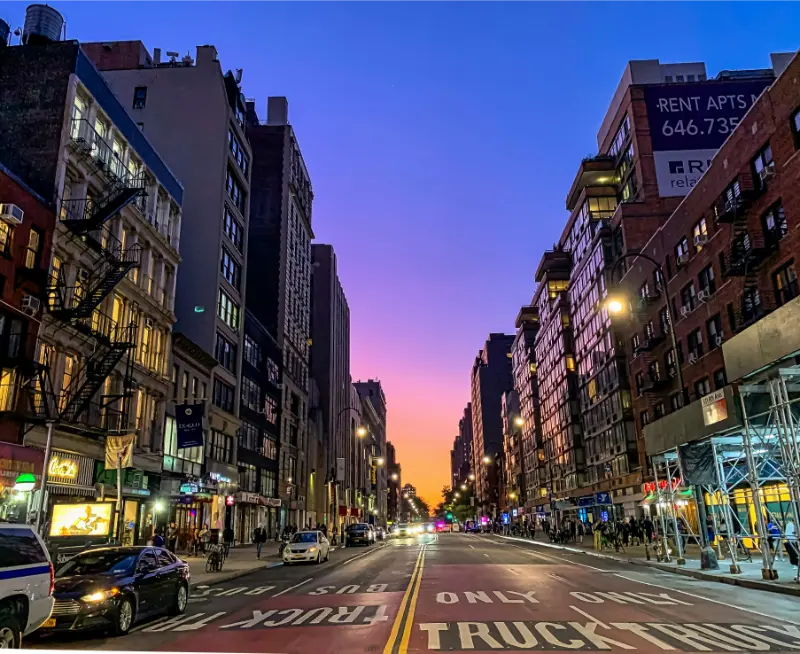
The East Village is associated with counterculture, punk, Ukrainian and Eastern European communities, small performance spaces and nightlife. The Lower East Side is deeply tied to immigrant New York, especially Jewish, Italian, Chinese, Puerto Rican and later global communities that shaped its streets and food.
Begin at Astor Place and Cooper Square
Astor Place is a convenient northern starting point with multiple subway options nearby. The area around Cooper Square introduces the East Village through a mix of institutional architecture, students, commuters and local street life. From here, walk east rather than heading immediately toward the most famous bars.
St. Mark’s Place
St. Mark’s Place, the section of East 8th Street east of Third Avenue, has been associated with youth culture for decades. The storefronts change, but the street still compresses tattoo shops, restaurants, music history, Japanese food, late-night spots and old facades into a few blocks.
Do not expect a preserved museum version of 1970s punk New York. The interesting part is the tension between history and change. Look at upper floors, old cornices and side streets, not just ground-level retail.
Tompkins Square Park
Continue east to Tompkins Square Park. The park has a complicated history involving public gatherings, protest and neighborhood change, but today it is also an everyday community space with playgrounds, dog runs, lawns and benches. It is a good place to pause before moving south.
On surrounding blocks, pay attention to community gardens. Many were created on vacant lots during difficult periods in the city’s history and now provide unexpected pockets of green between tenements.
Alphabet City
Avenues A, B, C and D form the area often called Alphabet City. Visitors tend to stop around Avenue A, but walking farther east reveals a quieter side of the neighborhood, especially in daylight. Avenue C retains a strong Puerto Rican and Latin American identity in parts of the corridor, while the East River waterfront provides more open space.
If this is your first New York trip, explore here during the day or early evening first. The neighborhood is generally easy to visit, but late-night nightlife can make blocks feel very different after midnight.
Food in the East Village
The East Village is one of Manhattan’s best neighborhoods for eating casually. You can build a meal from Ukrainian dishes, Japanese noodles, falafel, pizza, dumplings, bakeries and dessert shops rather than committing to one formal restaurant.
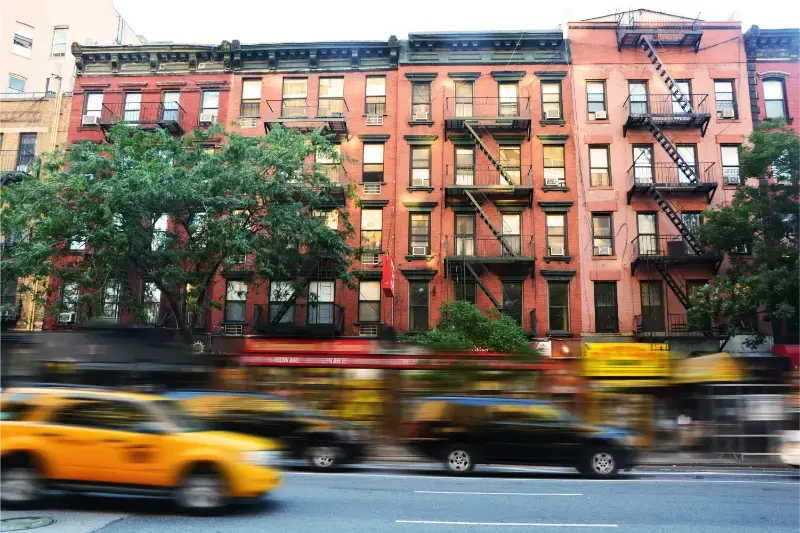
One long-running institution is Veselka at 144 Second Avenue, known for Ukrainian comfort food. Nearby, independent restaurants change often, so use current menus rather than relying on an old viral list. Our broader New York food guide explains how to plan neighborhood-based meals across the city.
Walk south across Houston Street
Houston Street is wide, loud and very Manhattan. Crossing it marks a clear shift toward the Lower East Side. If you are interested in the area’s social history, this is where a casual walk can become much richer with one museum visit.
Tenement Museum
The Tenement Museum interprets immigrant and migrant life through historic buildings and guided experiences on Orchard Street. Rather than presenting immigration as an abstract story, the museum focuses on individual families, apartments and businesses connected to the neighborhood.
Tours are timed and can sell out, so check the official Tenement Museum website for the current program before arriving. Allow enough time that you are not rushing from the tour directly to another reservation.
Orchard Street and Ludlow Street
Orchard Street is one of the best places to see the Lower East Side’s mixture of old and new. Historic tenements stand beside boutiques, bars, galleries and restaurants. Walk south toward Delancey, then use Ludlow Street to loop north again.
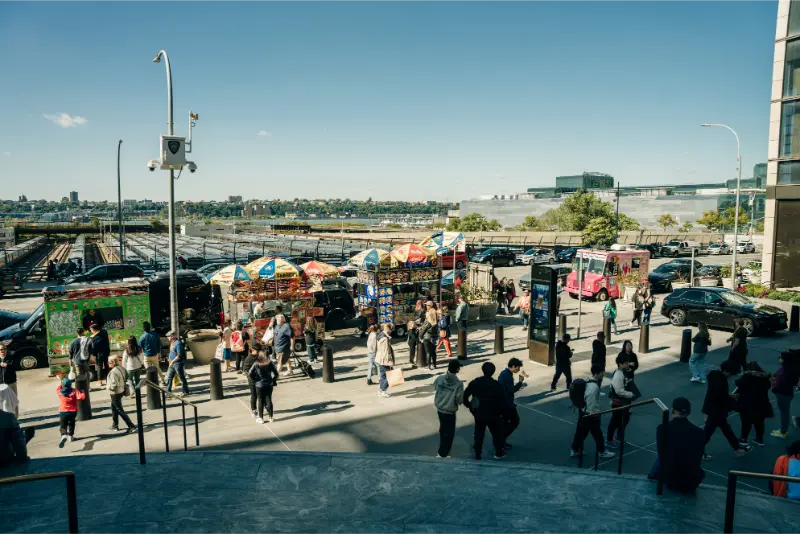
During the day, the architecture is easier to notice. At night, the same streets become part of one of Manhattan’s busiest bar and music districts.
Essex Market and the Delancey Street area
Essex Market reflects the neighborhood’s long market tradition in a modern setting. It is useful for groups because people can choose different foods, and it works especially well as a lunch stop on a rainy or very hot day.
Nearby Delancey Street is also a major transit corridor. The Delancey Street-Essex Street station serves multiple subway lines, making it an easy endpoint if you do not want to continue walking south.
The historic Jewish Lower East Side
The Lower East Side once held one of the world’s largest Jewish urban communities. Traces remain in synagogues, food businesses and institutions, although the neighborhood’s demographics have changed dramatically. The Museum at Eldridge Street, housed in the landmark Eldridge Street Synagogue, is one of the most beautiful places to explore that history.
If you continue toward East Broadway, you also reach the edge of Chinatown. Our Chinatown and Little Italy guide helps extend the walk through Lower Manhattan without repeating ground.
Music, nightlife and performance
The East Village and Lower East Side have long been connected to punk, rock, experimental theater, comedy and downtown performance. Venues change constantly, so it is better to check calendars for the nights of your trip than to build plans around a years-old list.
If you want nightlife, eat first and then choose one or two venues within walking distance. Do not spend half the night crossing Manhattan between reservations. Our New York at night guide includes other evening neighborhoods and skyline ideas.
A half-day walking route
- Astor Place
- St. Mark’s Place
- Tompkins Square Park
- East Village side streets and a food stop
- Walk south across Houston Street
- Orchard Street
- Tenement Museum or Essex Market
- Ludlow Street
- Optional Museum at Eldridge Street and Chinatown
Allow four to five hours without a museum tour. Add at least 90 minutes if you book a Tenement Museum experience.
Best time to visit
Late morning to early evening is best for architecture, markets and museums. Evening is ideal for restaurants, music and bars. On weekend nights, some blocks become crowded and noisy, which may be exactly what you want—or the reason to visit earlier.
Spring and fall are especially pleasant because these neighborhoods are built for walking. In summer, shade is limited on some streets; in winter, the compact geography makes it easy to combine indoor stops.
Where to stay
The East Village has relatively limited hotel inventory compared with Midtown. The Lower East Side has more boutique hotels and can be convenient for travelers prioritizing nightlife, downtown food and Brooklyn access. Light sleepers should check recent reviews for street noise before booking.
For a broader comparison, see our best neighborhoods to stay in New York.
Practical advice
- Wear comfortable shoes: uneven sidewalks and long wandering routes are part of the experience.
- Do not over-plan food: leave room for something you discover while walking.
- Respect residential blocks: not every stoop, courtyard or community garden is a photo set.
- Check museum times: smaller institutions may close earlier or operate fewer days than major museums.
- Use Houston Street carefully: it is a major roadway; cross at lights and allow extra time.
Frequently asked questions
Are the East Village and Lower East Side worth visiting on a first trip?
Yes, especially if you want neighborhood atmosphere, food and history beyond the major Midtown attractions. They are easy to combine with SoHo, Chinatown or Greenwich Village.
How long do you need?
Half a day is enough for a strong introduction. A full day works if you include a museum, several food stops and evening nightlife.
Is the Lower East Side good for families?
During the day, yes. Museums, markets and short walking distances can work well, but the neighborhood becomes more nightlife-oriented late in the evening.
What subway stations are useful?
Astor Place, 8 Street-NYU, Second Avenue and Delancey Street-Essex Street are among the most convenient depending on your route.
Final thoughts
The East Village and Lower East Side are most rewarding when you let history and present-day life overlap. Eat somewhere small, step into a museum, notice old storefronts, rest in a park and walk one avenue farther than the obvious route. These neighborhoods are not frozen versions of downtown New York. Their constant reinvention is the point.
[…] East Village & Lower East Side Guide […]