

DUMBO and Brooklyn Heights sit side by side, yet they offer two very different versions of Brooklyn. DUMBO is industrial, cinematic and energetic, with converted warehouses, cobbled streets and some of the city’s most famous bridge views. Brooklyn Heights is quieter: brownstones, tree-lined streets, historic churches and a promenade that looks directly toward Lower Manhattan.
Visited together, they create one of New York’s best half-day walks. This DUMBO and Brooklyn Heights guide explains how to organize the route, where the best views are, which streets are actually worth your time and how to avoid spending the entire visit waiting for the same photograph everyone else wants.
Where are DUMBO and Brooklyn Heights?
DUMBO lies along the East River between the Brooklyn and Manhattan Bridges. Its name comes from “Down Under the Manhattan Bridge Overpass.” Brooklyn Heights rises immediately south and west of it. The easiest subway stations are York Street on the F train and High Street on the A/C for DUMBO, while Clark Street, Court Street and Borough Hall are useful for Brooklyn Heights.
The neighborhoods are compact enough to explore almost entirely on foot. Hills are mild by most standards, but the climb from the waterfront toward Brooklyn Heights can feel noticeable if you are pushing a stroller or carrying luggage.
1. Washington Street: get the classic view, then move on
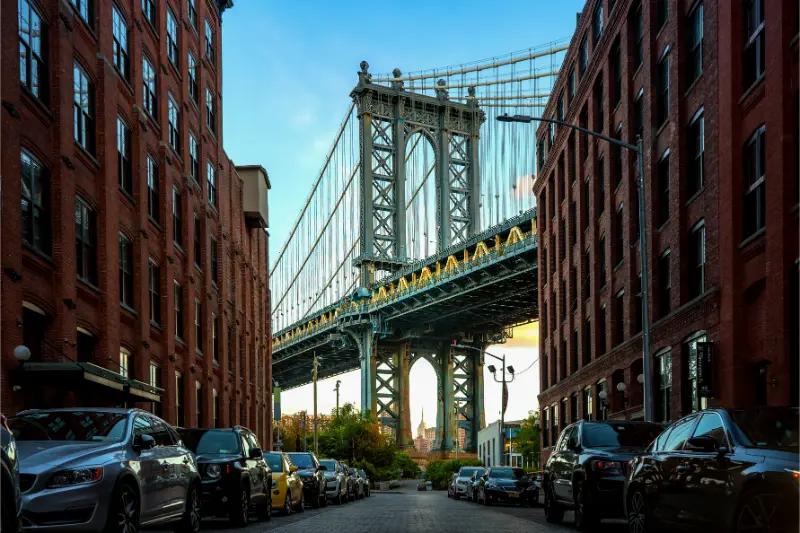
The view along Washington Street toward the Manhattan Bridge, with the Empire State Building framed beneath the bridge, is one of the most recognizable images of Brooklyn. It is worth seeing, but it can become extremely crowded.
Go early in the morning if photography matters. Stay on the sidewalk, watch for vehicles and do not block residents or businesses. Once you have the shot, continue exploring. DUMBO has much more to offer than this single street.
2. Walk under the Manhattan Bridge
The space beneath the Manhattan Bridge gives DUMBO its distinctive urban character. Massive steel structures, cobbles, brick warehouses and the sound of trains overhead create an atmosphere unlike most of Manhattan.
Walk along Water Street and Jay Street, then move toward the waterfront. Look for the way old industrial buildings have been adapted for offices, shops, galleries and apartments. The neighborhood’s visual appeal comes from this contrast between infrastructure and polished redevelopment.
3. Main Street Park and Pebble Beach
Main Street Park, part of Brooklyn Bridge Park, gives you one of the best open skyline views in the city. Pebble Beach is not a swimming beach; it is a small rocky waterfront area where people sit to watch ferries, bridges and the Manhattan skyline.
Late afternoon is beautiful here, but sunrise is far calmer. In summer, bring water and sunscreen because parts of the waterfront are exposed. In winter, expect strong wind off the East River.
4. Jane’s Carousel
Inside a glass pavilion near the waterfront, Jane’s Carousel adds an unexpected historic detail to DUMBO. The restored carousel dates to the early 20th century and is especially popular with families.
Opening days and hours can be seasonal, so confirm them before promising the ride to children. Even when you do not ride, the pavilion makes an attractive foreground for bridge and skyline photographs.
5. Empire Stores and the waterfront food scene
The restored Empire Stores complex demonstrates how DUMBO’s industrial heritage has been repurposed. The area includes shops, food and public spaces, with rooftop or terrace views depending on current access. Nearby restaurants and food-hall options make this a convenient lunch stop.
Do not feel obligated to eat at the most famous place. DUMBO prices can be high. If your budget matters, compare menus or continue into Brooklyn Heights, Downtown Brooklyn or nearby neighborhoods.
6. Brooklyn Bridge Park
Brooklyn Bridge Park stretches along the waterfront and is far larger than many first-time visitors realize. Piers offer lawns, sports areas, playgrounds and open harbor views. You can spend ten minutes here or several hours.
Families should consider building the day around the park rather than treating it as a photo stop. Travelers without children may prefer a shorter waterfront walk before climbing toward Brooklyn Heights.
7. Walk toward Brooklyn Heights
One of the most enjoyable transitions from the waterfront to Brooklyn Heights is via the pedestrian connections around Squibb Park. The climb gives you a gradual change from modern waterfront Brooklyn into residential brownstone streets.

Once above the park, traffic and tourist density drop quickly. This is the point where many visitors discover that Brooklyn Heights may be the more memorable half of the day.
8. Brooklyn Heights Promenade
The Brooklyn Heights Promenade is a raised pedestrian walkway with panoramic views of Lower Manhattan, New York Harbor and the Brooklyn Bridge. It is one of the city’s classic free viewpoints and a completely different experience from the busy bridge walkway.
In 2026, New York City has announced future major work connected to the BQE corridor beneath and around the promenade, with larger construction planned later in the decade. Current access can change around infrastructure work, so check local notices if this viewpoint is essential to your plans.
9. Walk the brownstone streets
Brooklyn Heights is one of New York’s most beautiful residential neighborhoods. Streets such as Pierrepont, Willow, Hicks and Columbia are lined with 19th-century townhouses, churches and mature trees. The pleasure is architectural rather than attraction-based.
Respect private stoops. They may look like perfect photo settings, but they are entrances to people’s homes. Photograph from public sidewalks and keep voices low on quiet residential blocks.
10. Plymouth Church
Plymouth Church has deep connections to the abolitionist movement and Henry Ward Beecher. Its history gives the neighborhood a layer many visitors miss when they focus only on brownstones and skyline views.
Public access and tours depend on programming, so check the church’s current schedule if you want to go inside. Even from outside, it is a useful stop for understanding the neighborhood’s 19th-century importance.
11. Center for Brooklyn History
The Center for Brooklyn History, part of Brooklyn Public Library, occupies a striking landmark building and offers exhibitions, archives and programs focused on the borough. It is an excellent indoor option in bad weather and helps place Brooklyn’s rapid change into context.
Hours and exhibition access vary, so consult the official calendar before making it the anchor of your day.
12. Walk the Brooklyn Bridge
You can walk the Brooklyn Bridge either before or after visiting DUMBO and Brooklyn Heights. For first-time visitors, starting in Manhattan and walking toward Brooklyn provides the skyline ahead and lets you finish in the neighborhoods. Starting in Brooklyn and walking toward Manhattan gives you stronger Manhattan views as you move.
The bridge can be very crowded at midday. Early morning is more comfortable. Cyclists and pedestrians have separate infrastructure now, but pay attention to signage and never stop abruptly in narrow areas.
See our Brooklyn travel guide for a wider borough plan.
13. Add the Brooklyn waterfront ferry
NYC Ferry can be a scenic way to continue toward Williamsburg, Wall Street/Pier 11 or other waterfront neighborhoods. In 2026 a standard adult one-way NYC Ferry ticket is $4.50, while transfers within the ferry network are available under current rules. Ferry fares are separate from subway OMNY fares.
Check the official NYC Ferry ticket page because fares and schedules can change. On warm weekends, popular boats can fill, so arrive before departure rather than walking up at the last second.
A perfect half-day route
Arrive at York Street early, photograph Washington Street, walk Water Street and the waterfront, see Pebble Beach and Jane’s Carousel, then follow Brooklyn Bridge Park toward Squibb Park. Climb into Brooklyn Heights, walk the Promenade and residential streets, then finish near Borough Hall for an easy subway return.
This route takes roughly three to four hours at a relaxed pace. Add lunch and you have an ideal half day.
A sunset route
For sunset, explore Brooklyn Heights first in the late afternoon, then reach the Promenade and waterfront as the light changes. After sunset, continue into DUMBO when the bridges and Manhattan skyline are illuminated.
Photographers should bring a small tripod only if they can use it without obstructing paths. Popular waterfront spots can be crowded, especially on summer weekends.
DUMBO with children
DUMBO is excellent for families because the day can include a carousel, playgrounds, lawns and ice cream rather than only architecture. Brooklyn Bridge Park has enough open space to reset children after a dense Manhattan morning.
Strollers are manageable, although cobbled streets and the climb toward Brooklyn Heights can be uneven. Use accessible paths rather than forcing stairs.
Where to eat
DUMBO has famous pizza, cafes, bakeries and food-hall options, but lines can be long. Decide whether a specific restaurant is part of the experience or whether you simply need a good meal. If the line exceeds your patience, there are many alternatives within a fifteen-minute walk.
For broader recommendations, read our New York food guide.
Best time to visit
Early weekday mornings are best for photography and quiet streets. Late afternoon is best for skyline light. Summer weekends are lively but crowded. Winter can be beautiful on clear days, though exposed waterfront wind is a serious factor.
If rain is forecast, prioritize Brooklyn Heights architecture and indoor stops, then return to the waterfront when conditions improve.
Common mistakes to avoid
- Spending forty minutes waiting for a Washington Street photo and ten minutes in the rest of DUMBO.
- Skipping Brooklyn Heights because it lacks a single blockbuster attraction.
- Walking the Brooklyn Bridge at the hottest time of a summer day.
- Blocking residential stoops for portraits.
- Assuming Pebble Beach is a swimming beach.
- Eating at the first crowded place without checking alternatives.
- Underestimating wind along the East River.
Frequently asked questions
How much time do I need for DUMBO and Brooklyn Heights?
Three to four hours is ideal for a relaxed walk. Add more time if you plan a long lunch, playground stop or Brooklyn Bridge crossing.
Is DUMBO worth visiting at night?
Yes. Bridge lighting and skyline views are excellent, but residential streets become quieter, so keep the late part of the visit focused on well-used waterfront and commercial areas.
Can I combine DUMBO with Williamsburg?
Yes. NYC Ferry or subway connections can work, but give each neighborhood enough time. Do not turn the day into constant transport.
Which is better, DUMBO or Brooklyn Heights?
DUMBO is more dramatic and photogenic; Brooklyn Heights is calmer and more atmospheric. Together they are much stronger than either one alone.
Final advice
Come for the bridge views, but stay for the contrast. DUMBO gives you industrial Brooklyn reinvented; Brooklyn Heights gives you one of the city’s most elegant residential districts. Walk slowly enough to notice both, and this becomes far more than a social-media photo stop.