

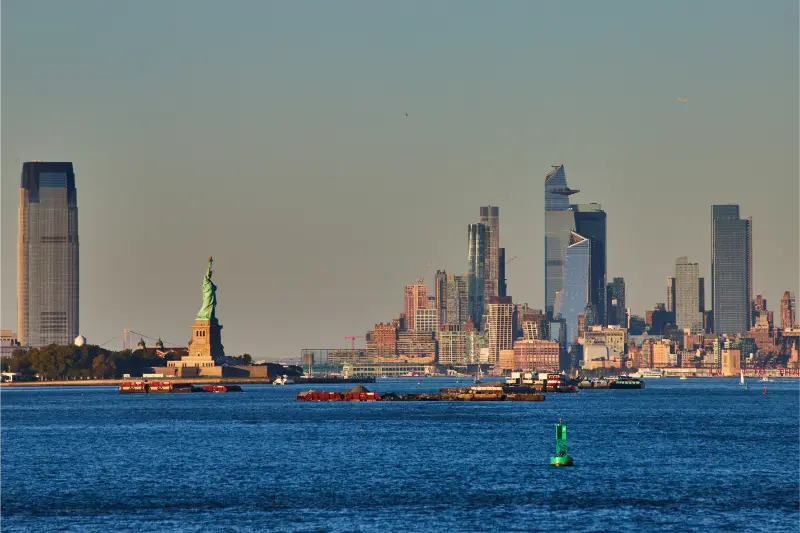
Seeing New York from the water changes the scale of the city. Manhattan becomes a skyline instead of a canyon, the Statue of Liberty appears in its harbor context and bridges connect boroughs in a way that makes more sense than a subway map. The word “cruise,” however, covers very different products: narrated sightseeing boats, sunset sails, dinner cruises, fast express trips and public ferries. The right choice depends on how much time you have, whether you want narration, how important sunset is and where the boat actually departs.
This guide to New York harbor cruises is designed for travelers who want a useful plan rather than a list copied from social media. New York changes quickly, so schedules, door policies, prices and operating hours should always be confirmed on the venue or operator’s official site shortly before you go.
Quick picks
| Place or area | Location | Best for |
|---|---|---|
| Circle Line Best of NYC | Pier 83 | long narrated sightseeing |
| Circle Line Harbor Lights | Pier 83 | sunset-to-night skyline views |
| Circle Line Liberty options | Pier 83 / Pier 16 | shorter Statue-focused trips |
| Classic Harbor Line | Chelsea Piers | smaller yachts and sailing atmosphere |
| City Cruises | Manhattan piers | dining and event-style cruises |
| NYC Ferry | multiple piers | budget transit with skyline views |
| Staten Island Ferry | Whitehall Terminal | free harbor crossing |
Best options to consider
1. Circle Line sightseeing cruises
Location: Pier 83 and selected Pier 16 departures.
Circle Line is the classic narrated sightseeing operator. Its 2026 schedule includes full-island, landmarks, Liberty-focused and Harbor Lights products, with departure times varying by season. Choose it when commentary and broad city orientation matter. Check the pier carefully: Midtown Pier 83 and Seaport Pier 16 are not interchangeable and can require very different travel time from your hotel.
Check the official website for the current calendar and policies
2. Classic Harbor Line
Location: Chelsea Piers.
Classic Harbor Line uses smaller yachts and sailing vessels, creating a calmer experience than a large sightseeing boat. It is a strong choice for couples, architecture fans or anyone who values the atmosphere of the vessel as much as the list of landmarks. Sailing routes and duration depend on weather, season and product, so compare the exact itinerary before booking.
Check the official website for the current calendar and policies
3. City Cruises
Location: Multiple Manhattan piers.
City Cruises focuses heavily on dining, brunch and event-style trips in addition to sightseeing. This can work for celebrations because the meal and view are combined, but it also means the experience is less flexible than a simple one-hour harbor loop. Verify the departure pier, dress expectations and what food is included in the ticket tier.
Check the official website for the current calendar and policies
4. NYC Ferry
Location: East River and other routes.
NYC Ferry is public transportation, not a narrated tour, but several routes deliver excellent skyline and bridge views for a fraction of the cost of a commercial cruise. Use it when you already want to visit Brooklyn, Governors Island seasonally, Queens or Lower Manhattan. You are paying for transport, so do not expect narration or a sightseeing loop back to the same pier.
Check the official website for the current calendar and policies
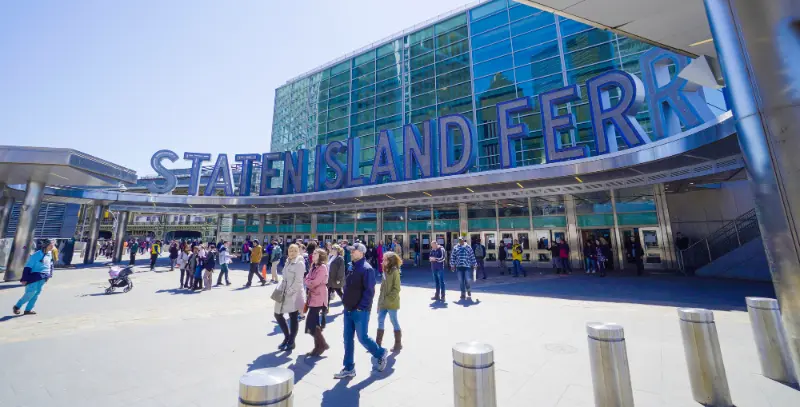
5. Staten Island Ferry
Location: Whitehall Terminal to St. George.
The Staten Island Ferry is free and offers harbor views with the Statue of Liberty visible from the route. It is not a close-up Statue tour and it does not circle landmarks for photography. Its strength is simplicity: you can add the crossing to a Lower Manhattan day without buying an attraction ticket.
Check the official website for the current calendar and policies
6. Short Statue and harbor cruises
Location: Lower Manhattan options.
Short cruises make sense when you want water views but cannot dedicate half a day. They usually prioritize Lower Manhattan, Ellis Island and the Statue of Liberty rather than circumnavigating Manhattan. Compare how long the boat spends underway and whether the route passes close enough to the landmarks that matter to you.
7. Sunset and night cruises
Location: Seasonal schedules.
Sunset departures are popular because one trip can include daylight, golden hour and illuminated skyline views. They are also the most sensitive to season: a “sunset” departure in June behaves differently from one in November. Check the actual sunset time for your date and the operator’s route rather than assuming the name guarantees a specific lighting moment.
Which side of the boat is best?
There is no universally best side because boats turn, routes curve and passengers move. Instead of defending one railing for the entire trip, learn the rough route and change position when the vessel is stable and staff allow movement. On busy cruises, arrive early enough to understand the outdoor deck layout before departure.
Weather changes the experience
Wind on the water can make a mild Manhattan evening feel cold, especially in spring and fall. Carry a layer even when the city streets feel warm. Rain does not automatically cancel a cruise, and haze can reduce long-distance views without making the trip worthless. If photographs are your priority, choose a ticket with reasonable cancellation or rescheduling terms.
Cruise versus the Statue of Liberty ferry
A harbor cruise is for views from the water. The official Statue City Cruises ferry is for landing on Liberty Island and Ellis Island with National Park access. Do not confuse the two products. If visiting the museum and island is essential, book the official island ferry; if skyline photography is the priority, a separate sightseeing cruise may be better.
Choose the departure pier before the cruise
Departure location is one of the most important differences between New York harbor products. Pier 83 in Midtown West, Chelsea Piers and Lower Manhattan terminals can be far apart in real travel time. Put the pier into your route planner before buying the ticket and add a buffer for finding the correct entrance, check-in line and boarding area.
Reserve the view you actually want
Some cruises emphasize narration, some food, some sailing and some photography. A longer route is not automatically better. If your priority is the Statue of Liberty, confirm how close the vessel passes. If your priority is skyline light, compare departure time with sunset on your exact date. If you want a calm meal, a fast sightseeing boat may be the wrong format.
Understand the full ticket price
Compare taxes, service fees, seating upgrades, food, drinks and cancellation terms. Premium decks can be worthwhile for a celebration but unnecessary when outdoor access is available to every passenger. Do not assume a dining ticket includes every beverage, and do not assume a cheap ferry ticket provides narration or a loop back to the same pier.
Families and accessibility
Families should check stroller rules, child ticket categories, restroom access and the amount of time children will remain on board. Travelers with mobility needs should ask about gangways, elevator access between decks and seating. Water levels, vessel design and pier infrastructure can affect the boarding experience even when a company generally advertises accessibility.
Weather and motion
Wind, rain, heat and haze influence a harbor trip more than a neighborhood walk. Bring an extra layer and secure hats or loose items on open decks. If anyone is prone to motion sickness, choose a larger vessel, stay near the center and consider medical advice before travel. Bad weather can change routes or cancel departures, so keep the operator’s contact information available.
Photography and phone battery
Harbor trips are excellent for photographs, but screens can consume battery quickly while you are also using maps and tickets. Start with a charged phone and keep important booking details offline. Protect the lens from spray and avoid blocking stairs or emergency paths for a photograph. The skyline changes quickly; take a few frames, then look up and enjoy the crossing.
Where to stay for waterfront plans
Midtown West is convenient for Pier 83, Chelsea and Flatiron work well for Chelsea Piers, and Lower Manhattan is simplest for Seaport departures and the Staten Island Ferry. Do not move hotels only for one cruise, but factor the pier into the day so you are not crossing the city at rush hour immediately before boarding.
How to fit a harbor cruise into a New York itinerary
A harbor trip works best when the rest of the day is geographically compatible with the pier. Combine a Pier 83 departure with Hudson Yards, the Intrepid Museum or Midtown West; combine Chelsea Piers with the High Line and Chelsea; combine a Seaport departure with Wall Street, the Brooklyn Bridge or Lower Manhattan. Leave at least one hour of buffer before boarding if the previous activity has timed entry or airport-style security.
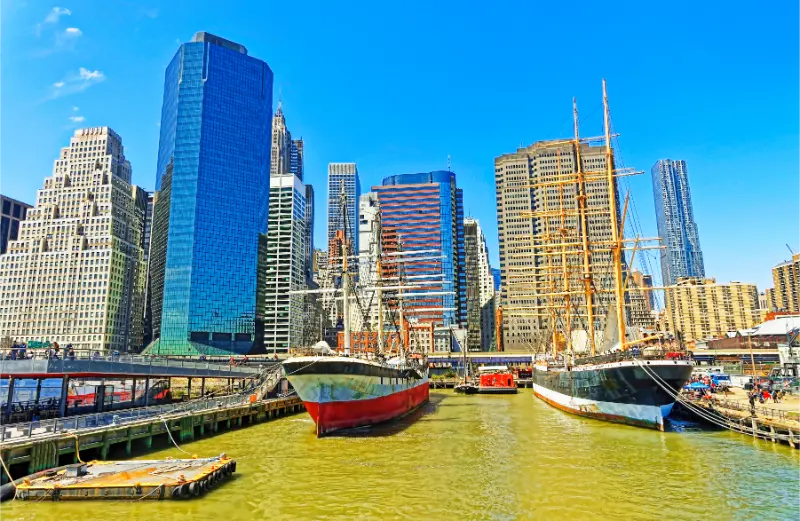
For a first trip, one commercial sightseeing cruise is usually enough. Add public ferries later only when they also move you toward another neighborhood. Repeating similar harbor views can consume valuable city time that might be better spent walking Brooklyn Heights, Central Park or a neighborhood you cannot understand from the water.
Where to stay if this is a priority
Accommodation should support the type of evenings you expect to have. A well-connected hotel can be worth more than a small nightly saving if it removes a long late transfer. Check the exact subway lines, walking route and recent guest comments about street noise before booking.
Disclosure: Dreaming New York may earn a commission from qualifying hotel bookings made through affiliate links, at no extra cost to you.
Compare New York City hotels on Booking.com
Common mistakes to avoid
- Planning several far-apart stops because they look close on a schematic map.
- Relying on an old blog post instead of checking the current official calendar or operating hours.
- Ignoring age rules, required purchases, check-in cutoffs or bag policies until arriving at the door.
- Using the entire phone battery on photos and then having no power for directions home.
- Assuming the most famous option is automatically the best fit for your group, budget or neighborhood.
- Booking every minute of the evening and leaving no room for queues, weather or a spontaneous change of plan.
Frequently asked questions
Is a New York harbor cruise worth it?
Yes when skyline views, the Statue of Liberty from the water or a slower perspective on Manhattan matter to you. It is less essential if your itinerary is already packed and you mainly want transportation.
What is the best time for a cruise?
Late afternoon into sunset is the most photogenic, while daytime provides clearer landmark identification and narration. Winter sunset departures can be much earlier than summer.
Do cruises run in bad weather?
Many operate in light rain, but severe weather can change or cancel service. Check the operator on the day of travel.
Is the Staten Island Ferry the same as a sightseeing cruise?
No. It is free public transportation with good harbor views but no narration, dedicated sightseeing route or close-up Statue stop.
How early should I arrive?
Follow the operator’s stated check-in time and add extra travel margin. Busy seasonal departures can have lines before boarding.
Related Dreaming New York guides
- Staten Island Travel Guide: Ferry Views, Snug Harbor and Things to Do
- NYC Ferry Guide 2026: Routes, Fares, Tickets and Best Scenic Rides
- Lower Manhattan Guide
- New York at Night: 15 Best Things to Do After Dark
- Best Jazz Clubs in New York City: 7 Essential Venues for Live Jazz
- Best Comedy Clubs in New York City: 7 Places for Stand-Up and Late Shows
Final advice
The best New York harbor cruise is the one that matches your desired view, pier and available time. Confirm the exact vessel, departure point and weather conditions, then arrive early enough that boarding is part of the experience rather than a sprint across Manhattan.