

New York’s subway is usually the fastest way to move around the city, but the NYC Ferry can be one of the most enjoyable. Instead of tunnels and crowded platforms, you get open-water views, bridges, skyline angles and direct access to several waterfront neighborhoods.
The ferry is not a substitute for the subway on every journey. Routes are less frequent, landings may be farther from your final destination and weather can affect service. Used selectively, however, it becomes both transportation and sightseeing. This guide explains fares, routes, tickets, transfers and the trips that make the most sense for visitors in 2026.
What is NYC Ferry?
NYC Ferry is the city’s passenger-ferry network serving waterfront neighborhoods across the five boroughs. It is different from the free Staten Island Ferry and different from the Trust-operated ferry to Governors Island, although some destinations overlap.
Routes connect places including Wall Street/Pier 11, East 34th Street, Long Island City, Astoria, Williamsburg, DUMBO, Red Hook, Rockaway and other waterfront stops. Route patterns can change seasonally, so always check the current map before traveling.
NYC Ferry fares in 2026
As of September 2026, the standard adult one-way fare is $4.50. A 10-trip pass costs $29, and NYC Ferry also lists a two-day unlimited ticket for $15 in its app. Discounted fares are available to eligible riders.
Because fare products can change, confirm the current price on the official NYC Ferry ticketing page before your trip.
The subway and local bus base fare is $3, so the ferry is not always the cheapest way to travel. Its value comes from the route and the experience, not simply the ticket price.
How to buy tickets
You can buy tickets through the NYC Ferry app and at ticket vending machines at ferry landings. Tickets must be purchased before boarding. The app is convenient because it also provides schedules and service information, but travelers without a compatible phone can still use machines at the docks.
Do not activate a mobile ticket too early. Activate it when you are close to boarding and follow the app instructions.
How transfers work
NYC Ferry allows free transfers to a different ferry route within a defined transfer window. The current system states that transfers are valid for 120 minutes after the start of the one-way trip.
A transfer does not mean you can ride out and back on the same route using one ticket. Round trips require the appropriate additional fare. Keep paper tickets if you need them as proof for a transfer.
NYC Ferry vs Staten Island Ferry
They are separate services. The Staten Island Ferry is free and runs between Lower Manhattan and St. George. NYC Ferry charges a fare and operates multiple routes.
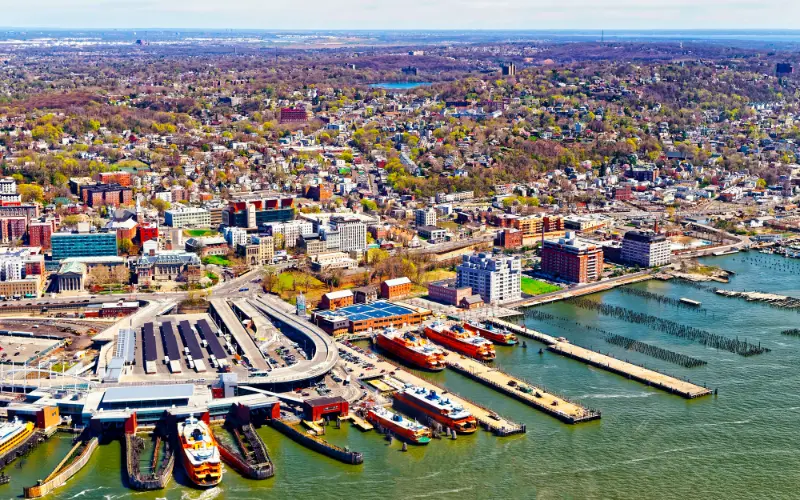
If your only goal is a free harbor ride with Statue of Liberty views, choose the Staten Island Ferry. If you want to reach Williamsburg, DUMBO, Astoria, Red Hook or other waterfront neighborhoods, NYC Ferry may be more useful.
NYC Ferry vs subway
The subway wins when speed and frequency matter. Trains usually run more often and penetrate much farther inland. Ferry landings sit on the waterfront, so a place that looks close on a map may still require a long walk uphill or several blocks through a neighborhood.
The ferry wins when the route itself is part of the day. Traveling from Wall Street to DUMBO or Williamsburg can turn an ordinary transfer into a memorable skyline ride.
Best NYC Ferry rides for visitors
Wall Street to DUMBO
This is one of the easiest ferry experiences to add to a first trip. Explore Lower Manhattan, board near Pier 11 and cross to Brooklyn. From DUMBO you can walk through Brooklyn Bridge Park and continue toward Brooklyn Heights.

Our DUMBO and Brooklyn Heights guide explains what to do after you arrive.
Manhattan to Williamsburg
Approaching Williamsburg from the East River gives you a better sense of the Brooklyn waterfront than arriving underground. It works well for a late-afternoon visit, especially if you plan to stay for dinner or sunset.
See our Williamsburg guide for a walking route.
East 34th Street to Long Island City or Astoria
This route can be useful if you want skyline views from Gantry Plaza State Park or are exploring Queens. The ferry makes the East River feel like a connection rather than a barrier.

Red Hook
Red Hook is one of Brooklyn’s more awkward neighborhoods to reach by subway because no station sits directly in its center. Ferry service can therefore be genuinely practical, not just scenic.
Check the exact route and times before committing, because missing a boat can create a long wait.
Rockaway
The Rockaway route is longer and can feel almost like a mini cruise. It is useful for a beach day in warm weather, but service patterns and reservation products can change during summer. In 2026, certain Rockaway departures use a reservation option designed to manage peak demand.
For a beach trip, check both weather and return schedules carefully. Do not wait until the last convenient boat if you have an evening reservation in Manhattan.
Governors Island and NYC Ferry
NYC Ferry serves Governors Island, but the island also has separate Trust-operated ferries. The tickets are not interchangeable. If Governors Island is your destination, compare the departure point and schedule that best fits your day rather than assuming one ferry product covers everything.
Read our Governors Island guide for a full itinerary.
Where to sit for the best views
Outdoor upper-deck seating is popular because it provides unobstructed views, but wind can be strong and space fills quickly. Indoor seats are more comfortable in cold, rain or extreme heat.
There is no single “best side” for every route because ferries turn and approach landings from different directions. Instead of obsessing over one seat, move your attention as the skyline changes. If you are taking photos, keep straps secure and avoid blocking boarding areas.
How early should you arrive?
For a normal weekday trip, arriving 10 to 15 minutes before departure is usually sensible. Popular summer routes can require more time. Boarding is generally first-come, first-served, and a ticket does not always mean a specific seat is guaranteed unless you are using a route-specific reservation product.
If missing the boat would make you late for a flight, show or timed attraction, use the subway or allow a very large buffer.
Can you bring luggage, bikes or strollers?
Bikes are permitted under NYC Ferry rules, and current ticket information lists no extra bike charge. Strollers and normal travel bags are common, but space on crowded boats is limited.
For airport transfers, the ferry is rarely the simplest option because most airports are not directly connected to the network. Use our New York airports guide instead.
Accessibility
NYC Ferry can be useful for travelers who want to avoid subway stairs, but access conditions at individual landings and water levels can matter. Check official accessibility information for the route you plan to use, especially if you travel with a wheelchair or have difficulty on ramps.
Combine this with our accessible New York City guide.
Weather and cancellations
Ferry travel is more exposed to weather than the subway. Strong wind, storms, ice or operational issues can delay or alter service. On very hot days, waiting at an uncovered landing can also be uncomfortable.
Check service alerts before leaving the hotel. If you have a timed ticket at the destination, keep a subway or bus backup route in mind.
A ferry-based sightseeing afternoon
Start in Lower Manhattan around Wall Street or the South Street Seaport. Take NYC Ferry to DUMBO, walk through Brooklyn Bridge Park, continue north along the waterfront and then board another ferry toward Williamsburg if timing works.
Have dinner in Williamsburg and return to Manhattan by ferry or subway. This creates a sightseeing day where transportation becomes part of the experience rather than dead time.
Is the two-day unlimited ticket worth it?
It depends on how much ferry travel you actually plan to do. At current prices, travelers taking multiple ferry trips over two days may find the unlimited product attractive. But most first-time tourists use the subway far more often, so do not buy it simply because it sounds convenient.
Sketch your actual routes first. If you only need one or two ferry rides, single tickets may be cheaper.
Frequently asked questions
Does OMNY work on NYC Ferry?
NYC Ferry uses its own ticketing system. Do not assume your subway OMNY tap covers the ferry fare.
Is NYC Ferry included in an unlimited MetroCard or OMNY fare cap?
No. NYC Ferry is separate from MTA subway and bus fares.
Can I buy a ticket onboard?
No. Current rules require purchase before boarding through the app, website or ticket machine.
Is NYC Ferry good at night?
Yes, especially for skyline views, but later service may be less frequent. Check the timetable before relying on it for your return.
Final thoughts
NYC Ferry is best used intentionally. It will not replace the subway, but it can turn a transfer into a view-filled part of your New York day. Use it for waterfront neighborhoods, choose routes where the journey itself adds value, and keep an eye on schedules. A single well-timed ferry ride can become one of the most memorable and inexpensive sightseeing experiences of the trip.