

New Year’s Eve in Times Square is one of the world’s most recognizable public celebrations, but the real experience is very different from watching the countdown on television. Public viewing is free and first come, first served. There are no public viewing tickets for the outdoor celebration. Once you enter a controlled viewing pen, movement, food, restrooms and re-entry become the practical issues that determine whether the night feels unforgettable or simply exhausting.
For December 31, 2026, Times Square Alliance says viewing areas officially open at 3 pm, with the celebration beginning shortly before 6 pm. At 11:59 pm the Ball begins its 60-second descent to welcome 2027. If you want to be there in person, treat the day like an endurance event rather than a casual evening out.
Quick facts
| Date | Thursday, December 31, 2026 |
|---|---|
| Public viewing | Free, first come first served |
| Viewing areas open | Officially from 3 pm |
| Ball Drop | 11:59 pm, 60-second descent |
Is Times Square New Year’s Eve free?
Yes. The official Times Square FAQ states that the outdoor New Year’s Eve celebration is free and open to everyone on a first-come, first-served basis. No ticket is required, and no public viewing spaces are sold.

Private parties in Times Square hotels, restaurants and venues are different. Those require tickets or reservations. Be cautious with “all-access” party passes that imply they let you move freely through police checkpoints; the Times Square Alliance specifically warns that such products may not provide the access buyers expect.
When should you arrive?
Viewing areas officially open at 3 pm. People begin gathering earlier, and the most desirable areas can fill as the afternoon progresses. There is no guaranteed arrival time because weather, crowd size and security operations differ every year.
The earlier you enter, the longer you will stand outside. That is the central trade-off. If seeing the Ball from the closest possible public area matters more than comfort, arrive very early and prepare. If you mainly want New Year atmosphere, a ticketed indoor venue or another city celebration may suit you better.
How entry works
Times Square Alliance directs public viewing access from Sixth Avenue or Eighth Avenue. Viewing-area access points are identified at selected cross streets, including 45th, 49th, 52nd and 56th Streets in the current guidance. Once Broadway and Seventh Avenue are closed, crossing the core becomes restricted.
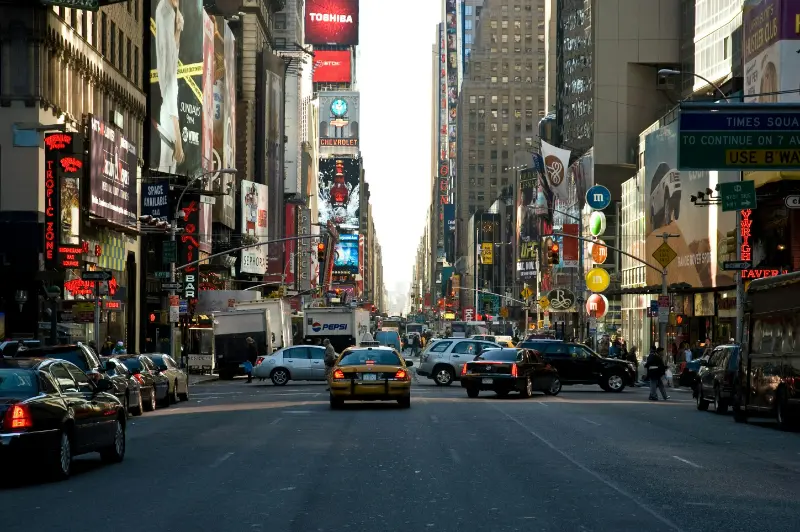
Follow police instructions on the day. Do not assume you can approach from any direction because your map app shows a street. If your hotel or ticketed venue is inside the controlled zone, carry proof of your reservation and use the side of Times Square specified by the venue.
Food, bathrooms and re-entry
The public experience is long and restrictive. There are no normal public restroom breaks with guaranteed re-entry to the same viewing area. Eating and drinking should be planned conservatively before you enter, but deliberately dehydrating yourself is not safe either.
This is one reason the event is not ideal for every traveler. People with medical needs, young children or anyone who cannot stand for extended periods may enjoy a private viewing event, a restaurant celebration or the official webcast much more.
What to wear
Dress for hours of standing, not a ten-minute walk from your hotel. New York on December 31 can be cold and windy, and the urban canyon effect makes stationary waiting feel colder. Use thermal base layers, insulated footwear, gloves, hat and a weather-resistant outer layer.
Avoid oversized bags. Bring a compact power bank and keep your phone warm enough to preserve battery life. If precipitation is possible, a waterproof shell is more crowd-friendly than a large umbrella.
Subway strategy
The subway is the primary way in and out, but stations and entrances near the core can be closed, bypassed or controlled as crowds build. Check the MTA status and official NYE guidance on December 31.

After midnight, do not expect to leave instantly. Thousands of people are moving at once. If your hotel is within a reasonable walk, that can be easier than forcing yourself into the nearest station the moment confetti stops falling.
The Ball Drop and webcast
The official celebration begins before 6 pm, when the Ball is raised at One Times Square. At 11:59 pm it descends for 60 seconds. Confetti and pyrotechnic effects follow at midnight.
If you decide the public pens are not for you, the official commercial-free webcast begins at 6 pm. Times Square Alliance also provides an accessible livestream with open captions and ASL interpretation.
Where to stay for New Year’s Eve
A Times Square hotel can transform the logistics because you may be able to walk back after the event, but hotel access inside the security zone requires careful planning. A room “in Times Square” does not automatically guarantee a Ball Drop view.
Midtown East or areas just outside the core can offer easier movement while keeping the celebration walkable. Book early and verify New Year’s Eve-specific hotel access policies directly with the property.
How to plan this around a real New York trip
The smartest way to use this guide is to treat Times Square New Year’s Eve 2026 as an anchor, not as an isolated item on a huge checklist. New York rewards compact days. Put nearby neighborhoods, meals and attractions on the same side of town, then leave a realistic buffer before any timed entry or crowd-controlled event. During major seasonal events, a distance that normally takes 15 minutes can take much longer because sidewalks, station exits and street crossings are managed differently.
Keep one flexible block in the day. If the weather is poor, move an indoor museum or meal into that space. If crowds are lighter than expected, use the extra time for a walk. This is especially important from late October through New Year, when daylight is shorter and the city’s most popular areas can feel completely different after dark.
Save the official event page, your hotel address and the nearest useful subway stations offline before leaving the hotel. Event-day cellular service can be slower in dense crowds, and temporary closures are easier to manage when you already know two ways back. If you are traveling as a group, choose one meeting point that is outside the most congested zone rather than saying only “we’ll text each other.”
Families, older travelers and accessibility
Crowd tolerance matters as much as physical accessibility. A route can be step-free and still be exhausting if it requires hours of standing, repeated security screening or a late-night subway ride. Families with young children, older travelers and visitors with mobility needs should prioritize predictable exits, nearby restrooms, seating opportunities and a shorter total day.
For ticketed venues, check the official accessibility page and contact guest services when you need a specific accommodation. For outdoor events, the exact street layout can change through police barriers, construction or weather. Build a plan that works even if your preferred corner is unavailable. A nearby café, hotel lobby or indoor attraction can be an important reset point in cold weather.
If someone in your group cannot comfortably stand for a long period, do not assume the most famous public viewing position is automatically the best experience. A broadcast, ticketed indoor venue, shorter daytime visit or less crowded neighborhood can preserve the atmosphere without turning the event into an endurance test.
Booking strategy and where to stay
Seasonal weekends create unusual hotel demand patterns. A neighborhood that is normally a good value may become expensive because it is close to a parade, race finish or holiday venue. Compare the total stay price, not only the first nightly rate, and read the cancellation rules before booking.
Location can be worth more than a small room-rate saving on a major event day. If walking back to the hotel avoids a packed transfer after midnight or a road-closure detour, that convenience has real value. On the other hand, a direct subway line can make a hotel outside the event zone a much calmer base.
Disclosure: Dreaming New York may earn a commission from qualifying hotel bookings made through affiliate links, at no extra cost to you.
Check New York City hotel availability on Booking.com
Practical checklist before you go
- Recheck the official event or venue page 24–48 hours before your visit.
- Check MTA service status and save at least one alternative subway route.
- Confirm any timed ticket, restaurant reservation or hotel-access instruction.
- Dress for the amount of time you will actually spend outdoors and standing still.
- Carry a charged phone and compact power bank, but keep important details offline too.
- Use a small bag and avoid bringing items that could create problems at security screening.
- Agree on a meeting point if your group becomes separated.
- Leave margin after the event rather than booking another timed attraction immediately.
Useful Dreaming New York guides
- Times Square Guide: What to See, When to Go and What to Avoid
- Best Hotels in Times Square: 3 Picks for Broadway and First-Time NYC
- New York in Winter: What to Wear, What to Do and How to Enjoy the Cold
- New York at Night: 15 Best Things to Do After Dark
- New York Subway Guide: Fares, Maps, OMNY and First-Time Visitor Tips
- Christmas in New York City: Lights, Markets, Ice Skating and 2026 Holiday Tips
Official resources worth saving
Frequently asked questions
Do I need a ticket for the Times Square Ball Drop?
No. The outdoor public celebration is free and first come, first served.
What time do viewing areas open?
The current official guidance says viewing areas open at 3 pm.
What time does the Ball Drop start?
The Ball begins its 60-second descent at exactly 11:59 pm.
Can I leave a viewing area and come back?
Do not count on re-entry to the same pen. Treat entering as a commitment for the rest of the evening.
Is there an official livestream?
Yes. The commercial-free webcast begins at 6 pm on December 31, with an accessible stream also available.
Final recommendation
Plan Times Square New Year’s Eve 2026 around the experience you actually want, not around the number of things you can technically fit into one day. The most successful seasonal New York trips leave extra time for walking, weather, crowds and spontaneous discoveries. Use confirmed 2026 information as your starting point, then make one final check of the official source shortly before you go because access rules, hours and event operations can still change.