

Fifth Avenue is not one single New York experience. It changes character repeatedly as it runs through Manhattan: landmark architecture and shops around Midtown, luxury retail near Central Park, Museum Mile along the Upper East Side and quieter residential stretches farther north. That variety is why “walk Fifth Avenue” can be either a brilliant half-day or an exhausting mistake.
For most visitors, the most useful section is between Bryant Park and Central Park, where you can connect the New York Public Library, Empire State Building area, Rockefeller Center, St. Patrick’s Cathedral, flagship stores and the edge of Central Park with very little navigation. This guide shows how to walk the avenue intelligently rather than trying to cover miles for the sake of completeness.
Where should you start?
If your priority is Midtown landmarks, start around 42nd Street at Bryant Park and the New York Public Library and walk north. This direction gradually builds toward Rockefeller Center, St. Patrick’s Cathedral and the luxury shopping district before ending at Central Park.
If you are already staying near the park, reverse the route and finish around Bryant Park. Our Midtown Manhattan guide can help you combine Fifth Avenue with Grand Central, Times Square and an observation deck without excessive backtracking.
Bryant Park and the New York Public Library
The main Stephen A. Schwarzman Building of the New York Public Library anchors Fifth Avenue at 42nd Street. Even if you do not take a formal tour, the marble interiors and Rose Main Reading Room area are worth understanding before you continue north. Bryant Park directly behind the library adds an easy place to sit.
See our dedicated New York Public Library and Bryant Park guide for current visitor rules and what can be seen without a ticket.
The Empire State Building area
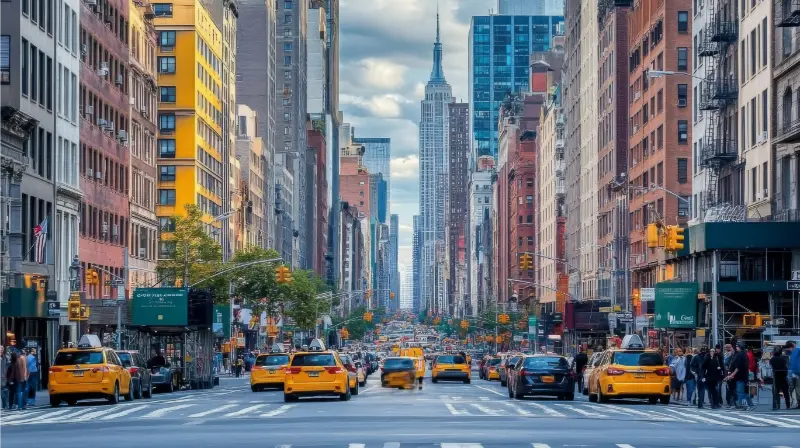
At 34th Street, Fifth Avenue passes the Empire State Building. From directly below, the tower is impressive but difficult to photograph in full. Step east or west a block, or continue north and look back from wider intersections for better architectural views.
If you plan to go up, use our Empire State Building guide rather than buying the first ticket you see. Observatory pricing varies by time and product, and the 86th and 102nd floors are different experiences.
Rockefeller Center and St. Patrick’s Cathedral
Around 49th to 51st Streets, Fifth Avenue reaches one of its strongest clusters. Rockefeller Center sits to the west; St. Patrick’s Cathedral faces it from the east side of the avenue. The contrast between Art Deco commercial architecture and Gothic Revival stone is one of the best short urban scenes in Midtown.
Allow at least an hour for the plaza, public art and cathedral even if you are not going to Top of the Rock. Our new Rockefeller Center guide explains the complex in more depth.
Shopping between 49th and 59th Streets
This is the part of Fifth Avenue most associated with flagship retail and luxury brands. Saks Fifth Avenue, jewelry houses, fashion stores and major global brands cluster along the route. Window-shopping is an attraction in its own right, especially during the holiday season.
For tax basics, outlet alternatives and other retail areas, see our shopping in New York guide. Fifth Avenue is iconic, but it is not automatically the best place to buy every type of product.
The Apple Store, Plaza and Central Park
At 59th Street, the glass Apple Fifth Avenue entrance, the Plaza Hotel and the southeast corner of Central Park create another familiar New York cluster. This is a natural end point for a Midtown Fifth Avenue walk.

Instead of immediately taking the subway, enter Central Park for twenty or thirty minutes. The Pond, Gapstow Bridge and paths near the zoo provide an easy contrast with the commercial avenue you just walked.
Museum Mile
North of the busiest shopping stretch, Fifth Avenue becomes the eastern edge of Central Park and eventually Museum Mile. Major cultural institutions include The Met, the Guggenheim, Cooper Hewitt, the Jewish Museum and others along or near the avenue.
Do not try to combine a full Midtown Fifth Avenue walk with multiple major museums. Choose one—perhaps the Guggenheim or The Met—and treat it as a separate half-day.
A major redesign is underway
New York City is investing heavily in a transformation of Fifth Avenue between Bryant Park and Central Park. Current plans call for wider sidewalks, shorter crossings, additional trees and a reduction in traffic lanes, with the aim of creating a more pedestrian-friendly boulevard.
Because work is ongoing, sidewalk conditions, traffic patterns and construction zones may change during your trip. This is a good reason to use Fifth Avenue as a flexible walking spine rather than scheduling minute-by-minute photo stops at specific corners.
How long does the walk take?
Walking from Bryant Park to Central Park without stopping can take roughly half an hour, but that is not a meaningful sightseeing estimate. With the library, Rockefeller Center, cathedral, shop windows and photographs, allow two to three hours before adding any paid attraction.
If you enter stores, take a Rockefeller Center tour or go up an observation deck, the route becomes a half-day. The correct pace depends on whether Fifth Avenue is the attraction or simply the street connecting attractions.
Best time of day
Morning is best for architecture and easier sidewalks. Late afternoon brings more energy, and evening makes Midtown signs and shop windows more dramatic. During the holiday season, after-dark lighting is beautiful but crowds around Rockefeller Center can be intense.
If you are visiting in December, use our Christmas in New York guide to avoid building a route that repeatedly crosses the same crowded Midtown blocks.
Photography tips
Fifth Avenue photography is often better from side streets than from the avenue itself. Step back to frame the Empire State Building, use Rockefeller Plaza for strong symmetrical lines and look for reflections in storefront glass. Around Central Park, wider intersections create cleaner views of landmark facades.
Do not stop suddenly in the middle of a busy sidewalk to take a vertical phone shot. Move to the edge, check pedestrian flow and wait ten seconds for a gap. New York rewards patience more than blocking traffic.
Common mistakes
- Trying to walk the entire avenue from Downtown to Harlem in one sightseeing session.
- Treating Fifth Avenue only as a shopping street and missing its architecture and museums.
- Scheduling The Met, Guggenheim, Rockefeller Center and Empire State Building on the same day.
- Ignoring construction and redesign work when planning exact walking times.
- Walking north and south repeatedly instead of choosing one direction.
Is Fifth Avenue worth a dedicated walk?
Yes, especially for a first trip, because it compresses so many versions of New York into one line: civic architecture, skyscrapers, religion, retail, public space and world-class museums. The value is not checking off every address; it is seeing how the city changes block by block.
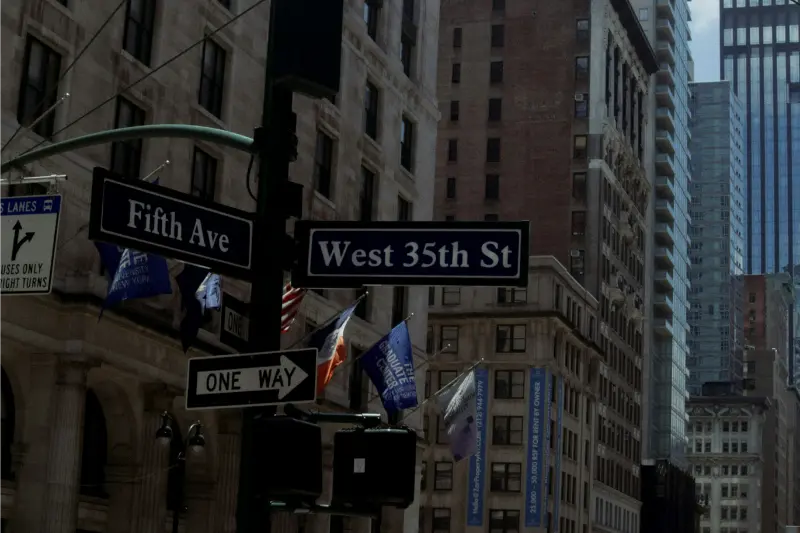
Choose the section that matches your interests, walk it in one direction and leave room for detours. Fifth Avenue works best as a framework for discovery, not as a shopping list.
A simple planning rule
Before you lock this stop into the day, decide what role Fifth Avenue New York Guide plays in your itinerary. If it is a priority, give it the best available time and protect that block from unnecessary cross-town travel. If it is optional, keep it flexible and move it according to weather, energy and nearby reservations.
New York days work best when each half-day stays geographically coherent. Group attractions that can be reached on foot, leave realistic meal and security time between timed entries, and avoid treating the subway as instantaneous. A route that looks efficient on a map can still become exhausting when every stop requires another line, staircase or crowded transfer.
Finally, check the official site the evening before visiting. Hours, entrances, temporary closures, exhibitions and weather-related access can change. That two-minute check is more useful than relying on an old screenshot or a travel post that may have been accurate when it was published.
How to fit it into a New York itinerary
The easiest way to make Fifth Avenue New York Guide work is to pair it with places in the same part of the city. Avoid crossing Manhattan or changing boroughs only to fill a spare hour. New York rewards compact days: one major anchor, one nearby neighborhood and one flexible stop usually feel better than four reservations scattered across the map.
If you are traveling for the first time, protect the morning for the place you care about most and keep the afternoon looser. Security lines, subway delays, weather and meal stops can all move a schedule by twenty or thirty minutes. Building that margin into the day makes it much easier to enjoy the visit rather than watching the clock.
For repeat visitors, use this stop as a reason to explore the surrounding streets rather than treating it as an isolated destination. A museum, park or landmark becomes more memorable when it is connected to a neighborhood meal, a local walk or a waterfront view. That is also the simplest way to discover a version of New York that feels less like a checklist.
Before leaving the hotel, check service changes on the subway, confirm the attraction or venue is operating normally, and save the address offline. Mobile coverage is generally good, but underground stations and crowded areas are exactly where having the basic route already saved can reduce unnecessary stress.