

Grand Central Terminal is one of the easiest New York landmarks to underestimate. Many visitors rush through the Main Concourse, take a photo of the clock and leave. But the building rewards a slower look: the celestial ceiling, whispering gallery, hidden architectural details, food market, train history and the contrast between the historic terminal and the modern Grand Central Madison complex below.
It is also one of the best free indoor stops in Midtown. You do not need a train ticket to visit most public areas, and it fits naturally into a walking route with Bryant Park, the New York Public Library, Fifth Avenue and Rockefeller Center.

Grand Central Terminal or Grand Central Station?
The correct name of the landmark is Grand Central Terminal. “Grand Central Station” is commonly used in everyday conversation, but technically the current building is a terminal because train lines begin and end there.
The terminal serves Metro-North Railroad, while Grand Central Madison brings Long Island Rail Road service beneath the complex. Subway lines 4, 5, 6, 7 and the S shuttle also serve Grand Central-42 St.
Opening hours and location
The official Grand Central visitor page currently lists the terminal as open to the public daily from 5:15 a.m. to 2 a.m.. Individual restaurants, shops and the market keep their own schedules.
The address is 89 East 42nd Street. The main façade faces 42nd Street at Park Avenue, making the terminal easy to combine with a Midtown walking day.
1. Start in the Main Concourse
The Main Concourse is the visual heart of Grand Central. Stand back from the central information booth and look up before you start taking photos. The space works because of scale: huge arched windows, stone walls and the blue-green ceiling make the crowd below feel almost choreographed.
The four-faced opal clock above the information booth is one of the terminal’s most photographed details. It is easy to miss how effectively it works as a meeting point—New Yorkers have been arranging to meet “under the clock” for generations.
2. Look carefully at the celestial ceiling
The ceiling depicts constellations and stars across a deep blue-green background. The design has been restored, but one dark patch was intentionally left visible to show how the ceiling looked before cleaning.
The constellations have also inspired decades of discussion because parts of the zodiac appear reversed from the way they are seen from Earth. Whether you treat that as a mistake or an intentional heavenly perspective, it gives you a reason to look longer than a quick glance.
3. Find the Whispering Gallery
Near the entrance to the dining concourse, outside the famous Oyster Bar, four tiled arches create an acoustic effect known as the Whispering Gallery. Two people can stand at opposite corners, face the wall and speak softly; the sound travels along the curved surface.
It is free, fun with children and easy to miss if you do not know where to look. Be considerate when the area is busy because it sits in an active passageway.
4. Walk through Grand Central Market
Grand Central Market is a compact food hall with specialty counters and ingredients rather than a tourist attraction built around spectacle. It is useful if you want fruit, bread, cheese, prepared foods or something to take back to your hotel.
Hours differ from the terminal, so check current listings if the market is a specific reason for your visit. Early evening can be lively with commuters shopping on the way home.
5. Explore the dining concourse
The lower dining concourse contains casual places where you can eat without leaving the station complex. It can be convenient on a rainy day or when your itinerary is tightly packed.
Do not feel obligated to eat here simply because you are visiting. Midtown has many options, and our New York food guide can help if you want to build a meal into the neighborhood.
6. Step outside for the façade
The terminal’s exterior is easiest to appreciate from across 42nd Street, where you can see the monumental sculpture group above the entrance and the way the building sits beneath surrounding towers.
Walk along Park Avenue and look back. The perspective highlights the tension between the Beaux-Arts terminal and modern Midtown skyscrapers—a classic New York contrast.
7. See Grand Central Madison
Grand Central Madison is the newer Long Island Rail Road terminal deep beneath Grand Central. Even if you are not taking a train, the scale of the infrastructure is worth understanding. Long escalators and modern corridors create a striking contrast with the historic spaces above.
If you are connecting to LIRR, leave more time than the map suggests. The vertical distance between street level, subway platforms and the new rail terminal can be significant.
How much time do you need?
For the main highlights, 30 to 45 minutes is enough. If you want to explore the market, eat, photograph architectural details or follow a self-guided tour, allow 60 to 90 minutes.
Grand Central works particularly well as a flexible stop because there is no fixed admission time for the public concourse. If rain begins or another attraction closes early, you can often fit it into the day without rearranging everything.
Best time to visit
Mid-morning is comfortable for sightseeing. Weekday rush hours are fascinating if you want to see the terminal functioning at full speed, but they are not ideal for slow photography. Early evening can be atmospheric as commuters fill the concourse.
If you want the space to feel calmer, avoid the busiest weekday commuting periods. Weekend mornings can also be pleasant.
Can you take a tour?
Official and independent tours are available at different times. A tour is most worthwhile if you are interested in architecture, rail history and hidden details rather than simply wanting a few photographs.
Check the official terminal site for current tour information before booking because operators and schedules can change.
What to see nearby
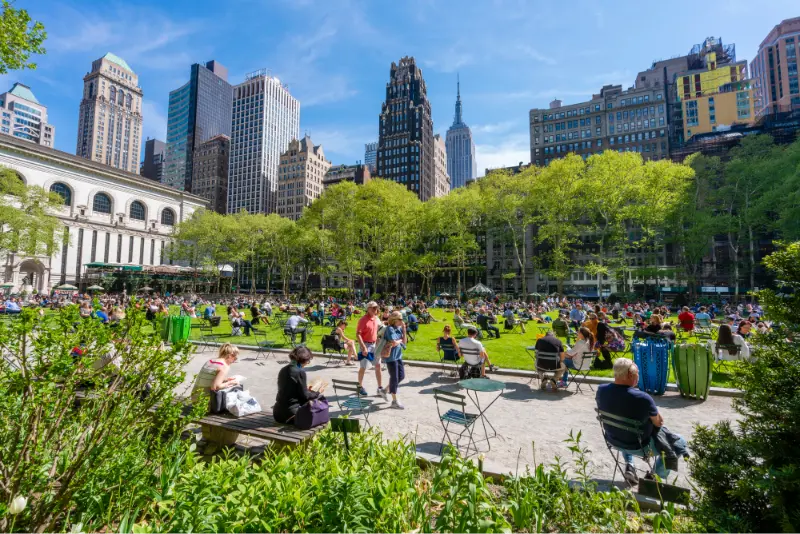
Grand Central sits in one of the densest sightseeing areas in Manhattan. Walk west along 42nd Street to the New York Public Library and Bryant Park. Continue north toward Rockefeller Center and Top of the Rock, or south toward the Empire State Building.
Our Midtown Manhattan guide connects these landmarks into a practical route.
Grand Central with children
Children often enjoy the enormous trains, the whispering gallery and the celestial ceiling. The visit is short enough to work between bigger attractions, and there are bathrooms and food options in the complex.
If you are traveling with a stroller, elevators are available, but moving between levels may take longer than using stairs or escalators. Review current accessibility signage on arrival.
Photography tips
The Main Concourse is a working transport space. Stay out of commuter flow, especially near staircases, platforms and the information booth. Wide-angle shots from the sides can capture the ceiling and windows without standing in the middle of traffic.
For exterior photos, step farther away than you think. The façade is large, and a longer perspective from 42nd Street usually works better than shooting directly beneath it.
Is Grand Central free?
Yes, the main public areas of Grand Central Terminal are free to visit. You only need to pay for food, shopping, tours or transport. That makes it a strong addition to our list of free things to do in New York.
Accessibility
Grand Central is a major transport hub with elevators and accessible routes, but its scale can be tiring for travelers with mobility limitations. If you are changing between subway, Metro-North and LIRR, allow extra time and check elevator status when necessary.
Our accessible New York guide explains how to reduce unnecessary walking and plan around elevator availability.
A simple 90-minute Midtown route
Begin at Grand Central, spend about 40 minutes exploring the Main Concourse, whispering gallery and market, then exit onto 42nd Street. Walk west past the Chrysler Building views toward Bryant Park and the New York Public Library. This compact route works especially well on a first morning in Manhattan because it gives you architecture, everyday city life and several famous landmarks without a ticket.
Frequently asked questions
Can tourists enter Grand Central without a train ticket?
Yes. The public concourse, shops, restaurants and many common areas are open to visitors. Platform access and railway operations follow normal transit rules.
Is Grand Central worth seeing at night?
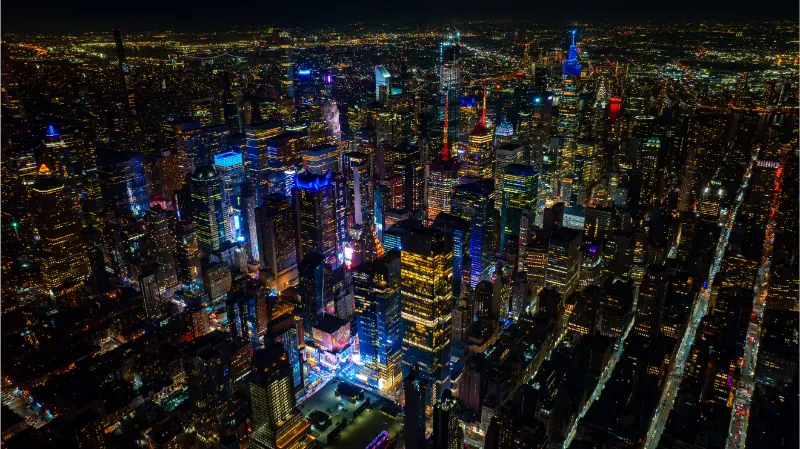
Yes. The concourse is atmospheric after dark and the terminal stays open very late, but shops and markets may close much earlier than the building itself.
A useful extra detail: if you are staying near Times Square or Bryant Park, walking to Grand Central is often more pleasant than taking one short subway ride. The 42nd Street corridor itself is part of the experience.
Final tip
Grand Central is at its best when you give it 15 minutes more than you think you need. Look up, find the whispering gallery, walk through the market and then step outside to see the façade in context. It is not simply a station you happen to pass through; it is one of New York’s great public interiors and an essential piece of Midtown.
[…] A monumental railway station where architecture is still inseparable from daily city life. Read our detailed guide […]
[…] Grand Central Terminal Guide […]