

Seeing a Broadway show is one of the most distinctively New York experiences you can add to a trip. The difficult part is not finding a theatre; it is choosing from dozens of productions, understanding ticket sources, deciding how much to spend and avoiding the pressure to buy from unofficial sellers.
This guide explains how Broadway works for visitors, how to choose a show, where to buy legitimate tickets, how rush and lottery systems can save money, what to wear, when to arrive and how to plan a Theatre District evening without turning it into a stressful race.
What counts as Broadway?
Broadway is not simply any show performed near Broadway Avenue. It refers to productions playing in designated large professional theatres, most of them concentrated around the Theatre District in Midtown Manhattan. The Broadway League currently lists 41 Broadway theatres in operation.
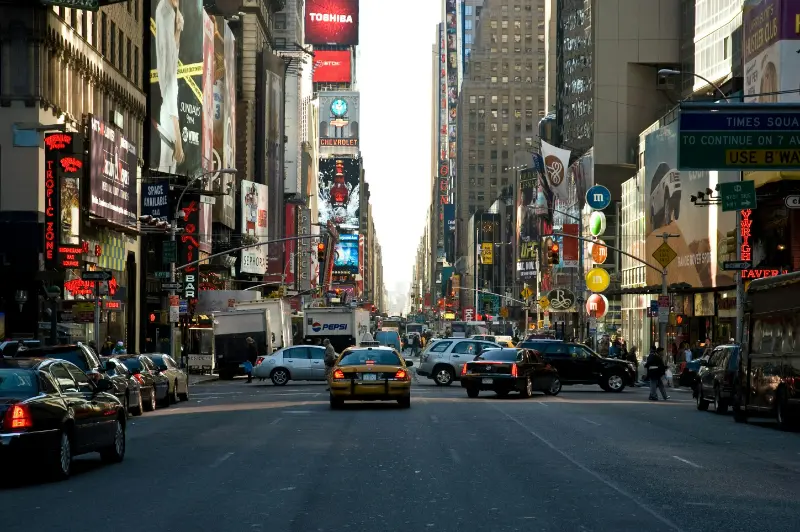
That distinction matters because New York also has excellent Off-Broadway and Off-Off-Broadway productions. A smaller theatre is not automatically a lesser experience; it is simply part of a different theatrical category.
Where to see the current list of shows
The safest starting point is Broadway.org, the official online headquarters of The Broadway League. It lists current and upcoming Broadway productions and links visitors to the official ticketing service for each show.
Productions change constantly, so avoid building an article, itinerary or vacation around an old list of “current shows.” Check the official list for your travel dates.
How to choose the right Broadway show
Start with your group, not with internet rankings. A family with a six-year-old, a couple who loves dramatic plays and a musical-theatre fan looking for a new score need completely different recommendations. Consider the following:
- Musical or play: decide whether spectacle and songs or spoken drama is more appealing.
- Familiar story or something new: first-time theatre visitors often enjoy recognizable titles, while regular theatre-goers may prefer original work.
- Age guidance: check the production’s official recommendation and theatre admission policy.
- Running time: a long performance can affect dinner and transportation plans.
- Language: visitors who are not fluent in English may prefer visually driven musicals or productions with familiar stories.
- Budget: ticket prices vary dramatically by show, performance and seat.
Where should you buy Broadway tickets?
The Broadway League recommends purchasing from the production’s official ticketing source, theatre box office or the official links provided through Broadway.org. Buying directly reduces the risk of counterfeit or dramatically marked-up tickets.
If you buy in person at the theatre box office, you may also avoid certain online service or handling fees. Box-office hours vary, so check before making a special trip.
TKTS: flexible last-minute discounts
If you are flexible about the exact show and seat, TKTS can be one of the best-known discount options. TDF’s official TKTS booths sell tickets for participating same-day performances and next-day matinees, with discounts that can reach up to 50%. Inventory changes in real time and the most popular productions may not appear.
Check the official TKTS information rather than assuming a particular show will be discounted. The famous Times Square booth is beneath the red steps, and TDF also operates another New York location.
Rush tickets and lotteries
Many productions offer some form of rush ticket, digital lottery, student ticket or standing-room policy. The rules differ widely: some are digital, some require an in-person line, some are limited to certain performances and some have age or student restrictions.
Broadway.org lets visitors filter shows by rush, lottery and student-ticket information. Treat these programs as opportunities rather than guarantees. If seeing one specific production is the central reason for your trip, do not depend entirely on winning a lottery.
When should you book?
Book early if you want a specific blockbuster, a holiday-week performance, a Saturday night, a limited run or particular seats. If you are flexible, waiting can create discount opportunities—but it can also leave you with fewer choices.
For most visitors, the right strategy is to identify one “must-see” production and book that in advance. If you want a second show, use flexible discount options once you are in the city.
How to choose seats
The most expensive seat is not always the best value. Orchestra seats feel close to the performers but can sometimes make large choreography harder to see. Front mezzanine seats often provide an excellent overview. Extreme side or rear seats may save money but can have partial-view limitations.
Use the official seating chart and read the exact seat description. If a ticket is labeled partial view, obstructed view or restricted view, take that seriously. The degree of obstruction varies by theatre and production design.
Matinee or evening performance?
A matinee can be a smart choice if you want to keep your evening free, travel with children or prefer not to return to your hotel very late. It also lets you build an easy day around Midtown: brunch or lunch, the show, then Rockefeller Center, Fifth Avenue or an observation deck.

Evening performances create the classic Theatre District atmosphere. Times Square makes much more visual sense after dark, so a nighttime show pairs naturally with the lights.
What time should you arrive?
Do not arrive at curtain time. Security lines, ticket issues, restroom stops and finding your seat all take time. Check the theatre’s official recommendation, but arriving roughly 30 minutes early is a comfortable default for many visitors.
If you are eating first, leave a generous buffer. Midtown sidewalks can be crowded and a restaurant bill can take longer than expected. The show will not delay the curtain because your dinner ran late.
What should you wear?
Broadway does not require formal evening wear for normal performances. Clean, comfortable smart-casual clothing is perfectly acceptable. Some visitors dress up because the night feels special; others arrive in normal sightseeing clothes. Comfort matters, especially in winter when you may be carrying a coat.
Very large bags can create problems because theatre space is limited and security rules vary. Return shopping bags to your hotel when practical.
Can children attend Broadway shows?
Yes, but each production and theatre can have its own age recommendation and minimum admission policy. Do not assume a child can enter simply because the show is family-themed. Also consider running time, loud sound, darkness and late finish times.
For a family trip, a matinee can be much easier than an evening performance. See our New York with kids guide for broader pacing advice.
Broadway for visitors who do not speak fluent English
A familiar musical can be easier to follow than a dialogue-heavy play. Read a short synopsis before the show without spoiling every detail. Some productions or theatres offer accessibility tools or translated support, but availability varies, so check the official show information.
Where to eat before a show
The Theatre District and nearby Hell’s Kitchen contain an enormous range of restaurants. You do not need to eat in Times Square itself. Hell’s Kitchen, particularly west of Eighth Avenue, is useful for varied cuisines and more neighborhood atmosphere.
Book dinner earlier than you think. A 7 p.m. or 8 p.m. curtain does not leave much room for a leisurely multi-course meal if you begin too late. A simpler pre-theatre meal and a drink or dessert afterward can be more relaxing.
A perfect Broadway evening itinerary
- Late afternoon: walk through Bryant Park, Fifth Avenue or Rockefeller Center.
- Early dinner: eat in the Theatre District or Hell’s Kitchen.
- Before curtain: spend 20–30 minutes in Times Square.
- Show: arrive at the theatre with time for security and seating.
- Afterward: return to Times Square for the late-night lights or have dessert nearby.
Read our Times Square guide for the surrounding area.

Broadway on a budget
Combine several strategies: compare weeknight versus weekend performances, consider matinees, use official rush or lottery systems, check TKTS and avoid insisting on the most central orchestra seat. Flexibility is the biggest money-saving tool.
If you are planning a low-cost trip, decide whether Broadway is one of your priority splurges. Saving on meals and attractions elsewhere can make one memorable show fit the budget. See our New York on a budget guide.
Ticket scams and resale warnings
Do not buy from someone simply because they are standing near Times Square or outside a theatre. Verify the ticket source. Search results can also contain resale sites that appear official, so use Broadway.org or the production’s own site to confirm the authorized seller.
If you intentionally use a resale marketplace, understand the fees, guarantee and delivery terms before paying. Never assume a high price means an official ticket.
Broadway etiquette
- Silence your phone completely.
- Do not record the performance unless explicitly permitted.
- Avoid talking, singing along or opening noisy food during the show.
- Return promptly after intermission.
- Follow staff instructions about photography before and after the performance.
Theatre etiquette is simple: remember that both performers and the audience are sharing a live experience.
Frequently asked questions
How much do Broadway tickets cost?
Prices vary enormously by production, day, demand and seat. Use the official ticketing source for your exact performance rather than relying on one generic average.
Are TKTS tickets legitimate?
Yes. TKTS is operated by the nonprofit Theatre Development Fund and sells discounted tickets for participating performances.
Is Broadway worth it if I am not a theatre fan?
It can be, especially if you choose a visually impressive musical or a story you already enjoy. But do not force it into your trip if live theatre genuinely does not interest you.
Can I wear jeans?
Yes. There is no universal formal dress code for standard Broadway attendance.
Can I see two shows in one day?
Yes on days with matinee and evening performances, but it creates a theatre-focused day. Leave enough time between venues and meals.
Final advice
Broadway is easiest when you separate two questions: which show do I most want to see, and how flexible am I about price and timing? Book must-see productions from an official source, use discounts when flexibility is real, arrive early and let the performance be the centerpiece of the evening. The Theatre District is busy and commercial, but once the lights go down inside the theatre, the experience becomes something no skyline viewpoint can replace.
[…] Broadway guide […]
[…] Broadway in New York: How to Choose a Show, Buy Tickets and Save Money […]