

The best things to do in New York City are not limited to famous landmarks. The city is at its most exciting when you mix icons—Central Park, the Statue of Liberty, Broadway and the Empire State Building—with neighborhood walks, waterfronts, food stops and moments that do not require a ticket. The list below is designed as a menu: choose what fits your interests, trip length, budget and season rather than trying to complete all 30.
For a first visit, a useful rule is to combine one major attraction, one neighborhood and one flexible experience in the same part of the city each day. That gives your trip variety without turning New York into a race.
1. Walk through Central Park
Central Park is not simply a green rectangle between sightseeing stops; it is one of the city’s essential experiences. Enter from Midtown and continue beyond the busiest southern paths to places such as The Mall, Bethesda Terrace, Bow Bridge, the Ramble, Belvedere Castle, the Reservoir, Sheep Meadow or Conservatory Garden. The park stretches from 59th to 110th Street and is open daily from 6 a.m. to 1 a.m. according to the Central Park Conservancy.
2. See the Statue of Liberty and Ellis Island
For many international visitors, this is the most symbolic experience in New York. Ferries depart from The Battery in Manhattan and Liberty State Park in New Jersey. The official ferry ticket provides access to Liberty Island and Ellis Island, while pedestal and crown access require limited reservations. If the islands are a priority, start early and allow several hours. Use the National Park Service for current planning information.
3. Choose one observation deck
New York has several outstanding skyline viewpoints, and most travelers do not need to visit all of them. The Empire State Building offers history and a classic Midtown location. Top of the Rock is famous for views that include the Empire State Building and Central Park. One World Observatory looks over Lower Manhattan and the harbor. Edge offers a dramatic west-side perspective, while SUMMIT One Vanderbilt combines views with a highly designed indoor experience. Pick the deck that best matches the skyline and atmosphere you want.
4. Experience Times Square after dark
Times Square is crowded, commercial and undeniably part of a first New York visit. Go after sunset when the screens have their full impact. Twenty to forty minutes is enough for many visitors, although the area naturally works before or after a Broadway performance.
5. See a Broadway show
Broadway is not one theater but a district and an industry with many productions running at the same time. If there is a specific show or date you care about, book in advance. If you are flexible, same-day discount programs, rush tickets and digital lotteries can reduce the cost. Also look beyond musicals: plays, off-Broadway productions, comedy, jazz and live music can be equally memorable evenings.
6. Walk the Brooklyn Bridge
The Brooklyn Bridge is one of the best free walks in New York. For classic Manhattan skyline views, many visitors enjoy walking from Brooklyn toward Manhattan, but either direction works. Early morning is generally calmer than the middle of the day. Combine the bridge with DUMBO and Brooklyn Heights rather than crossing and immediately taking the subway back.
7. Explore DUMBO and Brooklyn Bridge Park
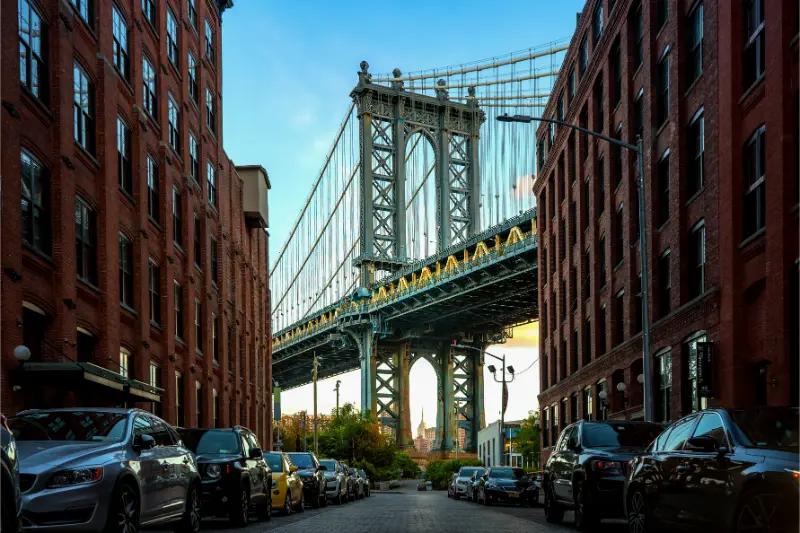
DUMBO delivers one of the city’s most recognizable street views, but the waterfront is the bigger reward. Brooklyn Bridge Park offers lawns, piers, playgrounds and exceptional views across the East River. Continue to the Brooklyn Heights Promenade for a quieter perspective on Lower Manhattan.
8. Visit the 9/11 Memorial and World Trade Center
The outdoor memorial pools occupy the footprints of the former Twin Towers and create one of New York’s most reflective public spaces. Nearby you can visit the 9/11 Memorial & Museum, One World Observatory, the Oculus and the reconstructed St. Nicholas Greek Orthodox Church. Give the memorial the time and tone it deserves rather than treating it as a quick photo stop.
9. Ride the Staten Island Ferry
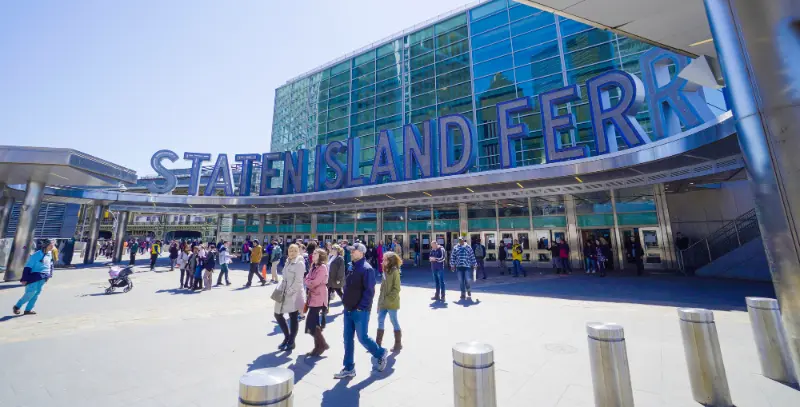
The Staten Island Ferry is one of New York’s classic free experiences. It crosses the harbor between Lower Manhattan and Staten Island and provides open-water views of the skyline and Statue of Liberty. It does not stop at Liberty Island, so it is not a substitute if you want to visit the statue itself, but it is excellent for a budget-friendly harbor ride.
10. Walk the High Line
The High Line transformed an elevated freight rail line into a landscaped urban park. The most enjoyable way to experience it is not to rush from end to end. Stop for city views, public art and architectural details, then connect the walk with Chelsea Market, the Meatpacking District, Hudson Yards or the West Village.
11. Visit Grand Central Terminal
Grand Central is both a functioning station and an architectural attraction. Step into the Main Concourse, look up at the celestial ceiling, explore the passages and notice how the building connects Midtown East with trains, subways, shops and restaurants. It combines naturally with the Chrysler Building exterior, the New York Public Library and Bryant Park.
12. See the New York Public Library and Bryant Park
The Stephen A. Schwarzman Building of the New York Public Library is one of Midtown’s great civic buildings. Behind it, Bryant Park provides a compact green space surrounded by skyscrapers. The atmosphere changes with the season, from lawns and outdoor seating in warmer months to winter programming and a holiday market.
13. Explore the Metropolitan Museum of Art
The Met is so large that trying to see everything can make the visit less enjoyable. Choose two or three collections that genuinely interest you and allow time to slow down. Pair the museum with Central Park or an Upper East Side walk instead of scheduling another enormous museum immediately afterward.
14. Visit the American Museum of Natural History
A favorite for families and anyone interested in science, animals, human cultures and the natural world, the museum can easily fill half a day. It sits beside Central Park on the Upper West Side, making the neighborhood ideal for a family-focused itinerary. See our New York City with kids guide for more family ideas.
15. Discover MoMA
The Museum of Modern Art is an excellent choice for visitors who want modern and contemporary art without committing an entire day. Its Midtown location makes it easy to pair with Rockefeller Center, Fifth Avenue, Central Park South or an evening in the Theater District.
16. Wander Greenwich Village
Greenwich Village is best experienced without a rigid route. Start around Washington Square Park, then walk side streets lined with townhouses, cafes, music history and small businesses. Continue into the West Village for a quieter residential atmosphere or east toward NoHo and the East Village.
17. Eat your way through Chinatown
Chinatown rewards curiosity and appetite. Dumplings, noodles, bakeries, Cantonese classics, regional Chinese cooking and newer restaurants are packed into a relatively small area. Walk Mott Street, Doyers Street and the blocks toward the Lower East Side, then choose somewhere to eat based on what looks busy, appealing and appropriate to your budget.
18. Experience the Lower East Side
The Lower East Side combines immigrant history, nightlife, galleries, restaurants and tenement-era streets. Visit the Tenement Museum if social history interests you, or explore Essex Market, Orchard Street and the blocks connecting the neighborhood to Chinatown and the East Village.
19. Walk through SoHo
SoHo is known for cast-iron architecture, flagship stores, galleries and cobblestone streets. It can become crowded on weekends, so early morning offers a more architectural experience. Continue west into Tribeca or north toward NoHo and Greenwich Village.
20. Explore Harlem
Harlem deserves more than a quick detour. Its cultural significance spans Black history, music, churches, literature, food and architecture. Depending on your interests, build time around 125th Street, the Apollo Theater area, historic residential blocks, Marcus Garvey Park or a meal at a long-established local restaurant.
21. Take the Roosevelt Island Tram
The tram is a short aerial ride between Manhattan and Roosevelt Island and is part of the city’s transit network. The ride itself is brief, but the East River and skyline views make it a fun addition to an Upper East Side day. Walk the island waterfront before returning by tram or subway.
22. Explore Williamsburg
Williamsburg is one of the easiest Brooklyn neighborhoods for first-time visitors to add to a Manhattan-centered trip. Expect restaurants, bars, shops, street art, music venues and East River views. The waterfront around Domino Park is especially attractive near sunset.
23. Visit Prospect Park and nearby Brooklyn
Prospect Park gives Brooklyn its own large landscaped park and connects naturally with Park Slope, the Brooklyn Museum and Brooklyn Botanic Garden. It is a strong choice for travelers who have already seen Central Park or want a less Midtown-focused day.
24. See Coney Island
Coney Island is seasonal, nostalgic and completely different from central Manhattan. The boardwalk and beach are free; amusement rides and other attractions cost extra. Summer is the obvious time for the full atmosphere, but off-season walks can be atmospheric in a quieter way.
25. Walk Fifth Avenue
Fifth Avenue changes character as it moves through Manhattan. Midtown brings flagship stores, St. Patrick’s Cathedral, Rockefeller Center and famous commercial architecture; farther north the avenue borders Central Park and Museum Mile. Choose a section instead of trying to walk the entire avenue.

26. Visit Chelsea Market
Chelsea Market is useful as a food stop, particularly when paired with the High Line. It can be busy at peak lunch times, but the range of vendors makes it practical for groups with different tastes.
27. Spend time at Little Island and the Hudson River waterfront
Little Island is a landscaped public park built above the Hudson River. Combine it with Hudson River Park, the Meatpacking District and the West Village. This is an especially good area for a slower late-afternoon walk.
28. See New York from the water
You do not need a sightseeing cruise to get onto the water. The Staten Island Ferry is free and NYC Ferry connects selected waterfront neighborhoods for a fare. A paid harbor cruise can still be worthwhile if you specifically want narration, a sunset departure or a route designed around skyline photography.
29. Eat something unmistakably New York
Food is part of sightseeing. Try a bagel, a classic slice, a deli sandwich, a bakery, a neighborhood diner or one of the city’s many immigrant cuisines. The “best” version of almost every iconic food is debated endlessly. A more useful strategy is to eat in the neighborhood you are already exploring instead of crossing the city for a viral dish.
30. Leave room to wander
Some of the best New York experiences are too small to schedule: a brownstone block, a street musician, a bookstore, a pocket park, a view at the end of an avenue or a food counter that smells too good to pass. A city this dense rewards people who leave a little time unscripted.
How to choose what belongs in your itinerary
First-time visitors should prioritize variety rather than volume. One observation deck, Central Park, Lower Manhattan, Brooklyn Bridge/DUMBO, one major museum, one neighborhood and one evening performance already create a rich trip. Families should add playgrounds, ferries and more breaks. Budget travelers can replace several paid attractions with free parks, bridges and waterfronts. Repeat visitors should push farther into Brooklyn, Queens, Harlem, the Bronx and smaller cultural institutions.
If you are starting from zero, read the first-time New York travel guide and then turn this list into a realistic route with the 5-day itinerary.
How many paid attractions should you book?
For a five-day trip, three to five major paid attractions is often enough, depending on museum time and your pace. New York has too many worthwhile free experiences to spend every hour entering ticketed venues. More tickets also create more fixed deadlines, which makes your trip less flexible if weather or transit delays change the day.
Best strategy for rainy days
Keep one or two indoor experiences flexible: a museum, Grand Central, a food hall, shopping or a performance. Move long park walks, Brooklyn Bridge and observation decks to the clearest periods. An overcast day can still be excellent for neighborhoods, but low cloud can make an expensive skyline ticket disappointing.
Frequently asked questions
What are the three must-do experiences for a first visit?
There is no objective top three, but Central Park, a harbor or Lower Manhattan experience, and one skyline viewpoint create three very different perspectives on the city. Add a neighborhood walk so your trip is not limited to ticketed attractions.
Are there enough free things to do?
Absolutely. Parks, bridges, waterfronts, the Staten Island Ferry, public architecture and neighborhood exploration can fill entire days. Our free things to do in New York City article organizes the strongest options.
Should I visit several observation decks?
Only if skyline photography is one of your main interests. Most travelers get better value from one paid deck and several free skyline viewpoints in Brooklyn, Queens or along the waterfront.
Dreaming New York tip: choose experiences that show you different versions of the city—skyline, street life, green space, culture, food and waterfront—rather than booking several attractions that deliver the same type of view.