

The Chrysler Building is one of the rare New York skyscrapers that can feel familiar before you have ever stood beneath it. Its stainless-steel crown, triangular windows, stylized radiator-cap ornament and needle-like spire turned a corporate office tower into a symbol of the city. For visitors, however, the key is understanding what the building actually offers: this is not an Empire State Building-style attraction with a ticketed observation deck. The experience is primarily architectural—seeing the exterior from the right angles, appreciating the landmark lobby when access is permitted, and placing the tower within the extraordinary cluster of Midtown East landmarks around Grand Central Terminal.
Quick facts
| Where | 405 Lexington Avenue, New York, NY |
| Neighborhood | Midtown East |
| Cost | Exterior viewing is free; there is no public observation deck. |
| Time to allow | 20–45 minutes for an exterior-focused visit; longer when paired with Grand Central. |
| Best for | Architecture, history, photography and self-guided sightseeing |
Why visit Chrysler Building?
Chrysler Building works best when you see it as part of the city around it rather than as an isolated pin on a map. New York architecture is unusually dependent on streets, setbacks, neighboring towers, transit and public space. Give yourself enough time to walk around the site, change viewpoints and connect it with one or two nearby places instead of arriving, taking a photograph and immediately returning to the subway.
Why the Chrysler Building matters
Designed by William Van Alen for automobile entrepreneur Walter P. Chrysler, the tower was completed in 1930 during New York’s famous race for height. Its concealed spire was assembled within the building and raised into place, allowing the tower to briefly claim the title of the world’s tallest building before the Empire State Building surpassed it. The New York City Landmarks Preservation Commission describes the Chrysler Building as an outstanding example of Art Deco architecture and emphasizes the role of its 185-foot spire, metal ornament and modern materials in shaping its identity.
Look beyond the crown
The crown understandably receives most of the attention, but the lower elevations deserve time too. Metal details were deliberately connected to the automobile age: stylized forms reference hood ornaments, hubcaps and radiator caps. The building becomes more interesting when you stop reading it only as a silhouette and start seeing it as a corporate design statement from an era when skyscrapers were competing for identity as much as height.
The lobby as part of the design
The landmarked ground-floor interior uses richly colored stone, metalwork, dramatic lighting and a large Edward Trumbull ceiling mural. Access conditions can change because the Chrysler Building remains an office property, so visitors should not plan a trip around guaranteed interior entry. If security permits a brief look from the lobby, treat it as a bonus rather than as a museum visit.
What to look for
Best first view
Approach from the west near Grand Central and Lexington Avenue. At street level the tower can disappear behind neighboring buildings, so keep moving until the crown separates cleanly from the surrounding skyline.
Best skyline context
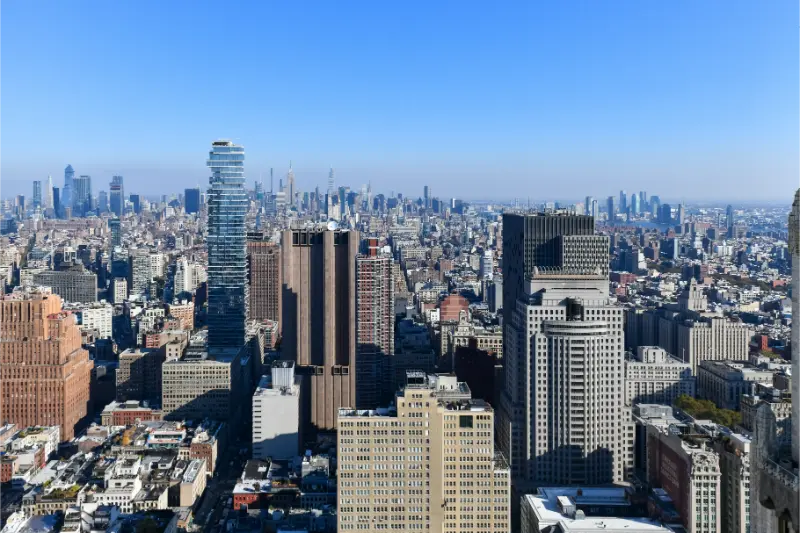
For a wider view, look from elevated or open spaces where Midtown East’s towers can be read together. Observation decks elsewhere in Midtown can reveal how narrow and elegant the Chrysler crown looks compared with larger modern towers.
Best architectural detail
Stand far enough back to see the setbacks and stainless-steel arcs, then walk closer for the lower-floor ornament. A telephoto lens is useful because many of the best decorative elements sit well above eye level.
Best pairing
Grand Central Terminal is the obvious companion. The contrast between Beaux-Arts rail architecture and Art Deco skyscraper design makes this one of the easiest architecture-focused hours in Midtown.
Visitor access: what to expect
The Chrysler Building is a working office building. There is no public observation deck and no standard visitor ticket. Lobby access should be treated as limited and subject to building security, business operations and current policy. Do not enter office areas or assume that a photograph seen online represents public access today. The safest plan is an exterior visit with Grand Central, followed by another attraction that offers guaranteed public entry.
Best time to visit
For an architecture-focused visit, weekday mornings are often easiest because sidewalks are calmer and you have more room to look up without stopping in heavy pedestrian traffic. The best photographic light depends on the building orientation, but a clear morning gives crisp detail while late afternoon can bring warmer façades and stronger reflections. If the site is a working institution, house of worship or government building, its operational needs always take priority over sightseeing.
Photography tips
Morning can give cleaner sidewalks around Midtown East, while late afternoon can create stronger reflections on the steel crown. The most common mistake is standing directly beneath the building and expecting the classic full-tower image. Because the site is dense, move several blocks and use street corridors to frame the upper tower. If you are photographing from an observation deck, a moderate telephoto focal length often works better than an ultra-wide lens.
How to combine it with nearby sights
Start at Grand Central Terminal, walk through the Main Concourse and then exit toward Lexington Avenue. View the Chrysler Building from several blocks around 42nd Street, continue to the New York Public Library and Bryant Park, and finish around Fifth Avenue or Rockefeller Center. This route turns a single exterior landmark into a satisfying half-day of free or low-cost architecture.

How much time should you really allow?
The time in the quick-facts table is a realistic sightseeing range rather than a promise. New York landmarks often take longer because the best angle is on another block, security adds a queue, a public room closes temporarily or you simply decide to stay. If this is one of your priority places, avoid placing another timed ticket immediately afterward. A flexible 30-minute buffer usually makes the day more enjoyable.
Is it worth making a special trip?
If you are already in Midtown East, yes: this is an easy addition and helps you understand the character of the neighborhood. Whether it deserves a dedicated cross-city trip depends on your interests. Architecture and history travelers will often value these places more than visitors focused mainly on shopping or major ticketed attractions. The strongest strategy is to create a themed route where several good stops reinforce one another.
Find a well-located New York hotel for an architecture-focused trip
Frequently asked questions
Can you visit Chrysler Building for free?
Exterior viewing is free; there is no public observation deck. Always check current official information when interior access, tours or security procedures are important to your visit.
Do I need to book in advance?
Only when the site has a timed tour, reservation system or controlled access. Exterior landmarks and public parks do not need a ticket, but working institutions can impose security or event restrictions. Use the official links below for the latest procedure.
Is it good for children?
It can be, especially when you turn architecture into a visual game: look for unusual shapes, statues, bridge details, old stones or skyline views. For controlled-access sites, check age, height and stroller rules before leaving the hotel.
Is the area accessible by subway?
Yes. Every landmark in this cluster is reachable by New York public transportation, though the final walk can vary considerably. Uptown parks and waterfront sites may involve more slopes or distance than central Manhattan landmarks.
What should I visit nearby?
Use the related Dreaming New York guides below to build a neighborhood route rather than adding unnecessary subway rides. The most efficient New York days group sights geographically.
Related Dreaming New York guides
- Grand Central Terminal Guide
- Midtown Manhattan Guide
- New York Public Library & Bryant Park Guide
- Empire State Building Guide
- Top of the Rock Guide
Useful official sources
- NYC Landmarks Preservation Commission – Chrysler Building designation report
- NYC Landmarks Preservation Commission – Chrysler Building interior designation report
Final tips
Look up, but also look around. The best New York architecture experience is rarely only about the façade in front of you. Notice the street width, neighboring buildings, public space, transportation and the way people use the site. That wider view turns a famous landmark into a more memorable piece of the city.
A practical architecture-first route
Begin the day with Chrysler Building before the busiest sightseeing period. Spend a few minutes understanding the building or site from more than one angle, then continue on foot to the closest related landmark rather than immediately entering the subway. This style of travel is particularly effective in New York because architectural eras overlap block by block: a nineteenth-century church can face a twentieth-century tower, while a modern transportation hub can sit beside a memorial plaza. The contrasts are part of the story.
If you are carrying a camera, keep the first part of the day simple. One wide-to-standard lens or a phone is often enough. Large bags become inconvenient at security-controlled attractions and make crowded sidewalks harder to navigate. Save indoor museums for the hottest, coldest or wettest part of the day and use better weather for street-level architecture.
What not to expect
Do not assume that every famous New York building has a public roof, observation deck or lobby tour. Many are offices, residences, religious buildings or government facilities. A landmark can still be worth visiting even when the interior is private. In those cases, the surrounding streets, public plazas and nearby institutions provide the visitor experience. Respect security staff, residents and worshippers, and never follow someone through a controlled door simply because it is open.